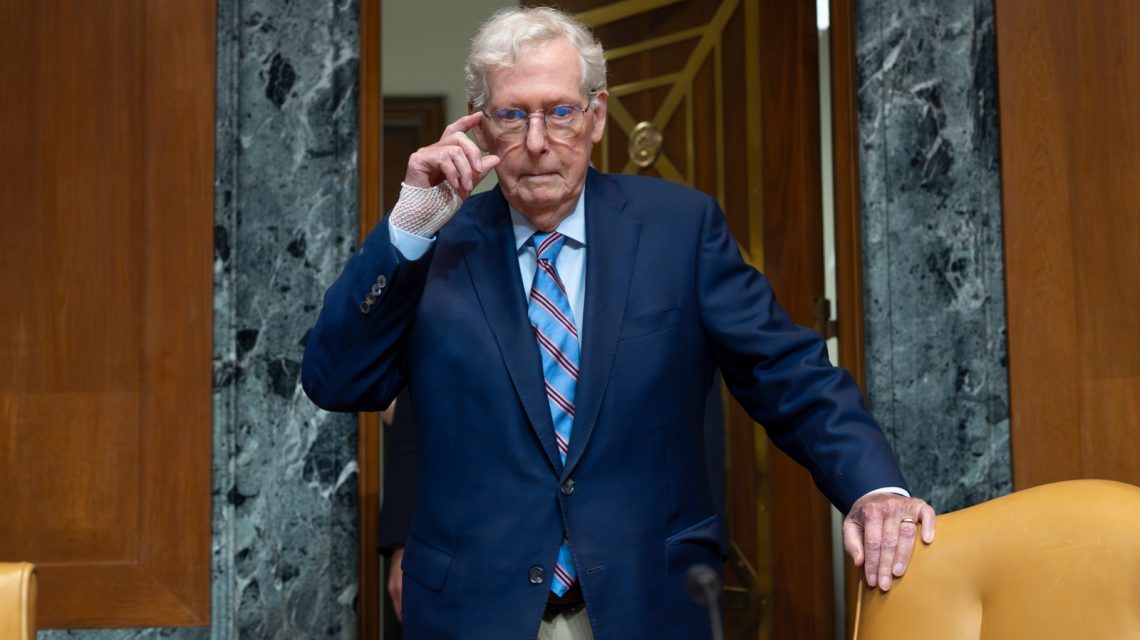
The health of Mitch McConnell, Kentucky’s longest-serving senator, has raised questions about what would happen if he cannot complete his term. This follows his recent hospitalization and limited statements from his office.
Changes to Kentucky’s Senate Vacancy Law
There is no indication McConnell plans to resign, but his condition has highlighted significant changes in Kentucky’s Senate vacancy laws made in 2024. The new legislation removed the governor’s power to appoint a replacement. Instead, vacancies are now filled through a special election process. This law will apply if a vacancy arises before McConnell’s current term ends in January 2027.
Both McConnell’s office and the Kentucky Secretary of State’s office were contacted but have not provided additional comments.
McConnell’s Health Status
McConnell was hospitalized due to a medical emergency, causing concern about his health. His office has confirmed his hospitalization but offered few details. They stated, “Senator McConnell appreciates the outpouring of support he’s receiving while he continues his recovery in the hospital. The Senator continues to improve and is working closely with his staff on Kentucky and Senate matters while the Senate is out of session.”
McConnell announced in 2025 that he would not seek reelection, with voters set to choose his successor in the November 2026 election.
Attention on Elaine Chao
Amidst McConnell’s hospitalization, attention turned to his wife, former Transportation Secretary Elaine Chao, who visited China shortly after his health emergency. Reports and images show Chao in meetings with Chinese Vice President Han Zheng in Beijing, discussing U.S.-China relations.
Chao has been contacted for comments on her trip.
Details of the New Senate Vacancy Law
Kentucky’s House Bill 622, passed in 2024, reformed the Senate vacancy process. It repealed KRS 63.200 and introduced a special election system. The law requires the governor to call an election to fill a vacancy, with administrative guidelines for filing notices and candidates. The key change eliminates the governor’s authority to appoint an interim senator.
However, the law leaves some questions unanswered. It does not clarify how to proceed if a vacancy arises close to an existing Senate election, which is relevant since McConnell’s seat is contested in November 2026.
Why McConnell’s Case Is Distinct
McConnell’s situation is unique because he has already announced his retirement. The focus now is not on his replacement but on how a potential vacancy before January 2027 would be managed under the new law.
As of now, McConnell remains in office, and the new vacancy law in Kentucky has not yet faced an actual U.S. Senate vacancy test. After McConnell announced stepping down as Senate Republican leader, Sens. John Thune, John Barrasso, and John Cornyn emerged as early contenders to succeed him.
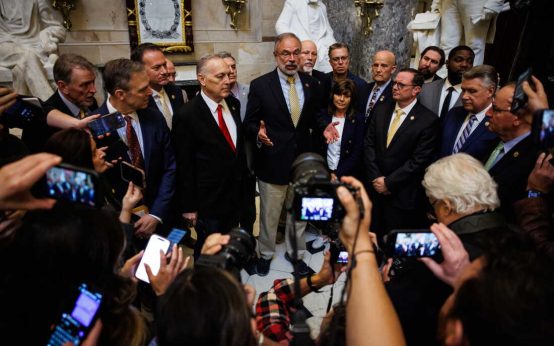 House Freedom Caucus Faces Transition as Key Members Depart
  FBI Investigation Into Alleged Pay-to-Play Scheme Involving Sen. Susan Collins
 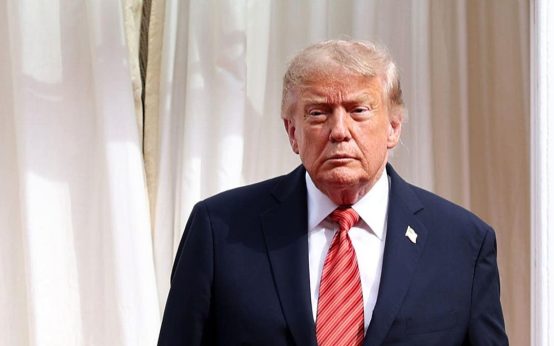 Trump Pressures Senate Republicans to End Filibuster to Prevent Democratic Dominance
 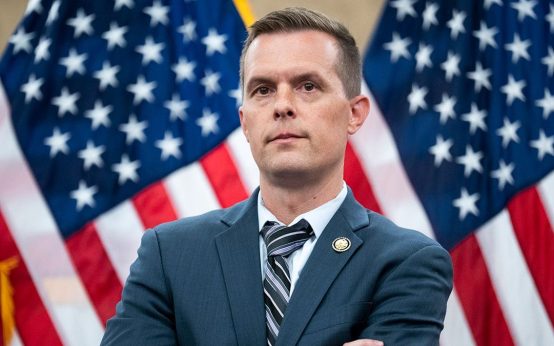 Jared Golden Endorses Mike Lawler for Re-election
  Data Centers and Their Role in the Midterm Election
  Jewish Democrats in Michigan Show Support for GOP Candidate