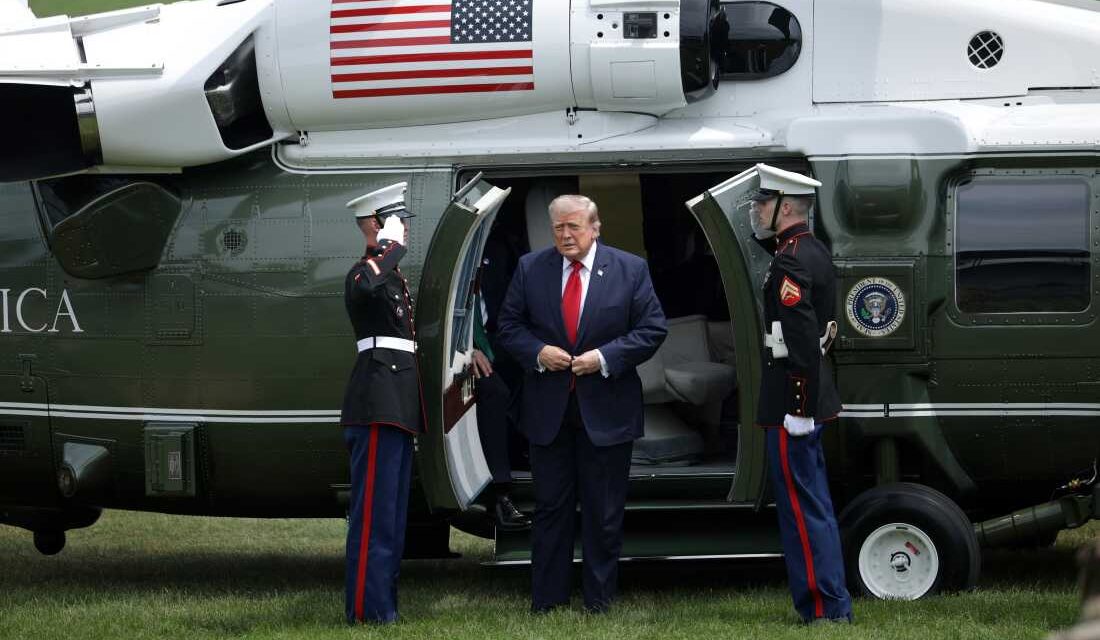
President Trump addressed an event in Carlisle, Pennsylvania on Wednesday. His recent financial reports show a significant increase in his wealth since taking office, with his family businesses reporting revenues of $2.2 billion last year, primarily from cryptocurrency. This news has sparked mixed reactions among voters in Pennsylvania.
NPR observed two focus groups with a total of 12 Pennsylvania voters on Tuesday. Opinions varied on Trump’s financial gains. Half of the participants expressed concern, while the other half dismissed it as typical for politicians.
Todd A., an independent voter aged 62, remarked, “When it comes to ethics, moral and financial, I think that just about every politician is corrupt.” He noted Trump’s long-standing reputation as a “huckster.” Rich Thau, the focus group moderator and president of messaging firm Engagious, commented on the cynicism among voters, noting their low expectations for politicians.
Betsy D., a 48-year-old Republican, described Trump’s actions as “typical behavior” for both a businessman and a politician. She stated, “I’m just not troubled by it because I just think it’s typical for politicians to increase their wealth while in office.” Similarly, Ken J., a 44-year-old Republican, argued that Trump’s wealth increase didn’t concern him due to a lack of evidence of illegal activity. He remarked, “He’s a businessman. He openly admitted it. This isn’t a shock.”
Contrarily, Bhavana G., a 54-year-old independent voter, voiced concerns regarding Trump’s financial behavior, describing it as an “abuse of power.” She emphasized the distinction between Trump’s roles as a businessman and president, saying, “It is the president, Donald Trump, who’s using his powers in manipulative ways to draw something that is of his personal interest.”
Margaret M., a 58-year-old independent voter, shared worries about potential undue influence from Trump’s business associates. “I would just be worried that whoever he’s doing business with would then have his ear a little bit more,” she explained.
The focus groups revealed two additional viewpoints:
- Politicians’ Health: Most participants believe that representatives with ongoing health issues should disclose this to the public. Eight out of 12 participants supported transparency, while four advocated for privacy.
- Iran War: Among the participants, seven were aware of the renewed conflict with Iran, yet only two had confidence in Trump’s ability to resolve the conflict by the end of the year.