
Researchers in Italy have identified a possible link between the erectile dysfunction medication Cialis, also known as tadalafil, and muscle regeneration. The study, featured in the Molecular Biology Reports, employed a laboratory setting to examine mouse muscle cells over a period of seven days.
This research assessed the drug’s impact on the growth, survival, and development of muscle cells. Tadalafil was seen to enhance the number of muscle precursor cells, supporting their early development and aiding their survival. The drug demonstrated potential in assisting muscle repair by promoting growth and reducing cell death.
While these results appear promising, the study observed that tadalafil delayed the maturation of fully developed muscle cells. This implies that although the drug may boost the creation and maintenance of cells essential for muscle regeneration, it does not necessarily correlate with increased muscle size and functionality in humans.
The study’s limitations include its reliance on mouse models, which may not translate directly to human applications. Furthermore, the research only spanned seven days, necessitating further studies to fully comprehend the long-term effects of tadalafil.
This research opens up exciting new possibilities for future therapeutic strategies in muscle recovery.
Dr. Cristina Antinozzi, from the Endocrinology Unit at the University of Rome Foro Italico and co-author of the study, emphasized the potential of repurposing tadalafil to aid muscle tissue repair and recovery. However, she indicated that more research is needed to validate these findings in human subjects.
Dr. Kien Vuu, a radiologist and founder of VuuMD Performance and Longevity in Los Angeles, who did not participate in the study, concurred that the research presents intriguing initial findings but does not conclusively prove that Cialis contributes to muscle growth or recovery in humans.
Vuu elaborated on the significance of studying this topic from a longevity perspective, noting the substantial impact of age-related muscle loss on conditions such as frailty, metabolic dysfunction, and loss of independence. He affirmed that lifestyle practices like resistance training, sufficient protein intake, and quality sleep remain crucial in safeguarding muscle as one ages.
He cautioned against using tadalafil for muscle-building purposes without further evidence from comprehensive animal and human trials assessing muscle mass, strength, physical function, and safety. Furthermore, Vuu highlighted the potential risks associated with tadalafil usage, such as severe blood pressure reductions when combined with nitrates.
Angelica Stabile, a lifestyle reporter for Fox News Digital, provided insights into this topic.
 The Value of Trained Advocates in Patient Rehabilitation
  Initiative for Safe Integration of Psychedelic Therapies
  Debate Over SNAP Restrictions for Soda Purchases
 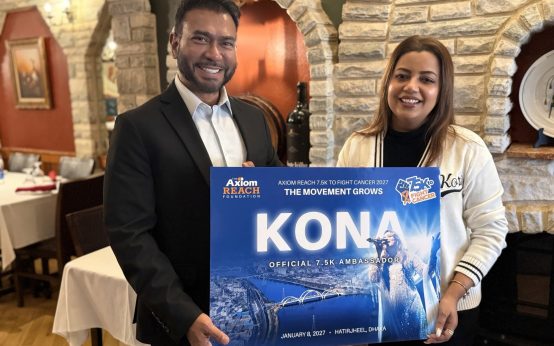 U.S. Cancer Foundation Expands Effort in Bangladesh
  The Vision of Lifelong Joint Health: Howard Luks’ Approach
  A Woman’s Journey to Breast Cancer Diagnosis and Advocacy