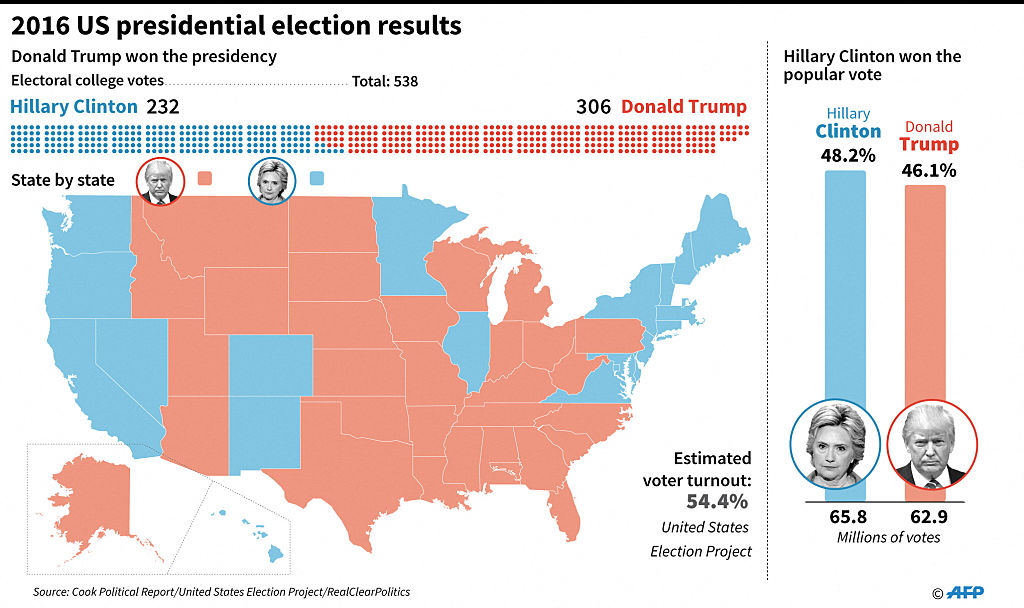
The recent elections have shifted several key state legislatures and gubernatorial seats to Democratic control. This change gives Democrats an opportunity to challenge a longstanding institution in U.S. elections, the Electoral College. Historically, the Electoral College has cost Democrats two presidential elections this century. Officially abolishing it would require a constitutional amendment. However, it can be effectively bypassed if enough states join the National Popular Vote Interstate Compact.
Currently, 18 Democratic-led states and the District of Columbia have joined the compact, representing 222 of the 270 electoral votes needed for it to take effect. With recent electoral wins, Democrats now have a chance to reach this goal.
Understanding the National Popular Vote Interstate Compact
The National Popular Vote Interstate Compact is an agreement among states. It requires member states to allocate their electoral votes to the presidential candidate who wins the national popular vote. This would alter the current system, where almost every state casts all its electors to the candidate with the most state votes. This method has allowed candidates to win the presidency without winning the national popular vote.
Historically, this happened five times, such as in 2016 when Donald Trump won the Electoral College while losing the popular vote to Hillary Clinton, and in 2000 with George W. Bush and Al Gore. The compact seeks to align the presidency with the national popular vote outcome.
The idea began after the contentious 2000 election. Akhil and Vikram Amar, professors at Yale and the University of California, laid a foundation for this concept in 2001. The compact was officially formed in 2006. Its member states aim to collectively reach 270 electoral votes for it to become operational.
For states to join, both legislative chambers must pass relevant legislation, and the governor must sign it into law. If the governor vetoes, a legislative supermajority can override it.
Impact of Democratic Midterm Victories on the Compact
In the recent midterms, Democrats gained control of both legislative chambers and the governorship in five more states: Pennsylvania, Michigan, Arizona, Wisconsin, and Nevada. These states contribute 61 electoral votes, enough to bring the compact into effect.
Gaining Pennsylvania (19 votes) and Michigan (15 votes) is crucial for the compact. Pennsylvania Governor Josh Shapiro supports the national popular vote idea, indicating potential progress. Meanwhile, incoming Michigan Senate Majority Leader Darrin Camilleri acknowledges potential legal hurdles but remains open to the idea.
Constitutionality and Legal Challenges
The compact’s constitutionality remains debated. Lawrence Lessig of Harvard Law states it aligns with constitutional provisions, permitting states to decide their electors’ allocation. However, some argue it breaches the Constitution’s compact clause, which limits states from challenging federal supremacy.
Jennifer Hendricks, from the University of Colorado Boulder, views the compact as constitutional, as it doesn’t infringe on federal authority regarding elector selection.
Potential Changes to Presidential Elections
If implemented, the compact would make the national popular vote crucial in elections. This change would alter campaign dynamics. Candidates would need to campaign nationwide, not just in swing states, making campaigning more expensive and broad-based.
Akhil Amar highlights that the compact promotes equal voting power. However, its implementation could face severe challenges and partisanship issues. Vikram Amar suggests delayed implementation to garner bipartisan support, easing the path for a constitutional amendment in future.
He suggests real-world operation of the compact in future elections could bolster support for constitutional changes to formally end the Electoral College.
 New York’s Socialist Experiment: A Look at Mayor Mamdani’s Policies
 Senate Countdown to Prevent Government Shutdown
 Salvadoran Immigrant Kilmar Abrego Garcia Leaves U.S. Amid Legal Struggles
 Child Rights Activist Criticizes Seattle Officials Over Sports Law Challenge
 Final Push for Republicans as Congressional Control Nears End
 Alabama Senator Invites Texans to Move Amid Political Shift