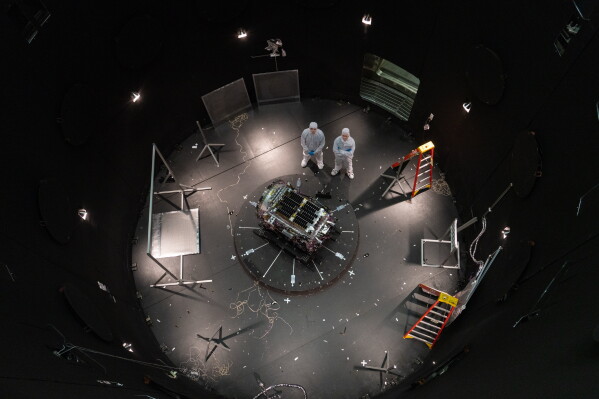
A space mission has launched to save a NASA telescope at risk of plummeting to Earth. On Friday, Katalyst Space Technologies launched a spacecraft from the Marshall Islands to intercept and secure NASA’s Swift Observatory.
The spacecraft, named Link, was launched aboard Northrop Grumman’s Pegasus rocket. The rocket took off from a modified aircraft, sending Link towards its target, which it expects to reach in about a month.
Swift, operational since 2004, is descending faster due to recent solar storms. To prevent its fall, NASA paid $30 million to Katalyst, which plans to elevate Swift’s orbit. This will allow Swift to continue observing phenomena like gamma-ray bursts and exploding stars. The goal is to resume operations by September, with observations currently on hold to extend the telescope’s operational life.
NASA’s Hubble Space Telescope may face a similar mission in the future due to altitude loss from increased solar activity.
Swift, weighing 1.6 tons, currently orbits 360 kilometers above Earth. Katalyst aims to lift the telescope by 240 kilometers back to its original altitude. The mission involves activating Link’s thrusters to gently propel Swift without causing damage. The mission was hastily organized in nine months, under NASA’s urgency to prevent a loss by autumn.
Adverse weather and technical issues caused delays in the mission’s commencement. Ghonhee Lee, CEO of Katalyst Space, emphasized the mission’s high stakes. “The biggest risk was not launching at all, leading to Swift’s destruction in the atmosphere,” he remarked. The team’s efforts aim to avert this threat.
The Associated Press’s Health and Science Department receives support from the Howard Hughes Medical Institute’s Department of Science Education and the Robert Wood Johnson Foundation. AP solely maintains editorial responsibility for this content.
 First Lady Melania Trump’s AI Education Push Amid Concerns
  Expansion of Data Centers Fueled by AI Development
  Beijing’s Tactical Undermining of U.S. Supremacy Through AI
  The Discovery of Incendiamoeba cascadensis: A Fire Amoeba
  Controversy Surrounds Automated License Plate Readers Across the U.S.
  Archaeological Discovery in Germany: Largest Hoard of Roman Coins Found