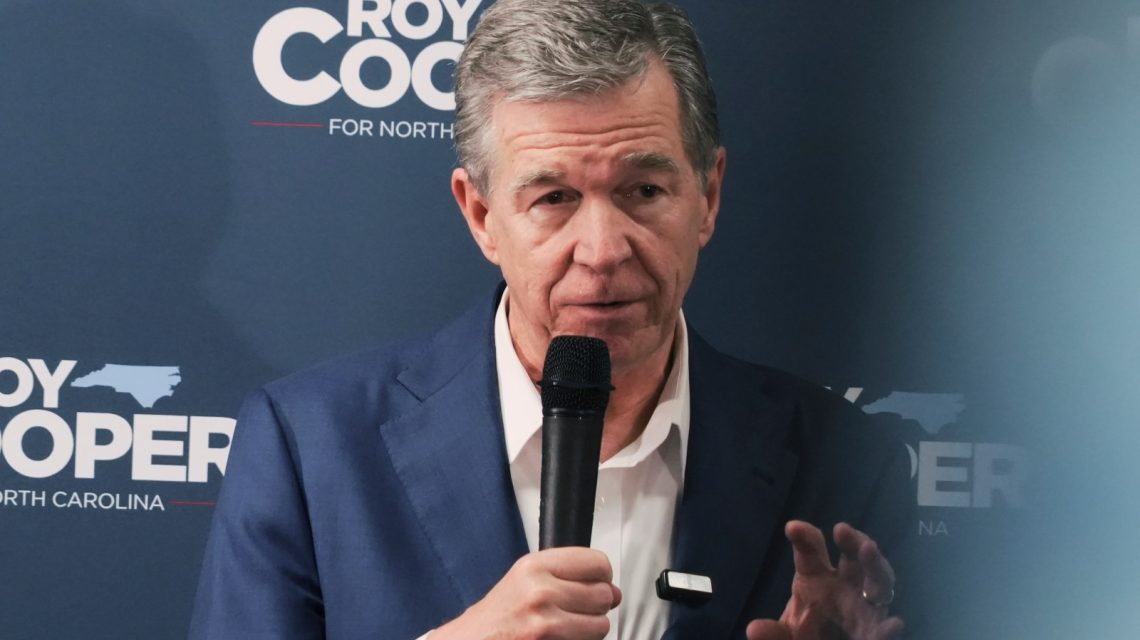
Three critical Senate races have recently advanced in favor of the Democrats, with four weeks remaining until the midterm elections. The Cook Political Report indicates a movement in Kansas from Lean Republican to a Toss Up, New Hampshire from a Toss Up to Lean Democrat, and North Carolina from Lean Democrat to Likely Democrat.
Midterm elections often evaluate the political environment for the ruling party. Historically, the president’s party loses seats during these elections. Republicans currently have a slim majority in both the House and Senate.
While President Donald Trump won Kansas by a significant margin against then-Vice President Kamala Harris in the 2024 election, Democrats have maintained influence in the state. Laura Kelly serves as governor, although Republicans control both U.S. Senate seats.
Trump also secured North Carolina in the 2024 election, whereas Harris claimed New Hampshire. The new polling shifts indicate Democrats’ potential to gain from declining approval ratings for Trump, amid growing affordability concerns across American households.
“At this point, the question isn’t whether Democrats will gain seats, but how many,” stated the forecaster.
Projected Seats and Challenges
Cook Political Report now predicts Democrats could gain two to six Senate seats. They require four to take control. Republicans still see opportunities in Michigan and Maine, but momentum seems against the president’s party.
In Kansas, a historically Republican seat, currently held by Senator Roger Marshall, is contested by Democrat Adam Hamilton. Recent polling suggests a close race, addressing important issues like agriculture and rising costs.
In New Hampshire, Democrat Chris Pappas leads over Republican John E. Sununu. The state has not elected a Republican senator in over 15 years. Recent polls prompted the shift in the race’s status.
In North Carolina, Republican nominee Michael Whatley trails former Governor Roy Cooper in various polls. Though Trump campaigned for Whatley, the Senate Leadership Fund has paused advertising efforts to allocate resources elsewhere. Democrats haven’t won a Senate election there for about 18 years.
Democrats aim to leverage Trump’s weakening approval ratings, which have declined on key policy issues such as the economy, immigration, jobs, and the ongoing war in Iran.
Robert Y. Shapiro, a political science professor at Columbia, commented, “It is clear that on almost all fronts the election is moving in the direction of the Democrats taking the House and very possibly the Senate.”
Shapiro noted the importance of Democrats maintaining their hold on states where Republicans could compete, like Minnesota, Michigan, and New Hampshire. Current polling gives Democrats an 8-point or better lead over Republicans.
This election season may significantly reject Trump and Republican leadership, as Trump’s approval ratings dwindle among Republicans and continue to decrease among Independent voters.
 DOJ’s Efforts in Addressing Allegations of Voter Fraud
  Family Mourns the Loss of Haitian Student, Pierre Damas Bel
  Lake County and Porter County Voters Begin Early Voting
  Senate Race Shifts Show Democratic Opportunities
  Rising Support for Medicare for All in the United States
  Los Angeles Councilmember Nithya Raman Criticizes Police Chief and Mayoral Opponent