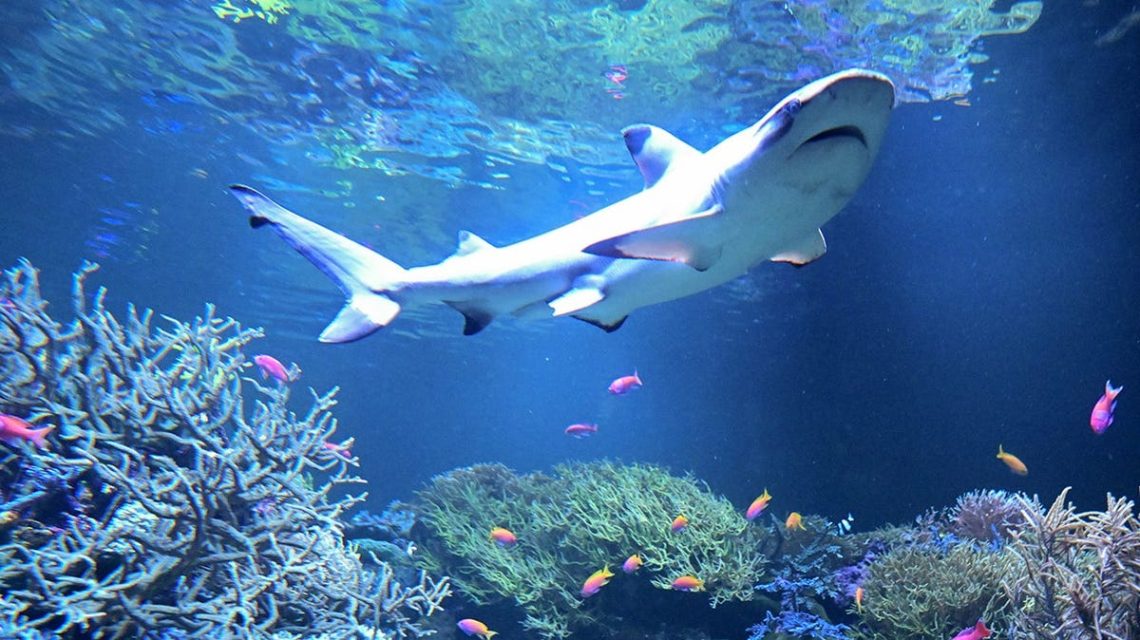
Researchers are observing notable changes in the migration patterns of blacktip sharks along the East Coast. Warmer ocean temperatures are allowing these sharks to venture farther north during summer months than they historically have.
Studies conducted by Florida Atlantic University indicate that blacktip sharks are expanding their summer range, with some reaching as far as Long Island, New York by late summer. This extension contrasts with their traditional presence in South Florida during winter periods.
Dr. Stephen Kajiura, a professor at Florida Atlantic University, emphasizes that these sharks are drawn to waters reminiscent of air-conditioned environments, approximately 72 degrees Fahrenheit.
As ocean temperatures continue to rise, researchers predict these sharks will push even farther north, spending less time in South Florida during winter.
“They’re like us. They enjoy our air-conditioned temperature,” Dr. Stephen Kajiura explained.
Beachgoers encountering blacktip sharks more frequently along northern shores is already evident. These sharks are known to swim close to shore, making them more visible to swimmers and surfers.
A recent study from Florida Atlantic University also examined the impact of beach nourishment projects on shark behavior. Such initiatives could affect shark hunting patterns due to changes in water clarity.
The findings, published in the Journal of Coastal Research, show that blacktip sharks consistently stay within about 50 meters of the shoreline. Murky waters from these projects may alter their hunting behavior, increasing potential encounters with humans.
Despite these changes in migration patterns, Dr. Kajiura reassures that shark encounters remain rare and encourages people to continue enjoying beach activities:
“The chances of a negative encounter with a shark are minuscule,” Kajiura said.
Beach nourishment remains crucial for coastal erosion protection, but researchers stress the importance of understanding its effects on marine life.
 Challenges in California’s Home Insurance Market
  Race Against Time: Preserving Quinhagak’s Archaeological Heritage
  Managing Drying Rivers: The Need for New Approaches
  Chimps and Self-Medication: Insights from Gombe Stream
  Rovelli Challenges Physics with Relational View
  Coastal Damage from Kelvin Waves and Rising Sea Levels in Southern California