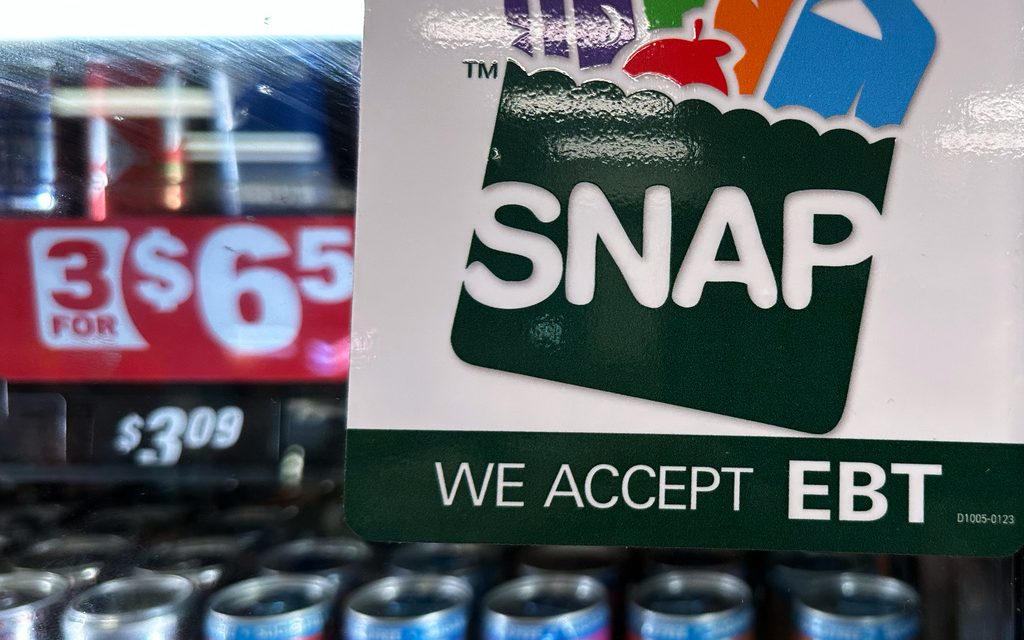
At a gas station in Riverwoods, Ill., a sign displays SNAP EBT information in November 2025. This example highlights a broader issue: New Mexico’s handling of food stamps.
Last year, a state official in New Mexico acknowledged a lack of plans to address the widespread misuse in the nutrition assistance program for low-income individuals. Niki Kozlowski, leading the Income Support Division at New Mexico’s Health Care Authority, exposed a loophole that many states are employing. This loophole undermines a crucial welfare reform introduced by former President Trump.
The reform, known as the One Big Beautiful Bill Act, initiated necessary changes in food stamp management. Traditionally, states could mismanage the program without fiscal consequences, since the federal government funded the $100 billion annual program entirely. However, starting in October of fiscal 2028, states misusing a substantial portion of food-stamp funds must cover up to 15% of the benefit costs, based on their error rates.
This reform provides a substantial incentive for states to combat wasteful spending and fraud. States failing to improve could face financial liabilities reaching into millions or even billions. Yet a complication exists: states that exceed a 13.34% error rate are exempt from penalties. They get more time to reduce errors instead.
Senator Lisa Murkowski (R-Alaska) advocated for this provision, as Alaska’s error rate reached 60.4% in 2023. This carveout has, however, offered other states a potential excuse to maintain or increase error rates.
In fiscal 2024, New Mexico’s error rate was 14.6%, exceeding the penalty threshold. Kozlowski indicated an effort to balance reducing misspending while avoiding accountability. Practically, New Mexico shows no rush to address misuse — evidenced by an increased error rate of 16.8% in fiscal 2025.
New Mexico isn’t alone in this dilemma. Before the One Big Beautiful Bill Act, Alaska, Georgia, Oregon, and Washington, D.C. reported error rates above 13.3%. While still problematic, none have significantly improved. Delaware and Illinois also saw increases in their error rates between 2024 and 2025, with Illinois climbing from 12.3% to 16% and Delaware from 11.5% to 14.6%.
Meanwhile, states like New Jersey show that progress is achievable. New Jersey reduced its error rate from 14.3% to 6.8%, and it is on track to fall below the 6% threshold potentially triggering penalties. Similarly, New York, Maryland, Massachusetts, and Florida saw reductions, though they remain close to the 13.3% loophole.
Despite such progress, most states wish to delay or eliminate the financial penalties. Following Democratic efforts, the Senate’s farm bill draft proposes a one-year delay in penalties. Many states might be postponing action, expecting potential repeal of these penalties if Democrats gain power.
Republicans should resist such changes. To ensure the reform’s success, they must pressure states to enforce meaningful changes. States must not receive leniency for enduring patterns of waste and abuse, as evidenced by New Mexico and other states.
Hayden Dublois, the data and analytics director at the Foundation for Government Accountability, stresses the need for accountability in states mismanaging taxpayer funds. It’s critical that they are held responsible for their financial mismanagement.
 Lukashenko and Putin’s Unique Relationship and Belarus’ Strategic Role
  Harris Discusses Potential 2028 Presidential Run
  Far-Left Groups Allegedly Organize Protests in Austin
  Michigan Senate Nominee Abdul El-Sayed Criticized for Remarks on Reproductive Rights
  Poll Reveals Voter Preferences Between Socialist Democrats and MAGA Republicans
  Challenges of Electing a Female President: Insights from ‘The View’