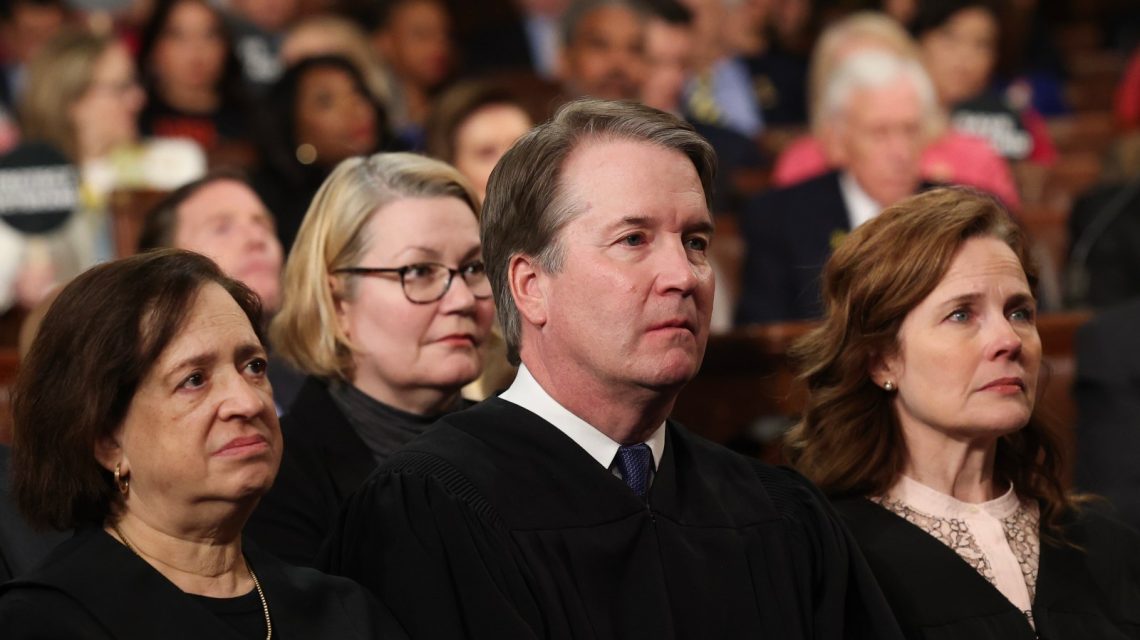
The United States Supreme Court’s approval rating has dropped to a historic low among independent voters, according to a new Gallup poll. Currently, 31 percent of independents approve of the Court, marking the lowest point recorded by Gallup. In comparison, the approval was at 35 percent in July 2026 and 38 percent in September 2025.
The Court has been losing public trust over recent years as Americans increasingly question its impartiality. Criticism from Democrats centers around rulings like the overturning of Roe v. Wade and perceived weakening of the Voting Rights Act. Meanwhile, former President Donald Trump has expressed discontent with decisions blocking his efforts, such as attempts to end birthright citizenship.
Stephen Wermiel, a constitutional law professor at American University, commented that the Court faces “criticism and very little praise” from all sides. Liberals view the Court as a conservative think-tank, while Trump feels betrayed by his appointees. This atmosphere contributes to the declining approval, Wermiel suggested in an interview with Newsweek.
Overall approval of the Court stands at 34 percent, near a record low. A year ago, in September 2025, the approval was higher at 42 percent. Among Republicans, approval improved from 58 percent in July to 65 percent in the recent poll. However, approval among Democrats remains unchanged at 12 percent, a figure close to their historical low of 11 percent in July 2025.
Approval Fluctuations and Perceptions
Over the past decade, the highest approval rating Gallup recorded for the Court was 58 percent in July 2020. By September 2021, approval had fallen to a then-record low of 40 percent. It briefly rose in September 2025 to 42 percent but fell again to 33 percent by July 2026.
Recent polling shows that Republicans typically view the Court more favorably than Democrats, with a 6-3 conservative majority. Democrats last favored the Court more than Republicans in July 2016, with approval rates of 60 percent versus 32 percent, respectively.
The latest Gallup poll reveals 43 percent of Americans see the Court as too conservative. Thirty-five percent view its ideology as “about right,” while 17 percent consider it too liberal. The survey involved 1,000 adults from September 1 to 17, 2026, with a margin of error of 4 percentage points.
Justices Address Declining Approval
Some justices have acknowledged the Court’s declining approval ratings. Justice Ketanji Brown Jackson has publicly questioned the Court’s use of the emergency docket, highlighting a lack of transparency in its expedited decisions. She voiced concerns about inequality in case prioritization, as reported by The Hill.
The Trump administration frequently used the emergency docket for swift judicial intervention. Last year, the High Court supported around two dozen Trump administration policies, often overturning lower court decisions.
Professor Wermiel shared with Newsweek that the emergency docket’s use can diminish the Court’s status. He suggests increased transparency on such actions and highlighting the Court’s rulings against Trump on significant cases could help restore public confidence.
Justice John Roberts expressed the importance of careful precedent overruling. He warned that doing otherwise “begins to suffer” the entire system.
Notable Rulings Impacting Approval
Several major rulings from the Court’s recent term have affected its approval ratings. Among these, the Court ruled 6-3 against Trump’s effort to end birthright citizenship, a direct challenge to his executive order.
The Court’s decisions also opposed Trump’s tariff implementations, deeming them unauthorized under the International Emergency Economic Powers Act. It blocked Trump’s attempted removal of Federal Reserve Governor Lisa Cook.
Conversely, the Court supported the administration’s stance on matters like transgender athletes and executive authority.
In another significant ruling, the Court invalidated a second majority-Black congressional district in Louisiana. This decision, in Louisiana v. Callais, led to Republican-led states like Alabama and Tennessee redrawing legislative maps in ways critics argue weakened Black electoral influence.
Trump’s Reactions
On Truth Social, Trump criticized the Supreme Court’s decision against using a Republican-backed congressional map in Missouri for the midterms. He expressed frustration, claiming the Court lacked “the Courage to MAKE AMERICA GREAT AGAIN.” He attributed significant national economic losses and changes in citizenship procedures to recent Court decisions.
Additional Polling Insights
Other polls mirror the poor public perception of the Supreme Court. A Marquette Law School Poll showed net approval at -14 points, with 43 percent approving and 57 percent disapproving. Conducted among 1,023 adults from September 2 to 9, the poll’s margin of error is plus or minus 3.3 percentage points.
Similarly, a YouGov and The Economist poll indicated a -22 point approval, with 34 percent approving and 56 percent disapproving. In this survey, 49 percent of respondents considered the Court conservative, while 10 percent viewed it as liberal. This poll surveyed 1,469 registered voters from September 4 to 8.
 President Trump Addresses Immigration Tensions at Hispanic Heritage Event
  Indiana Extends Gas Tax Holiday Amid Rising Fuel Prices
  Defense Secretary’s Rise in Trump Administration
 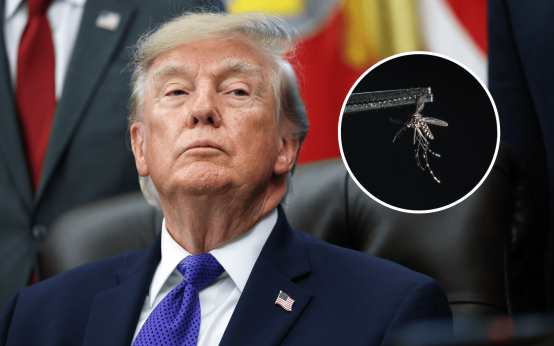 Trump Issues Order to Combat Mosquito and Tick Populations
 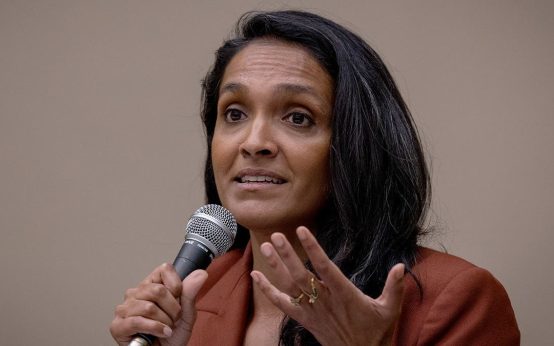 LA City Councilmember Challenges English-Only Head Start Proposal
 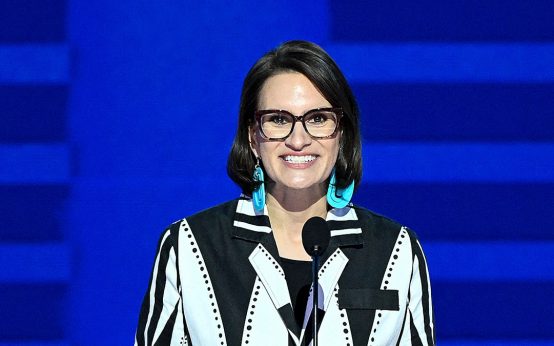 Michele Tafoya Criticizes Peggy Flanagan Amid Election Tensions