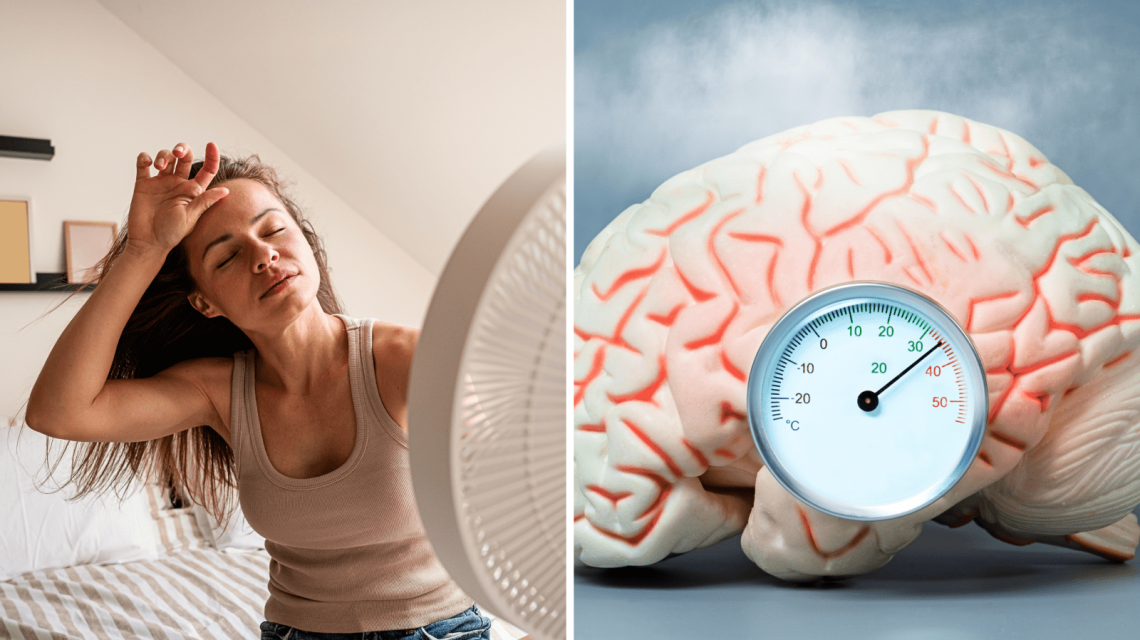
The bedroom, where individuals spend a significant portion of their lives, may pose health risks according to sleep and air-quality experts. In 2015, researchers monitored airtight homes in Scotland during winter. Over 80% of these homes reported CO2 levels beyond safe limits throughout the night. However, over 90% of occupants believed their bedroom air was adequate. Experts in 2026 highlight that this problem has become a summer issue due to heatwaves in homes not built for high temperatures, coinciding with rising global temperatures.
Devjoy Dev, a biomedical engineer with a Ph.D. from New York University, explained that global warming results in sudden and extreme heat waves, especially in Europe where adequate air conditioning systems are lacking. Additionally, fabrics like curtains and carpets in bedrooms can trap heat and moisture overnight, exacerbating the problem.
Dr. Ayesha Bryant from Alpas Wellness contributed insights to Newsweek, explaining that the study found average nighttime carbon dioxide levels in bedrooms exceeded 1,520 parts per million (ppm). High CO2 levels indicate stale air, usually measured in ppm, and can negatively affect sleep before the issue becomes apparent.
A Room With No Thermostat
The real issue lies not in the room itself but what ceases to occur once occupants fall asleep. While awake, people naturally adjust windows based on air and temperature needs. This self-regulation stops during sleep, leading to CO2 and moisture buildup. Although CO2 at these levels is not directly harmful, it indicates a lack of air exchange, reducing sleep quality and next-day performance.
A 2022 study on Danish bedrooms showed that cognitive functions decline when CO2 reaches 1,800 ppm, affecting sleep quality even at lower levels, thereby posing long-term health impacts. Dev stresses the importance of controlling environmental cues such as light, eating schedules, and temperature, which regulate circadian rhythms in bedrooms.
Clearing the Air
Factors like poor airflow, closed doors, weak insulation, and west-facing windows can trap heat in bedrooms. According to a June study by Amerisleep, 52% of Americans identify as hot sleepers, with 94% of them waking weekly due to heat. Women are twice as likely as men to wake multiple times a week from heat discomfort. The ideal bedroom temperature is between 65–67°F, yet it commonly ranges from 68–70°F.
Bryant advises keeping trickle vents clear and airing rooms when possible. The practice of ‘Lüften,’ or fully opening windows for 10–15 minutes each morning to disperse stale air, is gaining popularity. Dehumidifiers, costing around £90 to £300, can maintain humidity near 60%. For persistently hot rooms, fixing HVAC systems or adding air conditioning is recommended. Also, any mold or condensation must be addressed at the source.
 Trump Administration Seeks to Influence NIH Grantmaking
  Understanding School Shooting Preparedness Drills
  Addressing the Complex Issue of Suicide and Its Prevention
  Quality of Sleep Linked to Risk Reduction in Various Diseases
  Exploring Diets and Their Potential to Reduce Alzheimer’s Risk
  Understanding School Safety Drills: Lockdowns vs. Active Shooter Simulations