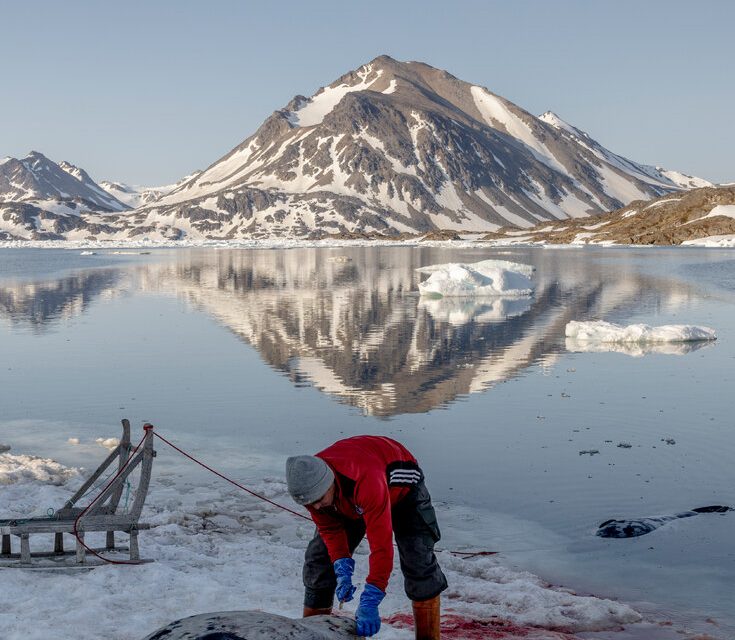
Kulusuk, Greenland – July 24, 2026
Anganni Mikaelsen navigated his boat past towering icebergs when he noticed a shiny head emerging from the water. With precision, he took aim and fired his rifle, disrupting the calm surroundings. Mikaelsen was engaging in seal hunting, a practice that has sustained Greenlanders for generations.
In Greenland, seals are integral to survival. They provide not only nourishment for people and their sled dogs but also materials for clothing and jewelry. Every part of the seal is utilized in this harsh environment. Seals have been central to Greenlandic life for centuries, and their importance cannot be overstated.
International organizations often criticize seal hunting, labeling it as cruel. While some countries, such as the United States, have prohibitions on seal products, exceptions exist for goods created by indigenous hunters.
In Greenland, the sealskin trade is vital, supporting thousands of Inuit hunters. After seals are butchered, the skins are sold and transformed into garments. The process involves removing fat with rollers, washing the skins with soap, and soaking them in fresh water to eliminate salt and blood. Further steps include cleaning, dyeing, and cutting.
The Great Greenland tannery in Qaqortoq resembles a large dry cleaner, exuding a briny ocean scent. The enterprise thrives by selling sealskin pelts, hats, mittens, earrings, and stylish jackets costing over $1,000.
In Nuuk, Greenland’s capital, sealskin clothing is visible in shops, and sealskin exhibits are present in the national museum. Statues pay tribute to this crucial animal. “No seal, no life,” stated Frederick Willie, a local schoolteacher, emphasizing the dependency on seals.
Mikaelsen acknowledged the criticisms against seal hunting, yet believed outsiders misunderstood its significance to Greenland. His family relies heavily on seals for sustenance. It is common in Kulusuk to see entire families at the harbor, waiting to process their catch.
Mikaelsen, as he steered away in his boat, leaving behind traces of blood, sang contently. “This will last us five or six days,” he mentioned, smiling, “And it will be good eating.”
 Artistic Chronicle of Communities’ Recovery Post-Hurricane Helene
  Chicago History Museum’s Latin American Exhibit Sparked by Student Protests
  DNA Links Jefferson to Hemings Descendants
  Ari Emanuel’s Memoir: A Business-Centric Narrative
  Celebrating Day of the Dead: Students Craft Calaveras in Pilsen
  Controversial Revelations from Charles Spencer’s New Book on Princess Diana