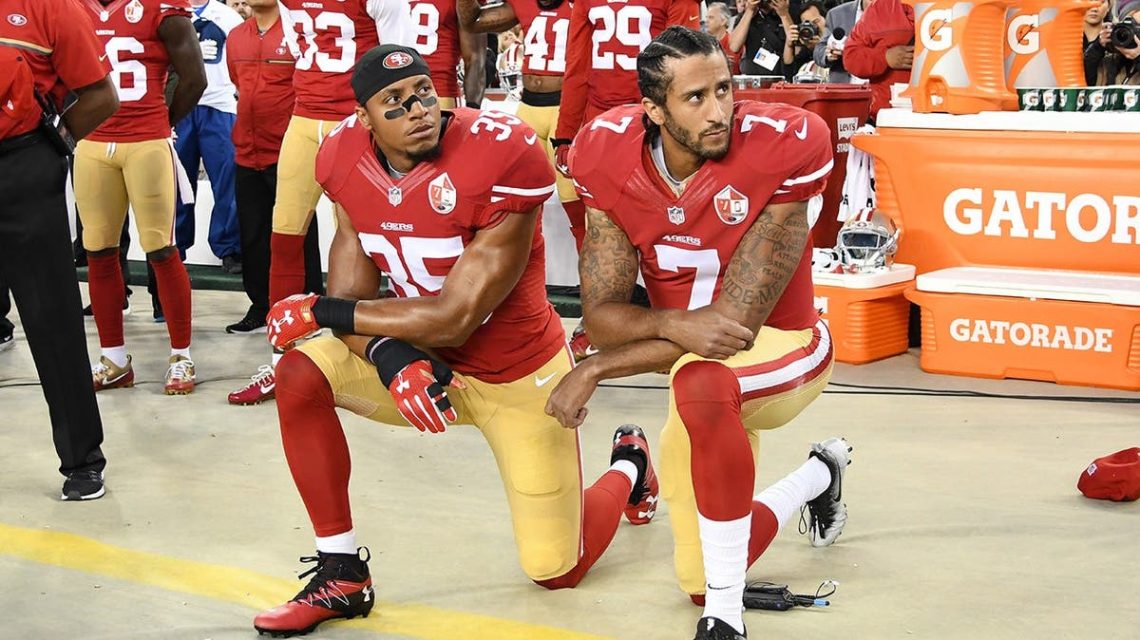
Recent media appearances have widely featured Colin Kaepernick as he promotes his new book, “The Perilous Fight.” Whether on “The View,” “The Daily Show,” or “The Pivot,” Kaepernick has spoken extensively. Yet, a certain aspect remains notably absent from these appearances—a thorough questioning of his controversial views.
Colin Kaepernick avoids interviews where he might face challenging questions. However, as a journalist, it’s concerning to witness the lack of probing inquiries aimed at one of the most polarizing public figures. The pressing issue might be not what he says but what isn’t being asked.
Key Questions That Remain Unasked
Several significant questions could shed light on Kaepernick’s stances and decisions, yet remain unaddressed.
1. The NFL as a Modern Slave Trade?
Kaepernick likened the NFL draft combine to a slave auction. OutKick’s Bobby Burack noted this comparison, highlighting the contrast between the voluntary nature of the NFL and its role in creating many Black millionaires. Despite this critique, Kaepernick continues training, hoping to rejoin the league.
2. Effects of Demonizing Police
Kaepernick’s protests contributed to the public perception of police officers as modern “slave patrols.” Harvard economist Roland Fryer published findings demonstrating that increased scrutiny of police led to fewer police interactions and a rise in the murder rate within Black communities. Kaepernick’s rhetoric played a part in these dynamics, particularly following George Floyd’s death.
3. Call for Violence After Floyd’s Death
In the wake of Floyd’s death, Kaepernick seemed to suggest violence as a reaction when civility failed. This rhetoric appeared during a time when protests sometimes turned destructive. His statement resonated during a period marked by heightened emotions and unrest.
4. Impact of Skill Decline on NFL Career
Kaepernick’s NFL career ended with lackluster statistics. His performance couldn’t outweigh the controversy he invited by kneeling during the national anthem. If his abilities were similar to top players like Aaron Rodgers, he might still find a spot in pro football.
5. Interest in Martyrdom Versus Quarterbacking
In 2019, Kaepernick planned a workout for NFL teams but changed venues last minute, claiming waiver issues. This decision, however, reinforced the narrative that Kaepernick’s activism was more important than his playing career. It’s suggested that his activism rewards, like a Nike deal, offered enough without the demands of professional football.
Interviews with Kaepernick rarely explore these contradictions, and the dialogue often lacks critical discussion about his motivations. As Kaepernick continues his advocacy, challenges to his actions and beliefs remain mostly unspoken.
 Week 5 Football Highlights and Playoff Prospects
  Kailey Skurka Nears Milestone in Varsity Volleyball Career
  Lane Kiffin’s Dramatic Return to Oxford: A Memorable College Football Weekend
  Debate Over O.J. Simpson’s Omission from Buffalo Bills’ Wall of Fame
  Red Sox Remove Interim Tag, Appoint Chad Tracy as Manager
  Lane Kiffin Criticized After Ole Miss Loss While Florida Football Faces Social Media Fiasco