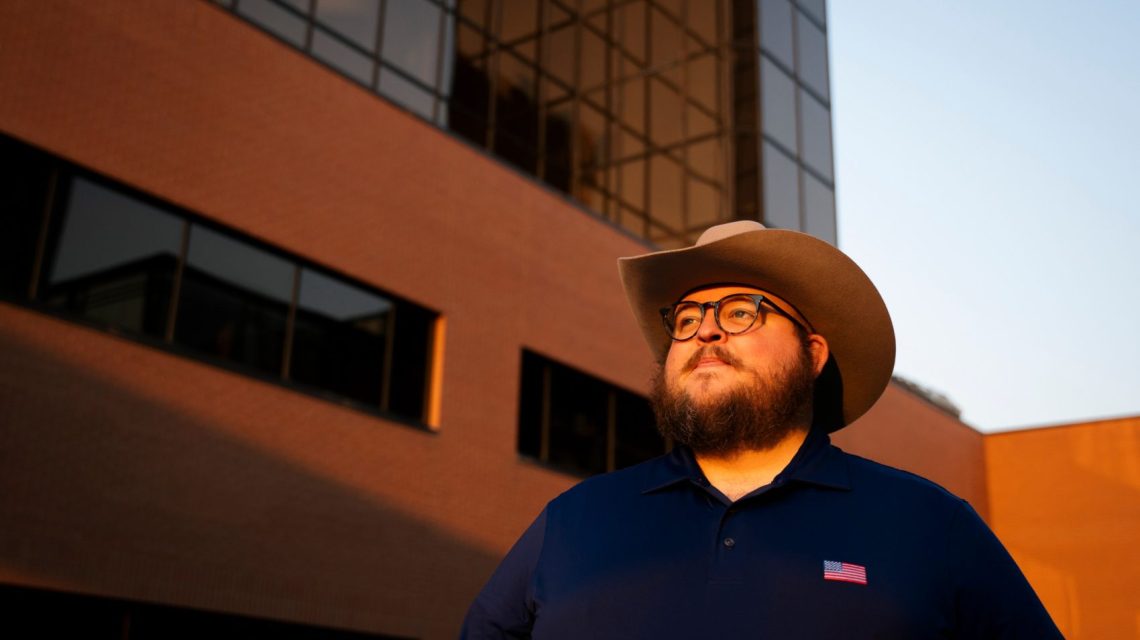
At 34, Giles Sims was tired of being overlooked for job opportunities due to the lack of a college degree. With responsibilities including supporting his wife and widowed mother, he sought a swift resolution. Sims, a former web developer who lost his job, embraced one of numerous three-year degree programs now available. He shared, “I can’t afford to be out of the workforce for four years. That just seems like forever, and the three-year made it seem less daunting.” Sims enrolled at Ensign College, a private institution in Salt Lake City, which updated its bachelor’s degree structures to require fewer classes than the conventional four-year arrangement.
The popularity of condensed programs is surging. As of spring, a college offering at least one reduced-credit, three-year bachelor’s degree exists in 26 U.S. states, as reported by the nonprofit research group RAND. Supporters argue these programs are essential for resolving the college affordability crisis, proving beneficial for non-traditional students like Sims.
“This is not innovation. This is just cutting corners,” remarked Todd Wolfson, president of the American Association of University Professors.
Critics worry about potentially narrowing students’ learning experiences, causing confusion among employers, limiting graduate school access, and complications in fields requiring state licenses. The American Association of University Professors highlights concerns that these programs might devalue the essence of a college credential.
Graduating More Quickly Through Reduced Credit
Historically, colleges have provided accelerated programs allowing faster completion by trading off long summer breaks, optimizing transfer credits, and compressing semester-long courses into shorter spans ranging between five and ten weeks. However, these programs maintain the standard credit load measurement. The new three-year degree concept offers quicker completion by allowing students to complete as few as 90 credit hours, effectively shortening the typical 120-hour bachelor’s degree by a year.
Common in countries like the UK, India, France, and Italy, three-year bachelor’s degrees can present challenges for graduates seeking entry into U.S. graduate schools with potential requirements for additional coursework. John Thelin, an author on higher education history, noted that some of the initial colleges in colonial America followed English models featuring three-year degrees. By the 19th century, the four-year format dominated partly due to the absence of a structured public high school system.
Accreditation Shifts Open Paths to Shorter Degrees
The idea of adopting three-year degrees in the U.S. gained traction in 2009 through Robert Zemsky’s proposition in a Newsweek cover story suggesting the concept could revitalize a flawed system. Initially, accreditors posed barriers, strictly adhering to a 120-credit model. As affordability concerns grew, Zemsky rejuvenated the concept in 2022, leading to the creation of the College-in-3 Exchange. Numerous institutions joined this network exploring faster degree completion options.
The Northwest Commission on Colleges and Universities became the pioneering accreditor in 2023, approving reduced-credit programs at Ensign College and Brigham Young University-Idaho, with other accreditors swiftly following suit. By May, RAND reported the public announcement of 119 reduced-credit programs, facilitating deliberations in states like Ohio regarding these models’ feasibility. This transition coincides with soaring tuition, averaging $11,950 for in-state public school students and $45,000 at private nonprofits last school year, as per College Board data.
Easier Compression for Certain Degrees
Three-quarters of the reduced-credit programs are offered by private nonprofit schools, frequently online. They typically accomplish this by minimizing electives. Common fields include business degrees such as marketing and management, alongside computer and information sciences. Engineering degrees, demanding extensive math, have proven challenging to compress. RAND identified only six reduced-credit degrees in teacher education, which require hands-on experience and state licensure.
Jill Cohen, a 42-year-old living on a ranch in rural Yoder, Colorado, is completing her teaching degree through Indiana Wesleyan. She transitioned from selling life insurance to teaching following a severe farming accident. Currently teaching middle school English, the streamlined degree fits her busy lifestyle comprising twin 12-year-olds and diverse livestock. Cohen expressed her preference for relevant courses specific to her teaching focus.
Programs entailing state licensing requirements spark primary concerns for Jenna Kramer, a policy researcher at RAND. Indiana Wesleyan tailors its education programs explicitly for Indiana licensing standards, though students from other states must determine if the requirements align with their state policies, as noted by Pam Downing, the school’s communications director.
Another RAND observation indicates the novelty of these programs leads to undefined practices in admitting three-year degree holders into graduate studies. Students recognize the risks involved.
Students Weigh the Risks
Gabriella Staten, a 20-year-old enrolled in a reduced-credit digital marketing program at Mount Mary University in Milwaukee, anticipates saving approximately $20,000. Despite occasional concerns about the perceived value of her degree compared to a traditional four-year program, she is confident in her ability to prove her capabilities to employers.
Wesley Hardy, progressing through an applied science degree in accounting at Ensign, acknowledges both benefits and drawbacks. He favors the three-year format for quicker workforce entry. However, he contemplates the divergence in state-specific requirements for certified public accountant exams and licensing, often necessitating more semester hours.
Ensign president Bruce Kusch shared discussions with multiple college presidents about potential graduate school implications, addressing Hardy’s inquiries about possible extra coursework.
 Early Start Brings Readiness to Alternative Education Program
  University of Chicago Fraternity Incident Raises Safety Concerns
  Haverford College Professor Faces Federal Cyberstalking Charges
  New Allegations Emerge in SJSU Volleyball Scandal
  Exclusive Footage from Cornell University Faculty Meeting
  Students Explore Future Careers with Surgical Robot Experience