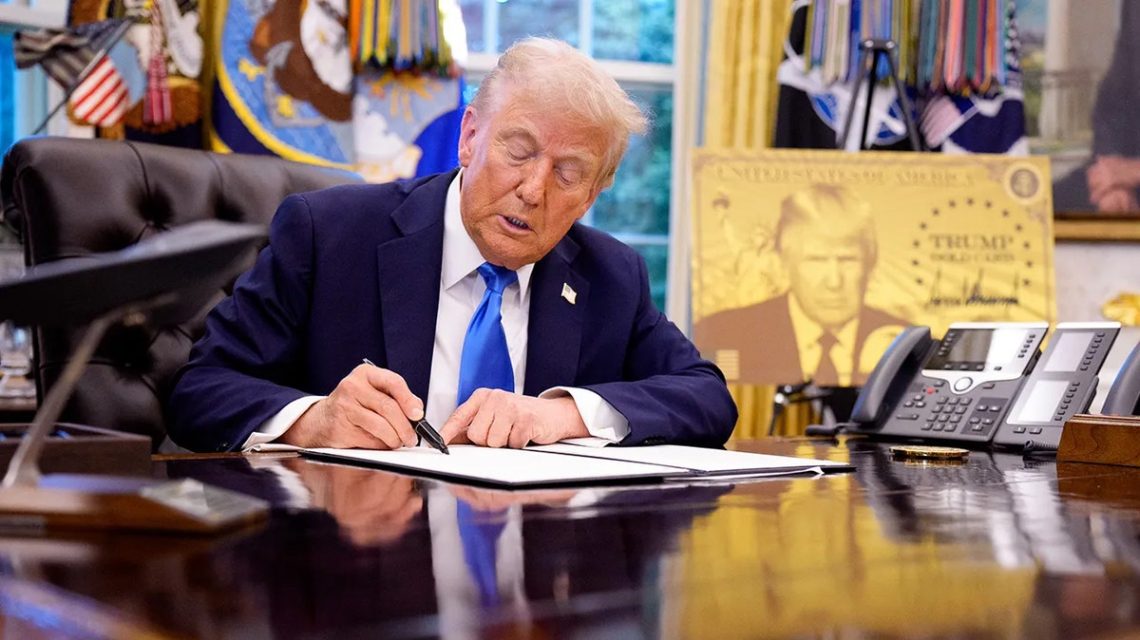
After the midterm elections, President Donald Trump indicated on a ’60 Minutes’ interview his willingness to negotiate an immigration deal with Democrats, allowing some illegal immigrants to gain legal status. This statement came shortly after Republicans faced losses in the elections, raising speculation about Trump’s potential compromise on immigration policies.
Despite signaling openness to dialogue, Trump ruled out amnesty, maintaining that his immigration stance remained unchanged. No detailed proposal from Trump has surfaced yet, but his comments have sparked discussions about how such a deal could affect the rule of law, assimilation, and fiscal policies.
Rule of Law
Experts have voiced concerns regarding the implications of a possible immigration agreement. Steven Camarota, director of research at the Center for Immigration Studies (CIS), emphasized the need to uphold the rule of law. He argued that offering legal status to those who violated immigration laws could undermine legal integrity and fairness towards those who followed legal procedures to immigrate.
Laura Collins, director of immigration policy at the George W. Bush Presidential Center, acknowledged these concerns but highlighted flaws in the current immigration system. Collins argued that the existing laws are not aligned with the economic realities pulling foreign labor into the U.S., which contributes to undocumented immigration.
Assimilation
Camarota expressed concerns about immigration rates overwhelming assimilation processes. He warned against situations where immigrants can maintain their native cultures without integrating into American society. Conversely, Collins referenced the book “Streets of Gold: America’s Untold Story of Immigrant Success,” affirming that current immigrants assimilate at rates similar to past generations. She suggested legal work rights could further ease assimilation for newcomers.
Fiscal Policy
Camarota estimated that households led by illegal immigrants receive around $50 billion annually in government aid, though this is mainly due to their U.S.-born children’s eligibility. He argued that legalizing immigrants without improving their education levels would not significantly increase their tax contributions.
Collins cited a Congressional Budget Office report suggesting that legalizing immigrants could enhance tax revenue and reduce federal deficits, with legal work authorizations allowing immigrants to seek higher-paying jobs.
Political Feasibility
Mark Krikorian from CIS expressed skepticism about the political feasibility of an amnesty deal. He noted the lack of incentive for Republicans, as Democrats are unlikely to agree to immigration restrictions. He referenced past attempts to use the Deferred Action for Childhood Arrivals (DACA) program as a bargaining tool, stating that Democrats have little to gain from such negotiations.
Krikorian also cautioned about potential consequences of granting green cards to DACA recipients, which could enable them to sponsor relatives, affecting immigration demographics.
Trump mentioned on ’60 Minutes’ that he was open to discussing arrangements for illegal immigrants working in specific industries, like hospitality and landscaping, to remain in the U.S. He stated his tough immigration policy remains, yet he is willing to explore pragmatic solutions.
The White House reinforced that Trump’s immigration strategy focuses on maintaining border security and addressing criminal illegal immigration and drug trafficking. They argued that on the immigration front, Democratic opposition to this policy aligns against American interests.
 Democrat Chuck Hubbard Wins North Carolina’s 5th District
 Trump Signals Potential Military Action against Iran
 Possible Return to White House for Former Press Secretary Katie Zacharia
 Senate Leadership Battle Highlights Democratic Party Divisions
 Stewart Rhodes’ Break with Trump and Plans to Rebuild Oath Keepers
 Progressive Democrats Push for Bold Agenda Amid Internal Party Tensions