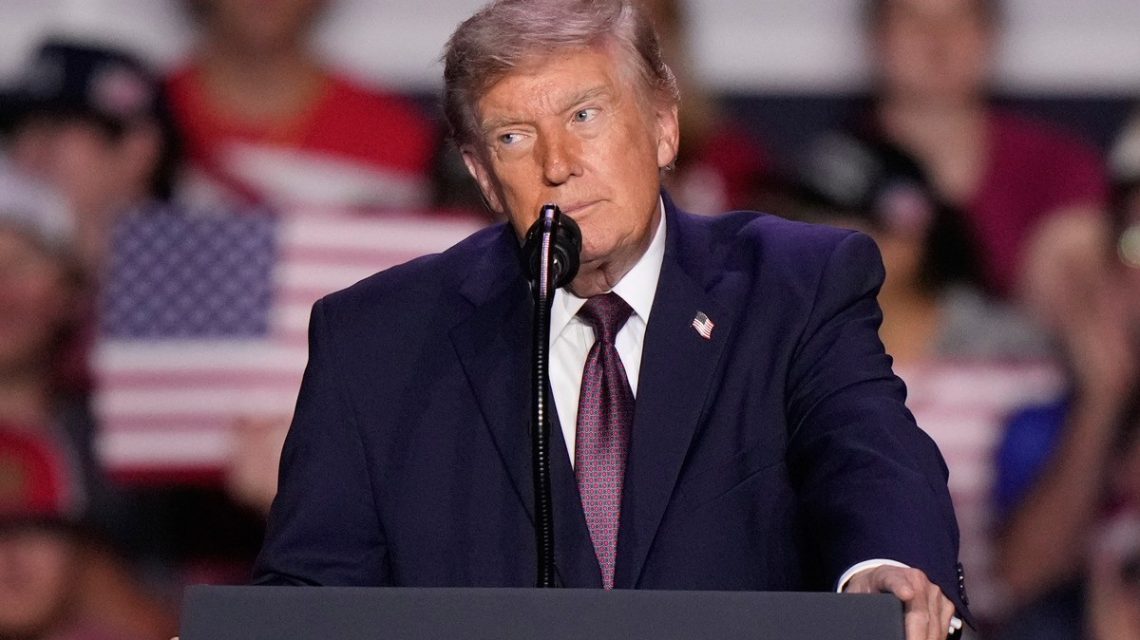
Trump’s Pledge to Widen Death Penalty Scope
President Donald Trump has announced an intention to increase the use of capital punishment in the U.S. This plan comes despite concerns from human rights advocates following a failed execution attempt in Tennessee.
During a campaign rally in Mobile, Alabama, Trump emphasized the need for the death penalty for large-scale drug dealers, human traffickers, and anyone found guilty of killing a police officer. Trump seeks to broaden federal executions, even amidst recent controversies surrounding execution failures.
Recent Controversy in Tennessee
The recent attempted execution of Christa Pike, a convicted murderer, spotlighted issues with capital punishment. Pike was scheduled to become the first woman executed in Tennessee in over 200 years; however, complications arose during the attempt.
We will pass the death penalty for large-scale drug dealers, human traffickers, and anyone who kills a police officer
Pike was rushed away from Riverbend Maximum Security Institution in Nashville after receiving two doses of the lethal drug pentobarbital. Despite these doses, she remained alive and was hospitalized in critical condition. Her lawyers highlighted her traumatic past and argued for her sentence to be commuted to life imprisonment.
The dramatic details of the case include Pike’s conviction for the murder of Colleen Slemmer in 1995 and her subsequent attempts to murder while incarcerated.
Execution Challenges and Delays
On the planned day of Pike’s execution, the Supreme Court and state officials refused to grant clemency or reprieve. Pike’s legal challenges pointed to likely psychological and physical suffering due to small veins and post-traumatic stress disorder.
Witness accounts described Pike’s visible distress. Multiple attempts to locate a vein for the lethal injection were unsuccessful, contributing to the failed execution.
In response, Tennessee Governor Bill Lee temporarily halted executions and initiated an investigation while some condemned the state’s handling of the situation.
Opposition and Public Opinion
The event reignited debates around the death penalty. Advocacy groups criticized the execution method and questioned its effectiveness as a justice tool.
Polling indicates a shift in public opinion concerning capital punishment. While support for the death penalty has declined from 80 percent in 1994 to 52 percent, opposition reached 44 percent last year.
The changing perspectives reveal growing concerns over the practice’s morality and effectiveness.
Increasing Controversy Over Future Execution Methods
The Trump administration has pursued aggressive execution policies since returning to office. An executive order directed the attorney general to seek the death penalty for severe crimes, especially those involving law enforcement fatalities.
The administration’s push includes efforts to overturn Supreme Court rulings that limit capital punishment.
The Department of Justice has considered alternative execution methods like firing squads, electrocution, and lethal gas.
The increasing scrutiny of execution practices highlights the ongoing debate over capital punishment in the U.S.
 Sharon Stone Discusses Abortion and Women’s Health on Podcast
  Trump’s New White House Ballroom and Military Complex Construction
  Addressing Working-Class Concerns: A Perspective from Vice President JD Vance
  California’s Legislative Session Sets Potential Trends for Nationwide Adoption
  White House Announces $90 Payments for Older Americans
  Thomas Matthew Crooks: Details of Attempted Assassination Revealed