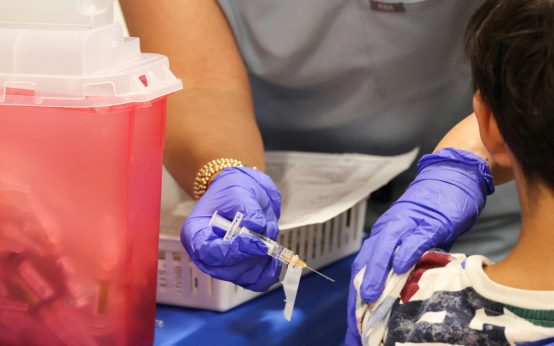
According to recent federal data, U.S. kindergarten vaccination rates decreased again last year, while exemptions reached the highest level yet. The exemption rate increased to 4.2%, up from 3.6% the previous year. This equates to approximately 155,000 children nationwide for the 2025-2026 school year. For the fourth year in a row, the national exemption average has set a new record, with most exemptions being due to nonmedical reasons. Increases occurred in 41 states and the District of Columbia.
Experts attribute this trend to confusion caused by federal health authorities. U.S. Health Secretary Robert F. Kennedy Jr., known for his antivaccine stance before being appointed by President Donald Trump to oversee federal health agencies, has been involved in efforts to revise childhood vaccination guidelines. In recent months, Trump sought changes to vaccination recommendations, promoting his debunked theory suggesting childhood vaccinations should be spaced out.
Dr. James Campbell from the American Academy of Pediatrics noted that chaos and uncertainty in vaccination recommendations are key contributors to the declining rates. The CDC reported that 92.4% of 2025-26 kindergarteners received the required measles-mumps-rubella shots, a slight drop from the year before. Before COVID-19, the vaccination rate was 95%, sufficient to prevent outbreaks or clusters.
Vaccination rates for polio, diphtheria, tetanus, pertussis, and the first dose for chickenpox also saw declines. The hepatitis B vaccination rate remained steady, though effects of changes in infant hepatitis B guidelines may appear in future kindergarten data, Dr. Campbell explained.
These statistics emerged amid the U.S.’s worst measles outbreak since 1991. Data shows more than a quarter of a million children entering kindergarten are at risk for measles. Distribution of unvaccinated kids is uneven, leading to varying measles intensity across regions.
With the academic year starting, schools and health officials nationwide urge parents to ensure children are vaccinated. “Back-to-school season is an important reminder that protecting our children’s health is both a shared responsibility and a shared goal,” mentioned Dev Sangvai, North Carolina Health and Human Services Secretary.
Historically, the CDC highlighted vaccination rates in its Morbidity and Mortality Weekly Report, emphasizing vaccine importance. However, since early last year when the Trump administration assumed office, data has been posted online. This year’s release included a short statement acknowledging a small decline in coverage and encouraged parents to talk with doctors about vaccines.
Public health authorities monitor kindergarten vaccination rates as schools serve as hubs for germ spread and possible community outbreaks. Historically high rates were maintained due to school requirements for vaccinations against diseases like measles, polio, and chickenpox.
While medical exemption rates, around 0.2%, have held steady over the past decade, nonmedical exemptions have grown. CDC data showed 17.5% of kindergartners in Idaho had an exemption for one or more vaccines during the last school year, while less than 0.5% had exemptions in Connecticut.
The Associated Press Health and Science Department is supported by the Howard Hughes Medical Institute’s Department of Science Education and the Robert Wood Johnson Foundation, though AP maintains sole content responsibility.
 Increasing Wait Times for Cancer Treatment
  Health Implications of Alcohol Use After Prolonged Sobriety
  Increase in Kindergarten Vaccine Exemptions
  Health Risks Linked to Alcohol Consumption After Sobriety
  California Bill Challenges Diaper Transparency
  Senator Cassidy Criticizes Executive Order on Vaccine Schedule