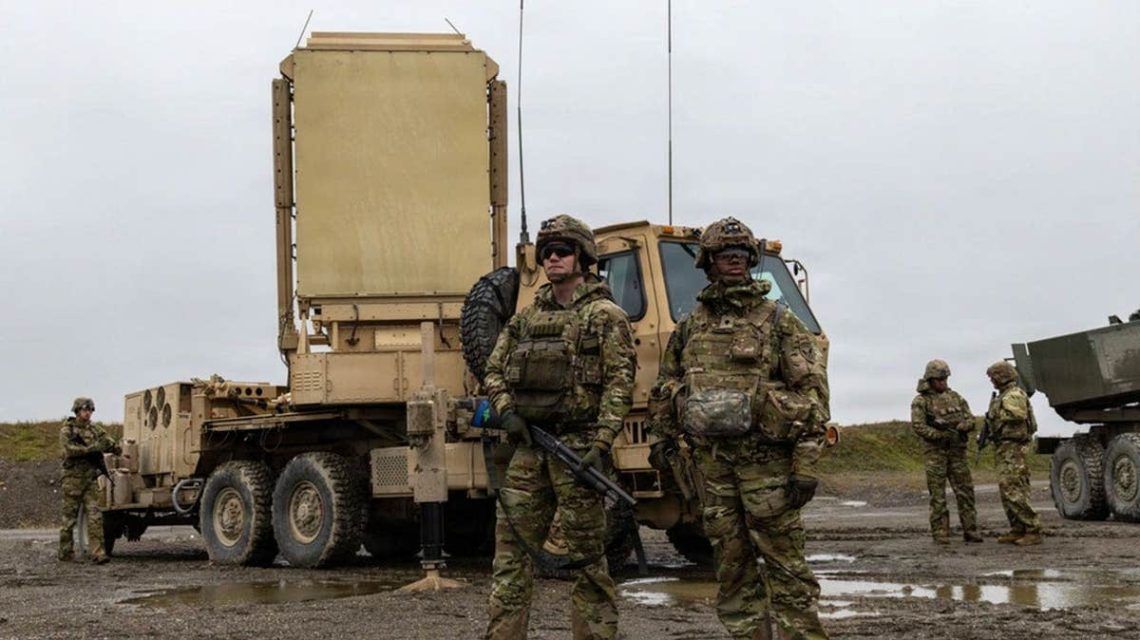
In one of the most remote and strategic areas of the United States, American forces are conducting exercises that involve land, sea, and air strategies. Troops are practicing rapid movements with rocket systems in western Alaska, deploying F-35s and F-16s against simulated threats, and coordinating with Canadian warships in the Bering Sea.
The operations fall under the Tundra Merlin campaign. This long-term U.S. military initiative proves that forces can quickly gather in Alaska’s vast, icy landscape to protect northern approaches to the United States. These preparations reflect changes in the security landscape partly driven by Russian and Chinese actions.
Growing Presence in the Arctic
Lieutenant General Robert Davis, commander of Alaskan Command, told Fox News Digital that two significant changes have occurred. One is the reduction of ice in the Arctic, making the area more reachable. Both commercial and military activities, particularly in the summer months, have increased in the Arctic. The other change is the advancements made by China and Russia in their military capacities, signifying their interest in utilizing these in the Arctic.
The Pentagon’s 2024 Arctic Strategy echoes this observation. It warns that increased cooperation between Russia and China could disrupt the Arctic’s stability, suggesting the need for a stronger U.S. presence and preparedness in the increasingly accessible region.
The Strategic Role of Alaska
Alaska plays a critical role in U.S. defense, positioned at the crossroads of the Arctic and Pacific. It serves both as a homeland defense hub and as a launch point for projecting military power toward the Indo-Pacific. The Russian and American territories meet within 55 miles across the Bering Strait, highlighting Alaska’s strategic location.
Major air bases, early-warning systems, and missile defense setups, housing over 22,000 active-duty personnel, emphasize Alaska’s importance. Air Force officials refer to the state as central to both defense at home and global power projection.
Gen. Davis noted that fifth-generation fighters stationed in Alaska mean the U.S. can project power almost anywhere in the Northern Hemisphere within about ten hours of flight time.
Exercises Test Rapid Deployment
Operation Tundra Merlin turns geographical advantages into combat capabilities. Including options in a strategic playbook, the operation can either deter adversaries or respond robustly if aggression occurs. An essential aspect recently on display involved deploying a U.S. Army HIMARS mobile rocket system and an AN/TPQ-53 radar into western Alaska. These ground forces connected with American F-35s, F-16s, and a KC-135 tanker for a comprehensive combat exercise.
The exercise highlighted the possibility of quickly moving force capabilities into remote areas to either defend Alaska or target potential adversaries.
Challenges of the Arctic Environment
Alaska’s extreme cold imposes unique challenges. Equipment must be conditioned for the environment, and personnel need specialized training to handle freezing temperatures. The Pentagon’s Arctic Strategy highlights the necessity of maintaining infrastructure in Alaska to support missile defense and rapid power deployments.
Davis stressed that forces and equipment brought into Alaska require specific preparation to function effectively in sub-zero conditions. This includes proper outfitting for personnel to prevent injuries and ensure effective operations.
Responding to Growing Threats
Recent events indicate growing military activity near North America. In July 2024, NORAD intercepted Russian and Chinese bombers in the Alaskan Air Defense Identification Zone. Although they did not enter U.S. or Canadian sovereign airspace, the episode demonstrated close cooperation between military forces.
For now, Davis believes Alaska is well-prepared to address the anticipated threats. However, if evidence of escalation appeared, additional forces may be requisitioned, highlighting the continual need for deterrence.
 Brazilians Head to Polls in Presidential Election
  Richard Ables: Compassionate Guide at Hall Brothers Funeral Home
  Football Coach Jon Gruden Joins Trump Rally in Ohio
  U.S. Marine Arrested in Japan Over Robbery and Murder
  Mystery of Lynette Hooker’s Disappearance in Bahamas
  Fugitive Arrested 17 Years After Fatal Silicone Injection