
President Trump has officially informed Congress that the United States has resumed military strikes against Iran. This announcement followed the breakdown of peace talks between the two nations. In a two-page letter dated Friday, Trump notified lawmakers that strikes against Iran had resumed on July 7. This compliance with the War Powers Act requires the president to inform Congress within two days of conducting military action abroad.
The resumption of strikes effectively restarts the 60-day timeline for the White House to either seek congressional approval or wind down hostilities. U.S. forces under the Central Command (Centcom) now have an additional 60 days of operational freedom. Trump may extend this period by another 30 days, but any deployment beyond 90 days necessitates congressional approval.
The conflict initially began on February 28. Trump, however, argued that the clock stopped on April 7 when a tentative ceasefire emerged with Tehran. Recently, Trump declared this ceasefire over during a NATO summit. The U.S. military subsequently launched another wave of strikes against Iran, marking a third consecutive day of such attacks.
U.S. officials describe these operations as retaliation. Tehran had targeted commercial ships attempting to navigate the Strait of Hormuz. On Monday, President Trump also announced the reinstatement of a naval blockade in the region.
Policy Implications and Future Actions
President Trump has urged Persian Gulf countries to reimburse the U.S. for protecting ships in the Strait of Hormuz. He emphasized the economic burden on the U.S. while ensuring the security of this key trade route.
There is debate over the effectiveness of renewed military actions in altering the conflict’s dynamics. If these actions don’t achieve significant changes, Trump risks deeper involvement in an unpopular issue as elections approach.
Amidst this, Trump suggested a potential target—Pickaxe Mountain in Iran—during a radio interview. He indicated that U.S. forces could strike this location.
Upcoming Discussions and Key Events
Several think tanks and institutes are set to host talks and discussions on related topics:
- The Progressive Policy Institute will address shifts in balance between Ukraine, Europe, and the U.S.
- The Center for a New American Security will release a report on global upheaval perspectives.
- Foreign Policy magazine will debate the vitality of trans-Atlantic relations.
- The Association of the U.S. Army, along with the Center for Strategic and International Studies, will host a discussion with Lt. Gen. Frank Lozano.
- Brookings Institution will discuss the future defense budget needs.
- The Aspen Security Forum will feature prominent speakers discussing security issues.
Other News and Developments
Related News: Maine senators are requesting an independent probe following an ICE-related shooting incident. They are raising concerns based on claims from the Department of Homeland Security.
Highlighted Readings: Other sources report on survivors of Iranian attacks and first-time use of naval drones by U.S. forces in combat operations.
Note: While legislative actions around daylight saving time and President Trump’s IRS settlement continue to evolve, further updates and discussions are expected in the coming days.
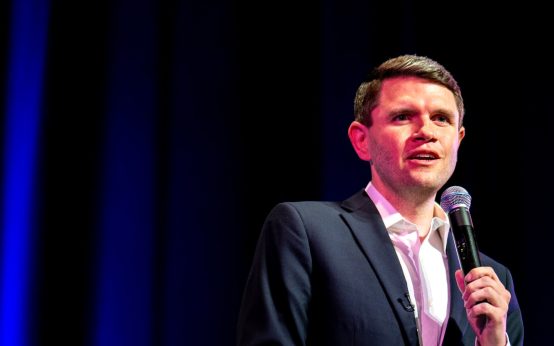 Democrat Gaining Traction in Texas Senate Race
  President Trump Creates ‘AI Force’ Amid Rising Concerns
  A Look into Wisconsin’s Budget Strategy and Its Implications for Federal Policy
 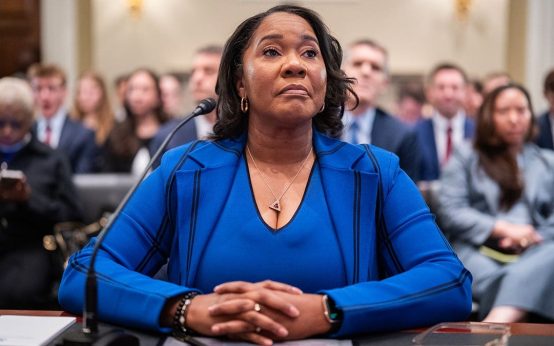 House GOP Continues ActBlue Investigation Over Alleged Foreign Donations
  U.S. and China to Discuss AI Transparency at Washington Summit
 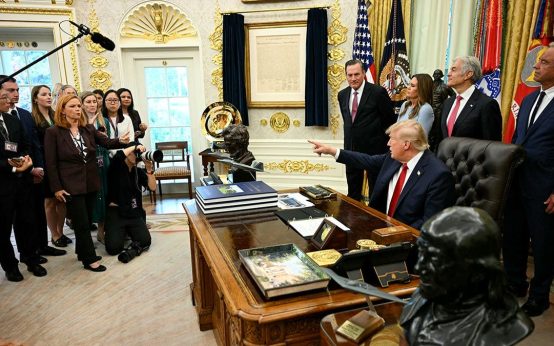 Media Pool Suspends Coverage of Trump After Banning CNN and Others