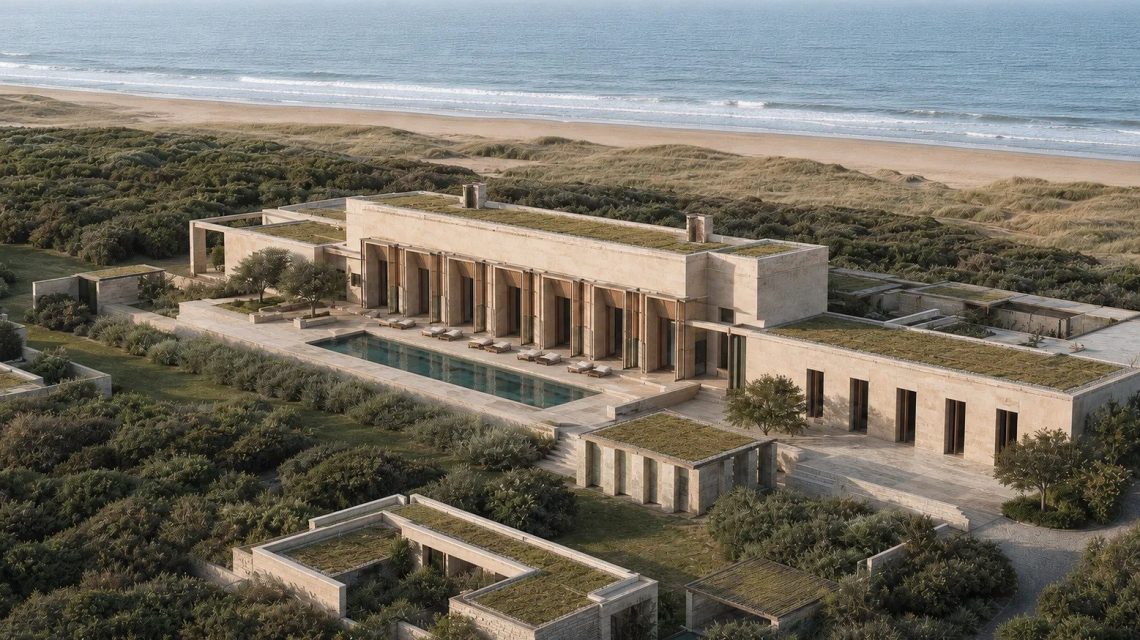
A new billion-dollar waterfront community is set to take shape in South America. This project, aimed at creating a futuristic city focused on sustainability, technology, and economic innovation, is spearheaded by Praxis. The company has chosen Uruguay for its stable environment, expanse, and scenic landscapes. The new city, dubbed “+Colonia,” will be constructed near Colonia del Sacramento, with residents expected to move in by mid-2027. Praxis plans to invest $1 billion over three years to build what it calls ‘the world’s first digital nation,’ prioritizing AI-driven community life.
While proponents highlight potential quality of life improvements, critics question its feasibility and financial goals. Besides +Colonia, several other ambitious city projects are in development worldwide, each with unique focuses and challenges.
California Forever in the US
Backed by Silicon Valley investors, California Forever aims to become “America’s next great city” and the first walkable city in over a century. Located in Solano County, between the Bay Area and Sacramento, the project plans to create 530,000 jobs and 170,000 homes. The development stresses sustainability, aiming to create an environment resilient to climate change, integrated with significant transport corridors.
Centered on expanding Suisun City, California Forever works with local officials to finalize development plans. A major milestone is Suisun City’s Draft Environmental Impact report expected later this year.
Woven City in Japan
Toyota’s Woven City, located in Susono at Mount Fuji’s base, focuses on mobility. Launched in 2020, it serves as a “living laboratory” for testing advanced mobility technologies. Phase 1 began welcoming residents in September last year, with 80 households now settled. The city continues to expand, with Phase 2 construction starting in September 2026, slated for completion in November 2028. Despite initial success, questions remain about future scalability.
Telosa in the US
Unveiled by entrepreneur Marc Lore, Telosa plans to redefine urban life through “equitism” – a model with shared land ownership and a focus on equality and sustainability. Designed by Bjarke Ingels Group, Telosa seeks to house millions across locations like Nevada and Texas. Some praise the idea, but others question the practicality of building anew and securing necessary finances.
Rio AI City in Brazil
Rio AI City aims to redefine urban centers with renewable energy and digital infrastructure. Developed by Elea Data Centers in Rio de Janeiro’s Olympic Park, it’s poised as a major digital initiative. Including renewable energy systems and eco-friendly architecture, the project seeks to stimulate local economies. While employment gains are anticipated, some raise concerns about its environmental footprint.
Oceanix Busan in South Korea
Oceanix Busan envisions a floating city in South Korea. Announced in 2022, the city incorporates flood-proof infrastructure with sustainability in mind. Featuring linked floating platforms, the city will produce its food, energy, and water through innovative processing systems. Floating infrastructure generates interest, yet concerns over cost and scalability endure.
The Line in Saudi Arabia
NEOM’s flagship, The Line, proposes a 170-kilometer linear city in Saudi Arabia. It aims to house 9 million residents in a sustainable, car-free environment. Although delayed until 2030 due to shifting priorities, officials assert the project remains active. However, uncertainties surround timeline and restructuring plans.
 Key Developments from Today’s News
  Key Events in Politics and Technology: U.S. and U.K. Developments
  The Shift Towards Work-Cations and Their Impact on Modern Workplaces
  Teens and Distracted Parenting: Impact on Emotional Well-being
  Washington’s Intense Focus on AI: Balancing Risks and Opportunities
  OpenAI Delays Release of New AI Model Due to Security Concerns