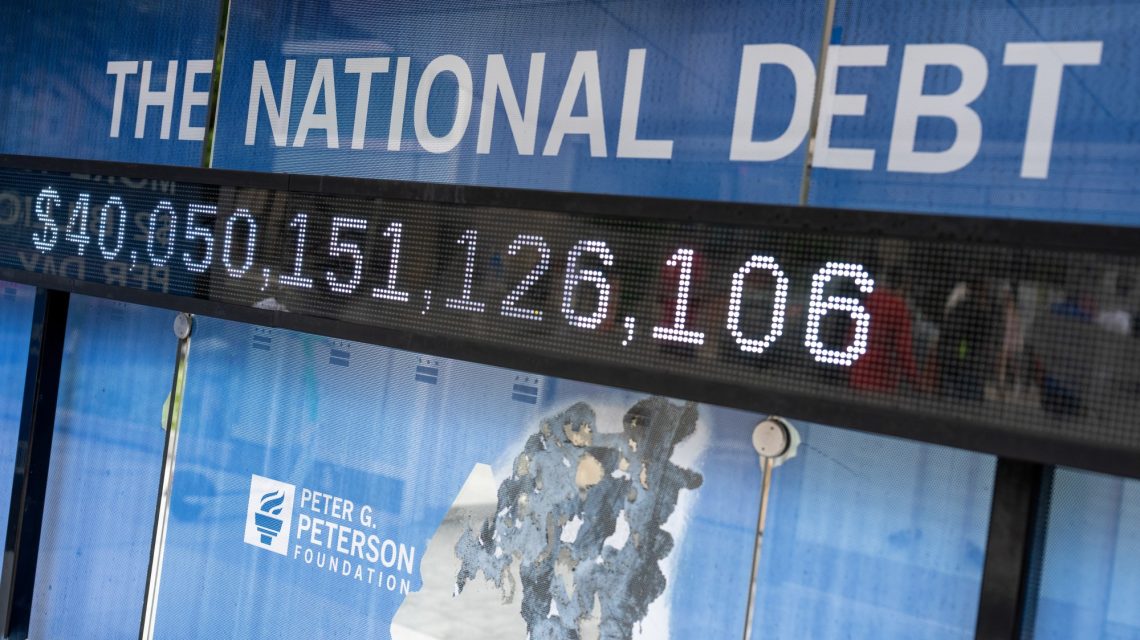
Getty Images Signage displays the US national debt total at a bus stop in Washington, DC, on Thursday, Aug. 20, 2026. Photographer: Daniel Heuer/Bloomberg via Getty Images.
In 2026, the total US public debt surpassed $40 trillion for the first time. It surged by a third in less than five years as lawmakers continue to ignore wide fiscal deficits. The fiscal year ended with the federal government accumulating an annual budget deficit of $2 trillion. This is equivalent to Washington spending about $15,000 per household more than it collected in revenue over the past year.
The current fiscal program lacks a focus on national emergencies or temporary circumstances, and projections suggest an average of $2.4 trillion in annual deficits over the next decade. In the 119th Congress’s remaining lame duck session, the House of Representatives has forwarded several bills to the Senate. These aim to provide taxpayer savings by curbing fraud in federal spending programs. The Government Accountability Office (GAO) indicates this fraud costs the government between $233 billion and $521 billion annually.
Legislative Measures
The Pre-Payment Fraud Prevention and Treasury Data Access Act, sponsored by Rep. James Comer (R-Ky.), seeks to enhance the Treasury Department’s Do Not Pay system. By incorporating new data sources, it aids agencies in verifying eligibility before making payments. The Committee passed the bill by a vote of 35-1, and it cleared the House with the necessary two-thirds vote.
The Zeroing Out Monetary Benefits Improperly Expended Act (or ZOMBIE Act), proposed by Rep. Gary Palmer (R-Ala.), updates federal law to shift from backward-looking audits to real-time auditing. It also mandates annual convenings of state officials with the Treasury secretary and OMB director to coordinate fraud prevention. The Committee unanimously passed the bill, and the House agreed by voice vote.
Another key bill, the Fraud Prevention and Accountability Act, sponsored by Rep. Pete Sessions (R-Texas), proposes creating a permanent government-wide Inspector General for Fraud, Accountability, and Recovery within the Treasury Department. This involves transferring analytics tools from the Pandemic Response Accountability Committee into a new inspector general. The bill passed the House by 240-181, with 28 Democrats supporting it.
Each of these bills awaits Senate action. With bipartisan support in the House, Senate leaders can hotline the bills when lawmakers return. Alternatively, senators could bring the bills to the floor and seek unanimous consent. It’s unlikely that any senator would publicly oppose reforms aimed at preventing billions of dollars from being lost to fraud.
Congressional Recommendations
While anti-fraud legislation isn’t a panacea for a $2 trillion deficit, pursuing achievable savings is crucial. The GAO has outlined nine strategies Congress can implement to combat fraud. Their recommendations, if followed, could yield financial benefits between $132 billion and $251 billion.
Senate leaders should prioritize these bipartisan anti-fraud reforms during the lame duck session. The magnitude of the fiscal problem encourages taking every reasonable opportunity to achieve savings. Dan Lips is a senior fellow with the Foundation for American Innovation.
Copyright 2026 Nexstar Media Inc. All rights reserved. This material may not be published, broadcast, rewritten, or redistributed.
 Debate Analysis: Bass vs. Raman in L.A. Mayoral Race
  Political Dynamics in Kansas: A Battleground of Opportunities and Challenges
  Attorney Paul Clement’s Supreme Court Advocacy and Legal Challenges
  Kimberly Guilfoyle’s Resignation as U.S. Ambassador to Greece
  Trump’s Alaska Visit to Support Sen. Dan Sullivan Amid GOP Concerns
  Ilhan Omar Faces Federal Investigation as Part of a Series of Probes on Democrats