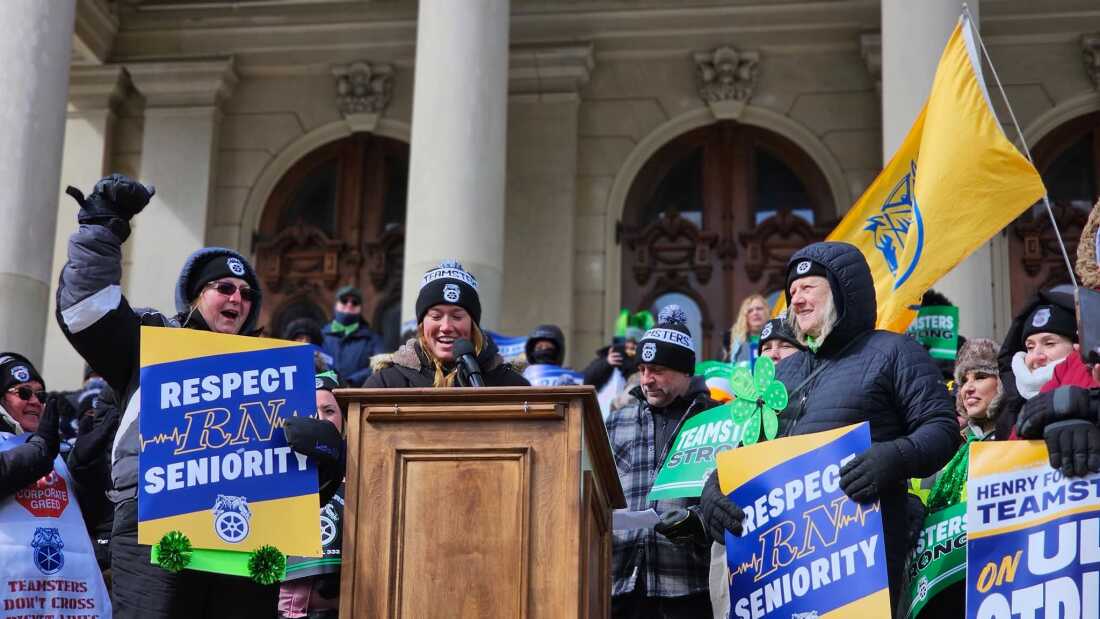
Emergency room nurse Crystal Dhooghe spoke at a rally in Lansing, Michigan on March 17. She is part of a group of Henry Ford Genesys Hospital employees on strike since September 1, 2025. Dhooghe, familiar with handling emergencies, recounts witnessing violence against colleagues.
“I’ve seen nurses shoved, pushed, scratched, and bitten,” Dhooghe explained. She works in Grand Blanc, Mich. Like others, she struck for fair working conditions but still works elsewhere to sustain herself. “It’s the same everywhere,” she remarked.
Henry Ford Hospital spokesperson Dana Jay acknowledged the issue of violence as a “national epidemic.” The hospital uses metal detectors, armed security, and de-escalation training as measures, but claims the strike centers on economic reasons instead of safety.
Data from the Bureau of Labor Statistics indicates healthcare workers face violence-related injuries seven times more often than others. Workers’ demands for better conditions clash with the financial pressures hospitals endure.
ER Tensions Rise
Violent episodes in emergency rooms are frequent enough to feature in media, like the TV series “The Pitt.” Rachel Odes from the University of Wisconsin-Madison described ERs as “powder kegs.” A “code gray” signals combative patients, often unpredictable but linked to staff shortages and training gaps.
At Butler Hospital in Rhode Island, mental health worker Andrew Kimball-Mirzaie was assaulted in February 2024. While monitoring a patient, he was punched, suffering a concussion and broken nose. The incident, he believes, resulted from lack of adequate staffing and training.
Kimball-Mirzaie joined a strike, alongside 700 unionized workers, garnering wage increases and worker protection improvements. However, incidents persisted, such as an unarmed patient assaulting staff, prompting a call to 911, leading to injuries and a felony charge.
Addressing Healthcare Violence
Butler Hospital president Mary Marran emphasized ongoing safety reviews. She supports proactive measures for staff protection. Organizations like the American Hospital Association advocate for prosecuting violent acts against healthcare workers as federal crimes, a move 45 states have mirrored.
Despite legislation, experts see no drop in workplace violence. Workers, instead, advocate for “safe staffing.” The Joint Commission calls for proper staffing and training to ensure care and safety. Jane Thomason from National Nurses United stresses the importance of safe unit staffing.
California stands alone with mandatory nurse staffing ratios, associated with improved outcomes. Other states like Oregon have partial laws. Efforts in Massachusetts and New Jersey stalled. The American Hospital Association opposes mandatory ratios, arguing flexibility is crucial, citing California’s emergency nurse staffing complications.
Former OSHA official Jordan Barab suggests alternatives, including staff training, security enhancements, and metal detectors. Georgetown University expert Debbie Berkowitz warns financial pressure could lead hospitals to cut worker protections first.
 10 Key Principles for Healthy Longevity
  Russian Scientist’s Death Raises Concerns Over Plague Exposure
  Alan Alda Reflects on Life, Career, and Parkinson’s
  Voice Disorders Linked to Dementia Risk
  Understanding the Misperceptions and Inaction in Addressing Sexual Violence
  Americans Seek Ibogaine Treatments Abroad Amid Health Risks