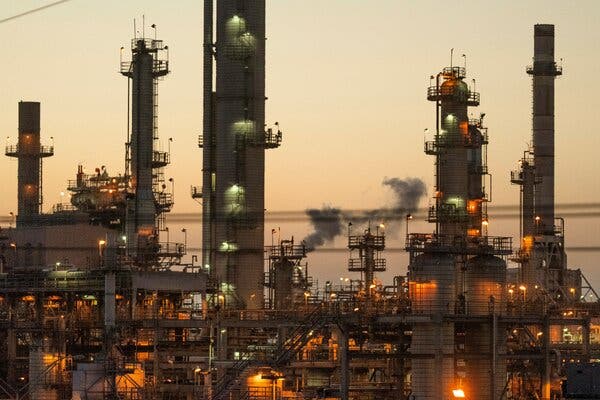
Oil prices experienced a significant surge on Monday as peace negotiations between Iran and the United States showed signs of faltering. The international oil benchmark, Brent, rose over 5% to approximately $93 per barrel. Similarly, West Texas Intermediate, the U.S. benchmark, saw an increase of over 6% to about $93 per barrel.
These gains mark the largest price jumps in weeks, although prices remain well below wartime peaks. The escalating tensions have prompted concerns about the closure of the Strait of Hormuz, a critical channel for oil transport bordering Iran.
Recent developments included new attacks involving Iran, the United States, and Israel. The U.S. conducted strikes in Iran over the weekend, and in response, Iran’s Revolutionary Guards targeted a U.S. air base. The continuity of these hostilities could hinder the reopening of the strait, essential for global oil and commodities shipping.
There has been quiet panic building,stated Helima Croft, head of global commodity strategy at RBC Capital Markets.
This situation has led Persian Gulf countries to reduce oil output by over 14 million barrels per day, roughly 14% of the prewar global supply, as reported by the International Energy Agency (IEA).
Efforts to mitigate the impact have been in place. China reduced its oil imports, numerous countries tapped into emergency oil reserves, and nations like the United States, Canada, and Brazil have ramped up oil exports. Despite these actions, energy experts express concerns about dwindling inventories of oil and refined products, including gasoline and diesel.
Neil Chapman, a senior vice president at Exxon Mobil, warned of nearing dangerously low inventory levels, suggesting potential for steep price increases. Although he did not differentiate between crude and refined products, the implications are concerning.
The U.S. has been draining around nine million barrels weekly from its strategic petroleum reserve. If this pace continues, reserves will reach the lowest mark since 1983. Amos Hochstein, a former adviser on energy policy in the Biden administration, emphasized the need to replenish these reserves.
This high-stakes situation continues to generate uncertainty, as nations brace for potential shortages and price fluctuations in the global oil markets.
 Nuclear Waste Concerns at San Onofre: Coastal Erosion and Long-term Solutions
  Nuclear Microreactor Project in Indiana Signals U.S. Nuclear Energy Revival
  Impact of Potential Canadian Electricity Cutoff on the U.S.
  Tariffs on Polysilicon Impact Green Energy Transition
  California Legislators Call for Action on Oil Companies’ Profits
  Shift in Perspective on Nuclear Waste Storage