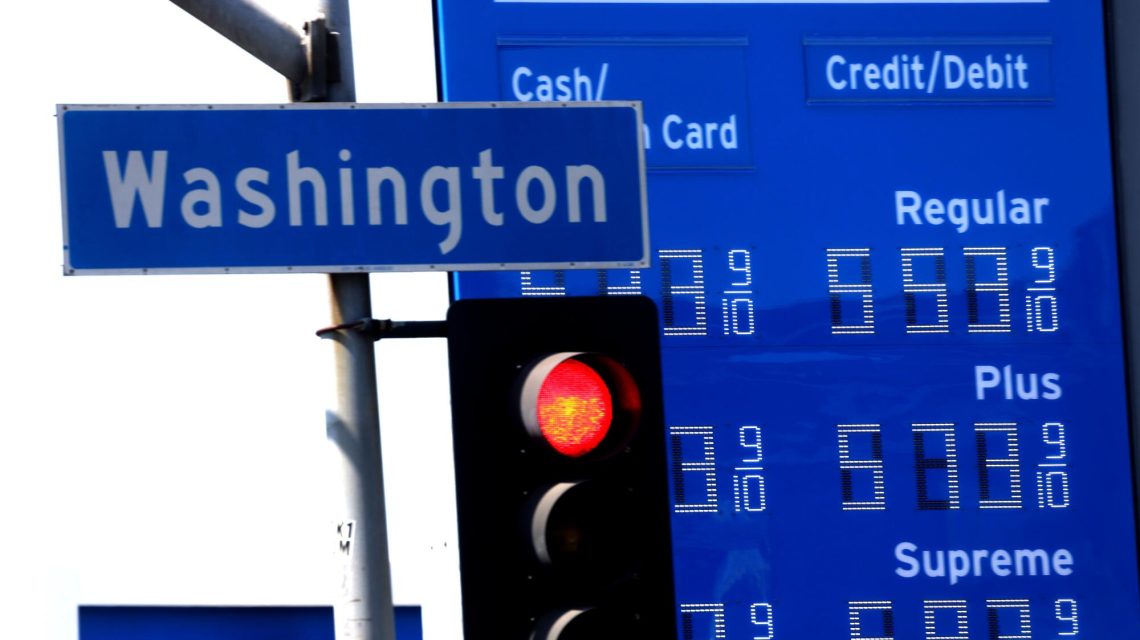
Record earnings from oil companies and California refiners in the recent quarter are prompting state lawmakers to push for stricter controls on industry profits. Marathon Petroleum, ranked as the second-largest refiner in California, disclosed that its profits reached $5.1 billion, a dramatic increase from the previous year due to tightened fuel supplies during the Iran conflict, causing oil and gas prices to rise.
Chevron, the largest refiner and the second-largest oil producer in California, made substantial gains as well, reporting $12.1 billion in profits. This represents almost a fivefold increase compared to the same period last year and marks the highest earnings they have had in over six years. Other refiners, such as PBF Energy and Valero, also saw significant financial gains, with Valero earning $3.7 billion—a fivefold increase compared to last year.
These profits are absolutely obscene,” said state Sen. Josh Becker (D-Menlo Park), who, alongside Sen. Benjamin Allen (D-Santa Monica), has introduced legislation to empower the state attorney general to prosecute price gouging during wartime.
Chevron attributed its success to global operations rather than regional results, highlighting efforts to meet consumer demand by boosting energy production by nearly 20% and attaining 97% capacity at refineries during the second quarter, according to spokesperson Ross Allen.
The surge in profits has come at a cost to consumers, with gas prices in the U.S. climbing 30% to 50% since the conflict began. California, which already faced high gas prices before the conflict, continues to see rates above $5.60 per gallon.
Some legislators are calling for an end to California’s cleaner-burning fuel blend mandates, established in the 1990s to reduce air pollution, blaming these regulations for high gasoline costs. State Sen. Henry Stern (D-Los Angeles) has proposed a bill to allow regular gasoline sales in California and impose fees to support initiatives like electric vehicle rebates. Environmental groups such as the Union of Concerned Scientists support the move, citing the efficacy of national gasoline standards and modern vehicles in reducing the need for California-specific blends.
However, the Western States Petroleum Assn. opposes such measures, arguing that they would penalize California refiners who have invested in cleaner fuels. Additionally, the Association is opposing Becker’s bill, which seeks to include war in the list of emergencies that could trigger California’s price-gouging laws, capping price increases at 10% of pre-emergency levels.
Senator Becker is focusing on evidence of price gouging in California, where a few refineries dominate. Research from Consumer Watchdog indicates California gas prices exceeded the national average by $1.50 for 13 of the initial 25 weeks of the year, predominantly after the conflict started.
While the California Energy Commission contends that the state’s price increases align with national trends, director Tai Milder highlighted the cost disparity between branded and unbranded gasoline stations. Average branded gasoline costs 31 cents more per gallon in California compared to 6 cents nationwide. Chevron stations in California had the highest prices at $6.34 per gallon in May.
A federal class-action lawsuit was filed by California motorists accusing major gas chains of using AI software to maintain high prices. The Western States Petroleum Assn. maintains that branded gasoline costs more due to factors like real estate expenses and specific additives for improved vehicle performance.
Jim Stanley, a spokesperson for the Association, insists that selling branded products at a premium is standard across markets. He also argued that capping oil profits during wartime could make California less competitive for imports, potentially causing energy shortages.
On a national front, several Democrats, including California Senator Adam Schiff and Representative Brad Sherman (D-Sherman Oaks), are pushing for legislation targeting excessive profits. Both Stern’s and Becker’s bills are awaiting their next evaluation by the state Assembly Appropriations Committee on August 13.
Consumer Watchdog President Jamie Court supports Becker’s bill yet noted the state’s reluctance to enforce existing laws that could limit price spikes. A law signed by Governor Gavin Newsom in 2022 allows the California Energy Commission to cap refinery profits, potentially saving drivers money. However, concerns about refinery operations post-closures have made agencies hesitant to regulate actively.
The California Energy Commission is analyzing refining margins to understand the impact of potential price caps on consumers. The oil and gas industry has invested over $17 million lobbying the state legislature this year.
According to Brett Gibbs, an analyst with Bloomberg Intelligence, global oil profits largely stem from refining activities, exacerbated by refinery closures due to attacks and crude shortages. Marathon and Valero credited their strong performance to recent refinery closures and an increased supply of California crudes, aside from the war. PBF Energy, after resuming operations following a fire, expects continued profitability in California in the coming quarters.
Wood Mackenzie, a research, and analytics firm forecasts that oil company profits could surge to $495 billion this year if prices stay high, averaging around $90 per barrel.
 Nuclear Waste Concerns at San Onofre: Coastal Erosion and Long-term Solutions
  Nuclear Microreactor Project in Indiana Signals U.S. Nuclear Energy Revival
  Impact of Potential Canadian Electricity Cutoff on the U.S.
  Tariffs on Polysilicon Impact Green Energy Transition
  Shift in Perspective on Nuclear Waste Storage
  Addressing Aging Water Infrastructure in Los Angeles