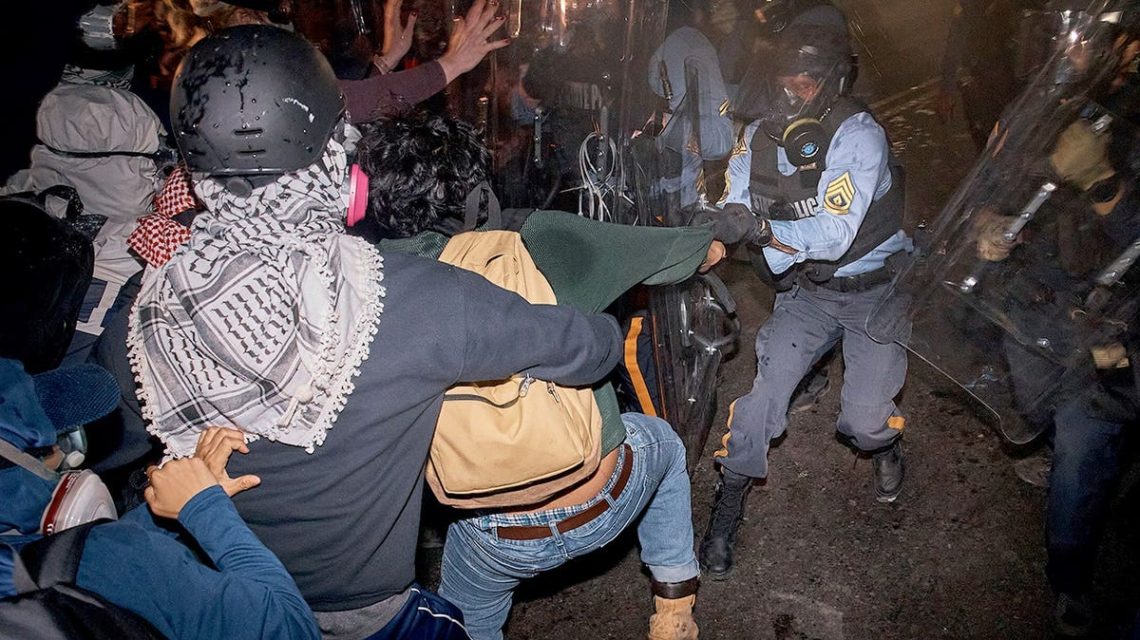
Protesters and organizers converged on Delaney Hall in Newark, New Jersey, responding to a strategic call to action against the controversial ICE detention facility. At 11:30 a.m. on June 3, an Instagram post urged demonstrators to swarm the site, a facility that has become a focal point in the immigration debate. The post was promoted by various anti-Israel, Marxist, and Democratic organizations, including ‘Palestine Solidarity Working Group’ and ‘Al-Awda.’
Utilizing encrypted messaging platforms like Signal, hundreds of anti-ICE activists coordinated their efforts, ensuring logistics such as transportation and protective gear like goggles and respirators were in place. A Fox News Digital investigation revealed that these protests are not spontaneous but the product of meticulous planning by well-organized groups seeking to influence federal immigration policies.
“We should be very concerned about the Delaney Hall 100,” stated Chuck Flint, nonprofit expert.
With annual revenues surpassing many city budgets, around 100 groups, including notable names like the ACLU and Democratic Socialists of America, are involved. The IRS has granted special nonprofit statuses to many of these organizations, allowing them to benefit from tax-deductible donations. Investigations by lawmakers and the Treasury Secretary are underway to assess potential abuse of nonprofit laws in instigating political violence.
Activists employed strategic language, as directed by the ‘Delaney Hall Creator Brief,’ referring to the detention center as a “concentration camp” and detainees as “imprisoned prisoners.” Protest tactics resembled those used in Minneapolis, showcasing an organized approach similar to insurgency operations.
Activists continued gathering outside Delaney Hall, setting up supply stations and organizing logistics. The focus shifted to action as groups discreetly planned, bringing essential protest supplies and coordinating transportation. By late afternoon, preparations escalated for confrontations with law enforcement.
Beyond the immediate protests, months or years of planning preceded these events. In recent times, large networks including faith leaders, legal groups, and national nonprofits mobilized in support of detainees, intensifying political pressure. Numerous elected officials have joined the debate, however, have faced protests themselves.
Overall, the Delaney Hall protests are a well-coordinated response by various groups aiming to challenge federal immigration policies and influence broader public opinion. As developments continue, questions regarding nonprofit law compliance and political traction remain prominent.