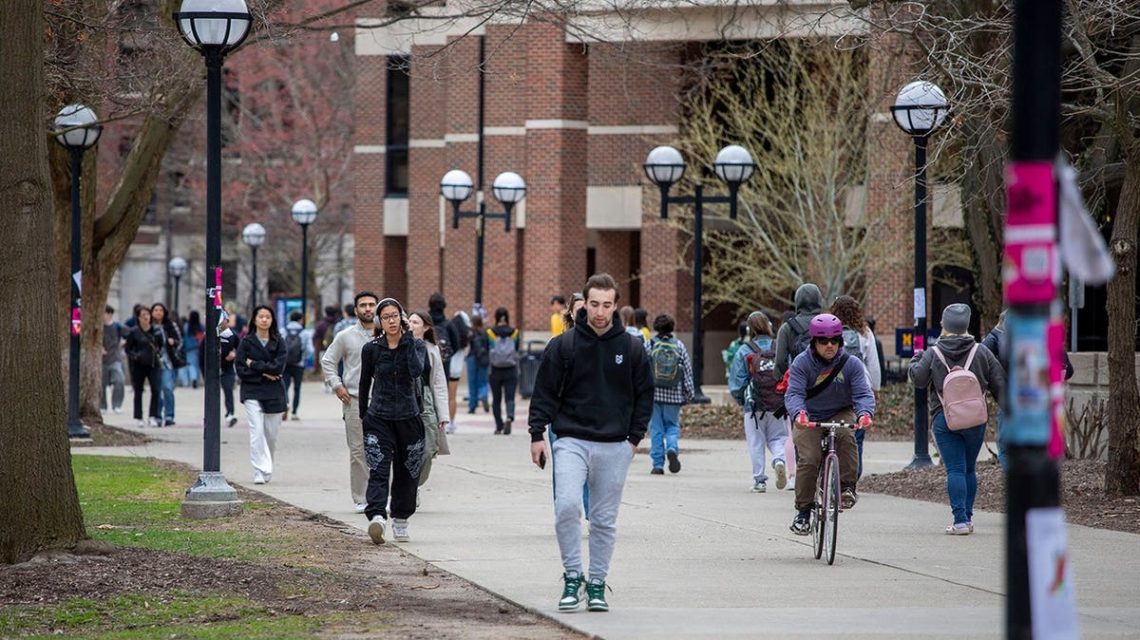
The University of Michigan plans to implement a new grading system for freshmen in its College of Literature, Science, and the Arts (LSA) starting in fall 2027. This change is part of an effort to address the mental health challenges faced by students in higher education. For the first semester, grades will appear as either pass or no credit on transcripts, rather than traditional letter grades.
The initiative aims to help first-year students adjust to college life and focus on meaningful academic pursuits. The LSA is the largest college at the university, serving about 19,700 undergraduates. Students will still receive letter grades during the semester, but only a ‘P’ for pass or ‘NC’ for no credit will be recorded on their transcripts. These grades will not be included in the computation of their grade point averages.
University officials believe this system allows students to explore new fields without fear of long-term consequences from low grades. The university emphasized its commitment to student well-being by encouraging a culture of connection and collaboration.
The policy ensures that first-semester letter grades are retained internally for a variety of administrative purposes. These include academic advising, scholarships, internship applications, and more. The new policy applies exclusively to incoming freshmen in the LSA, without an opt-out option. University officials stated that an opt-in structure would undermine the objectives of supporting student mental health and intrinsic motivation.
The University of Michigan joins institutions like Massachusetts Institute of Technology, Swarthmore College, and California Institute of Technology in adopting similar policies. However, psychotherapist Jonathan Alpert expressed concerns that removing the impact of grades might be counterproductive. Alpert argued it may prevent students from learning resilience, and understanding that discomfort is a part of life.
While intended to mitigate stress, Alpert warns the policy might impede students’ readiness for life beyond the academic environment, suggesting it could diminish their sense of perseverance and ability to handle adversity.
 Impact of Removing Tax-Exempt Status from Private Schools
  AFL Investigates Fairfax County Schools’ 9/11 Teaching Guidance
  Challenging the ‘Trust the Experts’ Narrative in School Libraries
  Implications of AI in College Admissions
  Preparing Students for an AI-Shaped Workforce
  Concerns Over Racism and School Funding Inequality Discussed by ‘The View’ Co-Host