
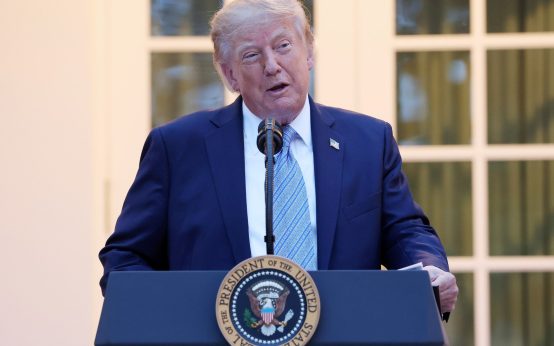
President Donald Trump, facing criticisms from both opposition and allies, finds himself in a complex geopolitical situation concerning the conflict with Iran. Initially depicted as a swift military intervention, the conflict has since entered a waiting phase.
Ceasefire Agreement
Negotiators from the United States and Iran struck a provisional agreement nearly a week ago to extend the ceasefire for 60 days and initiate fresh nuclear program discussions. However, Trump demanded unspecified modifications to this agreement, and Iranian officials, possibly sensing the President’s reluctance to resume bombings, have resisted further demands. Recent attacks from Washington and Tehran have renewed fears that the ceasefire might collapse. Trump downplayed these developments, emphasizing regional disparities.
“It’s a different part of the world,” Trump remarked in the Oval Office.
This volatile period follows Trump’s earlier assurances post the 14-day ceasefire agreement on April 7, after a lengthy bombardment campaign. Despite continued rhetoric about close negotiations, global energy prices remain high, provoking concern internationally about escalating costs impacting food, fuel, and other goods.
Internal and External Pressure
Reports indicate Trump’s discomfort growing within key government spheres due to pressures from Democrats leveraging oil prices and warnings from war-supporting constituents who argue swift conflict withdrawal equates to surrender. Sources familiar with internal deliberations reveal that discussions with Republicans, Pentagon officials, and Gulf allies underline the drawbacks of resuming military actions. The depletion of munitions at an alarming pace complicates weapons system replenishment efforts.
Trump exhibits apprehension towards agreements resembling the 2015 nuclear deal, negotiated by the previous Democratic administration, which limited Iran’s nuclear activity for sanction relief. Having abandoned this pact earlier, Trump has articulated his resistance towards “bad deals,” conscious of legacy tarnishing risks.
Israeli Intervention
Israeli allies and certain Washington stakeholders have pressed for increased economic pressure on Iran or support for Israel’s assaults on Hezbollah in Lebanon. In an intense exchange, Trump urged Israel’s restraint, resulting in an agreed ceasefire between Israel and Lebanon, albeit Hezbollah dissented from these hostilities discussions.
Political Implications
Democrats are capitalizing on Trump’s unpopular war management ahead of midterm elections. A symbolic resolution demanding military action suspension against Iran passed the House, with bipartisan dissent. Trump dismissed the vote’s significance, attributing it to political opportunism.
“Democrats suffer from Trump Derangement Syndrome,” Trump rebuked in a social media commentary while disparaging dissenting Republicans.
Democratic criticism intensified during congressional hearings regarding Trump’s conflict-related economic impact minimization. Concerns over strategic failures were voiced, highlighting the unstable ceasefire and perceived Iranian advantage.
The ongoing conflict poses risks for Republicans in contested districts. Democratic candidates have targeted Trump’s remarks on cost impacts as campaign points. Christopher Borick, a political analyst, identified this prolonged conflict as a meaningful threat to Republicans both tactically and electorally.
“There’s significant risk if prolongation occurs,” Borick commented, suggesting strategic relief remains advisable.
This report includes insights from Associated Press journalists Farnoush Amiri in New York and Lisa Mascaro.
 Flight 93 Hero’s Father Criticizes Ties Between Hasan Piker and Abdul El-Sayed
  House Races Shift Amid Democratic Momentum
  Iowa Senate Race: Marist Poll Shows Democrat Josh Turek Leading Republican Ashley Hinson
  Kamala Harris and Abdul El-Sayed Campaign Together in Detroit
  Challenges Facing the Supreme Court’s Public Perception
  California Democratic Aide Arrested for Visa Overstay by Federal Authorities