The Pentagon has announced an expanded list of Chinese companies linked to Beijing’s military, potentially paving the way for future restrictions on investment and sanctions.
188 Entities Listed by the Department of Defense
The updated roster, released under a congressional mandate from 2021, identifies 188 entities considered part of or supportive of China’s military-industrial ecosystem. Major companies like Alibaba, BYD, and robotics firm Unitree are now included. These businesses are neither state-owned nor traditionally tied to the defense sector.
There is rising concern in Washington about China’s military modernization and the role of private companies in Beijing’s civil-military fusion strategy, which integrates commercial innovation into national defense. U.S. officials argue that Chinese firms can be forced to provide data and technology to the government, raising worries about their involvement in advancing China’s military capabilities.
Advanced Technologies and Potential Restrictions
The latest designation arrives amid broader U.S. efforts to limit China’s access to critical advanced technologies, including AI chips, semiconductor equipment, and quantum computing.
Inclusion on the Pentagon’s list does not automatically trigger sanctions but may lead to future restrictions on investment and commercial engagement.
Beijing’s Response and Concerns
China responded quickly, accusing the U.S. of unfairly targeting its businesses. Foreign Ministry spokesperson Lin Jian stated, “We urge the U.S. side to correct its mistakes and stop its unreasonable suppression of Chinese companies.” He added that China would take necessary measures to safeguard its companies’ rights.
Reasons for Adding Alibaba, BYD, and Unitree
Alibaba, China’s large tech company in e-commerce and cloud computing, was described by the Pentagon as a “military-civil fusion contributor.” Alleged ties to China’s Ministry of Industry and Information Technology were mentioned.
BYD, a major electric vehicle producer, was also added. Despite having little U.S. market share, former President Donald Trump welcomed Chinese automakers to build factories and hire American workers, contrasting with some calls to ban Chinese electric vehicles in the U.S.
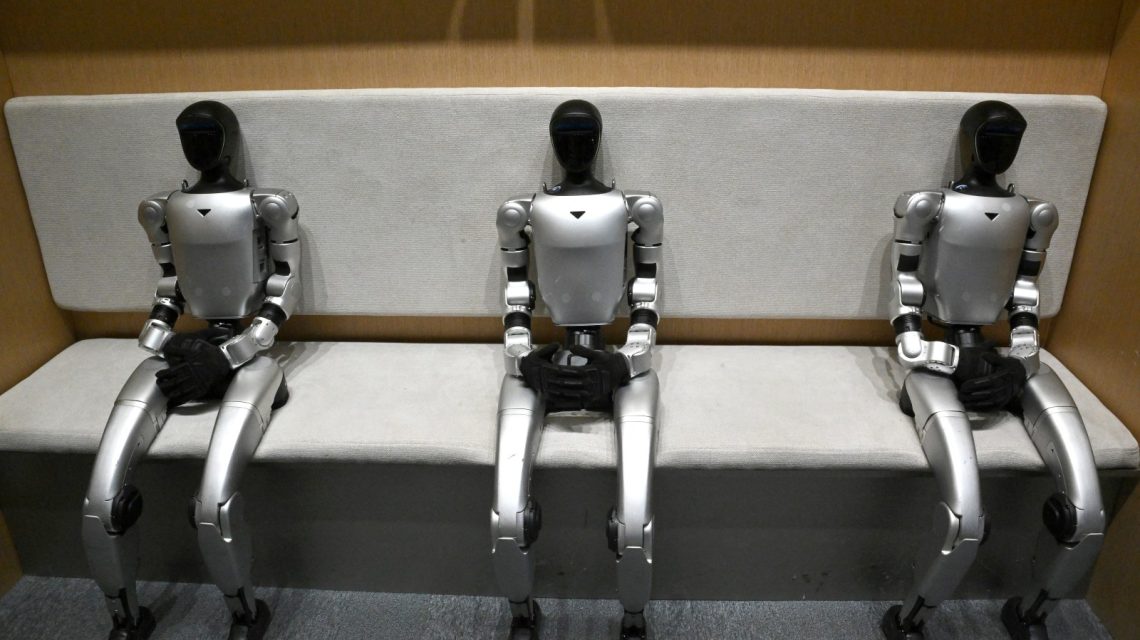
Unitree, known for its humanoid robots and rapid advances in robotics, gained attention for its kung fu robots at China’s Spring Festival Gala.
Congress Urges Stronger Measures
The U.S. House Select Committee on the Chinese Communist Party supported the Pentagon’s update, urging stronger action against listed companies. The committee described the designations as a “warning” to American businesses and investors.
“Any of them that are publicly traded on U.S. exchanges should be immediately delisted and their products should be removed from supply chains our country depends on,”
The committee stated. They emphasized that American companies must end business with these entities to avoid enabling China’s military advancements.
The expanded list highlights the growing U.S. effort to scrutinize Chinese companies in key sectors as tensions with Beijing extend beyond trade to technology, investment, and national security.
This article includes reporting by The Associated Press.
 Impact of Libya’s Fall on Trump’s Rise and Current U.S. Policy
  Alberta Voters Reject Independence Process in Referendum
  Judge Warns Trump Over BBC Lawsuit Participation
  NATO’s Air Defense: Tackling Rising Drone Threats
  Christian Advocacy and the Call for Action on Settler Violence in the West Bank
  Tensions Rise in U.S.-Ukraine Relations Over Intelligence Sharing and Energy Policies