NASA has introduced the four astronauts selected for the next Artemis moon program mission. The announcement took place at the Johnson Space Center in Houston. These astronauts will undergo extensive mission-specific training for a year or more as part of the Artemis III crew.
Artemis III Mission Objectives
The mission aims to launch the crew into Earth orbit next year. They will test crucial rendezvous and docking procedures with moon landers built by SpaceX and Blue Origin. This represents a critical step before the United States can achieve a moon landing by 2028.
The Artemis III crew’s task involves mastering the operations they will carry out during a future lunar orbit mission. This will mirror the operations of NASA’s Apollo 9 mission in 1969, where the crew tested the lunar module in Earth orbit before the successful Apollo 11 moon landing.
Nasa’s Lunar Plans
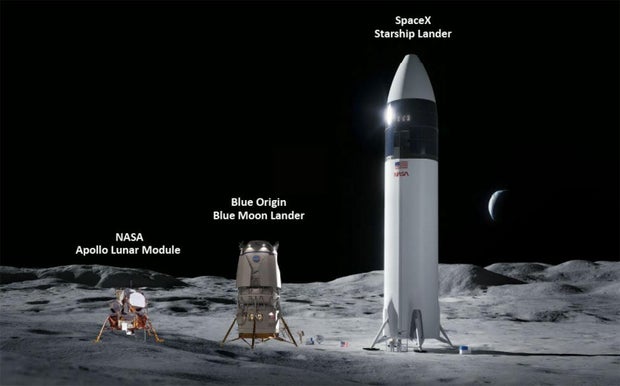
Currently, the Artemis III mission is the sole test flight NASA has scheduled before a moon landing attempt in 2028. By then, one or both industry partners will need to have completed a successful unpiloted moon landing. An artist’s rendering depicts NASA’s lunar lander design alongside Blue Origin’s Mark II lander and SpaceX’s Starship variant, each scaled to size.
Despite setbacks including a Blue Origin launch pad explosion and ongoing issues with SpaceX’s Super Heavy-Starship rocket, NASA is continuing with Artemis III mission plans. If only one lander is prepared, the mission will still proceed. Otherwise, NASA may explore alternate scenarios to maintain momentum.
Establishing a Permanent Lunar Presence
NASA aims to reestablish a near-permanent presence on the moon with the Artemis program. The agency’s goal is to cement its leadership in space travel and technology. This involves launching robotic landers, lunar satellites, and conducting multiple astronaut landings each year following the Artemis IV and V missions.
The lunar south pole is a targeted region due to its permanently shadowed craters believed to contain comet-borne ice deposits. These deposits could supply water, air, and fuel on-site. With necessary infrastructure and rotating astronaut crews, sustained lunar habitation will mirror the long-term stays seen aboard the International Space Station.
Challenges remain, including ensuring rocket and lander readiness, which may impact schedules and require additional test flights before a moon landing. However, the Artemis program remains central to meeting its objectives by 2028.
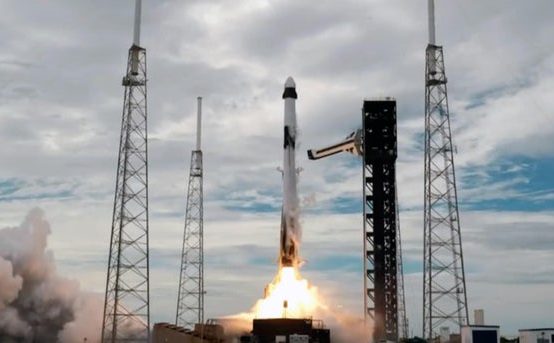 SpaceX Falcon 9 Delivers Crew to International Space Station
 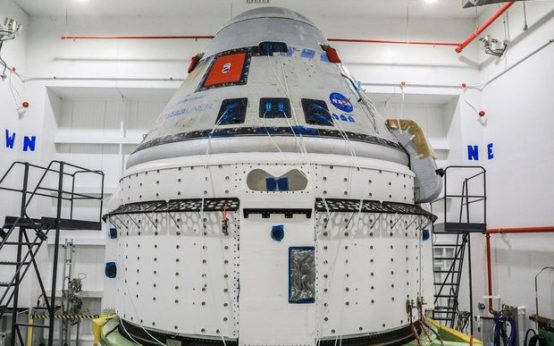 NASA Collaborates with Boeing to Launch Unpiloted Starliner Test
  NASA’s New Space Telescope Launch: A Breakthrough in Cosmic Exploration
  Trump’s Call with ISS Astronauts and Honors at NASA
  Anticipated Northern Lights Due to Solar Activity
  NASA’s Nancy Grace Roman Telescope Prepares for Launch