Last year, Chicago recorded its lowest number of violent crimes in six decades. Although this is positive news, the situation has worsened this year. While other cities continue to reduce crime, homicides in Chicago have increased by 7%. The arrival of summer, a time when violence often escalates, adds to the concern. Financial struggles continue as federal pandemic aid for cities has ended, and downtown faces challenges due to remote work. Effectively managing each dollar spent has become crucial.
Chicago has allocated $100 million to community violence interventions (CVI). This approach deploys community organizations to prevent interpersonal conflicts, a major cause of shootings in Chicago and nationwide. CVI aims to prevent conflicts from turning into gun violence through street outreach, mentoring, job programs, and case management.
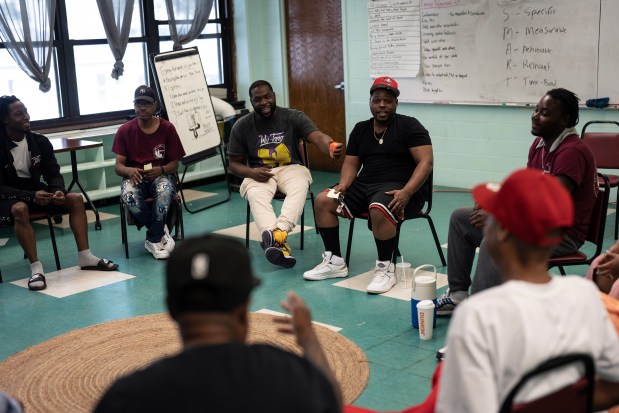
Cognitive behavioral interventions complement CVI, potentially enhancing its effectiveness. This can be observed in programs like READI Chicago, which I helped evaluate. READI provided the most at-risk individuals with a subsidized job, cognitive behavioral intervention, and support from street outreach workers for 18 months. In our study, 98% of participants had been arrested, and 35% had been shot.
“READI taught me not to react impulsively. Before the program, I would have retaliated for disrespect, but now, I pause and think,” shared a participant.
Three patterns emerged from in-depth interviews with 99 men from Chicago’s highest-violence neighborhoods. First, being a victim of violence alters your perception of the world. For example, a young man shot at 17 found himself more prone to aggression afterward. In READI, participants learned to understand that their initial reactions might be influenced by past experiences.
Second, chronic exposure to violence limits perceived options during conflicts. A participant prepared to retaliate for a friend’s death realized that alternative responses existed. READI taught him that revenge was not the only path.
Third, engaging in violence can lead to seeing oneself as inherently violent. One man’s perception changed through READI, realizing he was not bad but had faced adverse situations. He identified trauma from losing family members, including his sister, which he had not addressed before.
These patterns are not moral failings but predictable reactions to chronic violence. Cognitive behavioral interventions help individuals re-evaluate their thinking, aligning decisions with their desired self-image. Seventy percent of participants saw READI as a chance for personal growth, not merely an anti-violence or employment program. This indicates that it transforms participants’ self-perceptions and potential.
The effectiveness of cognitive behavioral interventions is supported by statistical evidence. A randomized controlled trial of READI showed a 65% reduction in shootings and homicide arrests. Although costing $60,000 per participant, it saves between $4 and $18 for every dollar spent through fewer hospitalizations and incarcerations.
Programs such as Becoming a Man (BAM), Choose to Change, and One Summer Chicago Plus have also shown significant reductions in violent crime among youths. Skilled outreach workers intuitively teach some cognitive behavioral skills. The next step is to ensure these skills are consistently delivered across CVI programs in Chicago.
Implementing these evidence-based strategies does not require significant additional funding. This approach offers a practical solution for Mayor Brandon Johnson to address violence effectively.
Megan Kang, a sociologist at Johns Hopkins School of Government and Policy, is affiliated with the University of Chicago Crime Lab. She co-authored “Social Cognition and Interpersonal Violence” with Kathryn Edin, Jens Ludwig, Timothy Nelson, and Sendhil Mullainathan.
To share your thoughts, submit a letter of up to 400 words to the editor at [email protected].
 Infrastructure Challenges and the Uncertain State of America’s Bridges
  Ebola Outbreak Updates: Kenya and Democratic Republic of the Congo
  Preventable Cancer Cases Linked to Infectious Diseases
  Pennsylvania at the Center of U.S. Measles Outbreaks
  The Value of Trained Advocates in Patient Rehabilitation
  Federal Focus on Kratom-Derived Products