
President Donald Trump announced on Thursday the cancellation of new military strikes against Iran. He suggested progress in talks aimed at ending the conflict between the two nations. This decision came just hours after he had threatened to escalate the situation by seizing Iran’s oil industry.
In a social media post, Trump stated that significant points of discussion had reached the highest level of Iranian leadership and received approval. This development followed two days of exchanges between the United States and Iran that moved the Middle East closer to all-out war.
Earlier on Thursday, Trump had warned of a potential escalation, stating on social media that the U.S. would strike Iran ‘VERY HARD TONIGHT’ and take control of its oil and gas industries. Later, Trump indicated that the final discussion points had been agreed upon by the U.S., Israel, and other regional allies, though he offered no specific details.
In recent weeks, Trump has claimed that the warring parties were close to a deal, yet no agreement has materialized. Iranian officials and mediators have not commented on Trump’s latest statements concerning negotiation progress.
Negotiations remain stalled over Iran’s nuclear program, which the U.S. and Israel fear could lead to the development of a nuclear weapon. Iran, however, asserts the program is for peaceful purposes. Another major sticking point is Iran’s control over the Strait of Hormuz, a vital route for transporting oil and natural gas.
Trump’s abrupt shift from dire threats to promoting peace negotiations underlines his erratic approach to the conflict. On Monday, he suggested a resolution could be reached in days. However, subsequent attacks between Iran and Israel and those involving the U.S. and Iran have rocked the Middle East.
The first incidents involved military exchanges between Iran and Israel, followed by two rounds of fire between the U.S. and Tehran, targeting regional countries hosting U.S. bases. The American attacks commenced after Trump accused Iran of downing a U.S. attack helicopter near the Strait of Hormuz. Both pilots were rescued safely.
The Iranian Foreign Ministry declared in a statement on Thursday that U.S. attacks rendered the ceasefire ‘meaningless,’ although it did not explicitly abandon it. Following Trump’s threats of more strikes, Iranian Parliament Speaker Mohammad Bagher Qalibaf responded on social media, warning that ‘wrong strategies and impulsive decisions’ would wreak havoc in energy markets and create an enduring quagmire.
This was not the first time Trump had threatened escalation before reopening negotiations. In April, he warned Iran that an entire civilization could be lost if his conditions were not met, before extending a ceasefire.
Iran’s disruption of maritime traffic through the Strait of Hormuz has constricted global energy supplies, inflating fuel prices and raising food and other commodity costs far beyond the region. On Thursday, Trump threatened to seize Iran’s Kharg Island, a critical point for 90% of the country’s oil exports.
In an interview with Fox News, Trump expressed skepticism about such an action’s feasibility, stating, ‘I’m not sure the United States has the stomach for it.’ He added, ‘I don’t want troops there, but if needed, we could deploy a small group to take control.’
Tensions remain over Iran’s nuclear program and the Strait of Hormuz. U.S. Treasury Secretary Scott Bessent noted on social media that the U.S. would draw from frozen Iranian funds to compensate allied nations for damages and any tolls Iran imposes on ships navigating the strait.
Beyond the stalemate over the strait, the conflict over Iran’s nuclear ambitions persists. Tehran maintains its nuclear activities are peaceful. Washington and Israel fear Iran’s uranium enrichment could lead to atomic weapons.
Iran insists any resolution must also conclude hostilities in Lebanon between its ally Hezbollah and Israel. However, Israeli Prime Minister Benjamin Netanyahu appears committed to pursuing his goal of dismantling the political-military group.
A 25-year-old student in northern Iran expressed fears amid escalating conflict with the U.S. and Israel, worsened by domestic crises. The student from Babol, who spoke anonymously due to security concerns, said many Iranians struggle with rising food costs and massive job losses.
‘Everything is going wrong, and there’s no hope among the people,’ the student said. Previously involved in anti-government protests, he now worries about maintaining Iran’s territorial integrity and deterrence against U.S. and Israeli attacks.
The U.S. Central Command reported on Thursday that it targeted an oil tanker with a Guinea-Bissau flag attempting to bypass a blockade on Iranian ports. The M/T Jalveer was disabled late Wednesday after its crew defied U.S. orders.
This marks the ninth merchant vessel disabled by the U.S. in enforcing the blockade. Three Indian sailors died when U.S. forces targeted the Palauan-flagged M/T Settebello on Tuesday, according to India’s minister overseeing ports and shipping.
The U.S. Central Command stated that warnings were issued before firing at the vessel, accused of violating the blockade. The leader of the International Maritime Organization, a U.N. agency, condemned the attack.
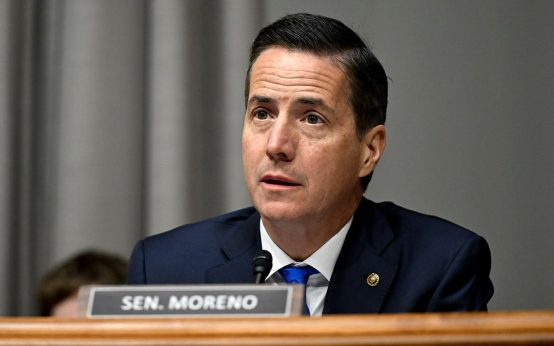 Senator Bernie Moreno Urges DOJ to Address Drug Policy Enabling Forced Abortions
 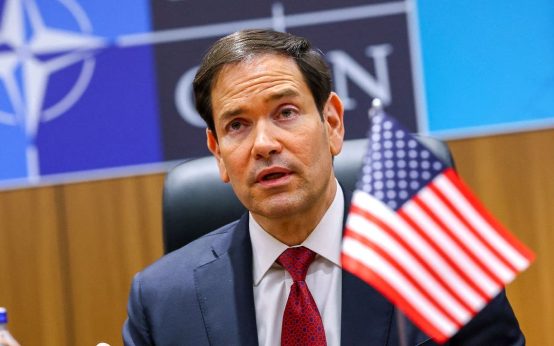 Marco Rubio Criticizes NATO’s Role Amid Middle East Conflict
  Karoline Leavitt Offers Insights on Trump’s Calls With Putin and Xi
 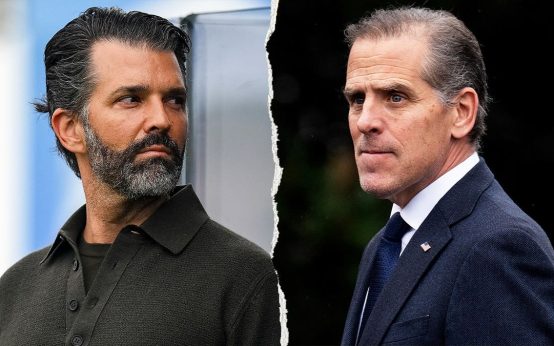 Curtis Pushes for Investigation into Trump Jr. and Biden
  Israeli Prime Minister’s Visit to the U.N. Amid Controversy
  Reader Perspectives on Social Security Reform and Competency-Based Degree Programs