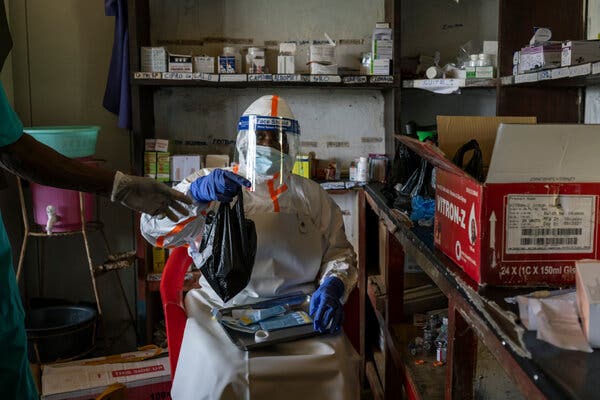
In the Democratic Republic of Congo, health workers operate in challenging conditions to manage an outbreak of the Bundibugyo virus. This virus is responsible for the recent health crisis in East Africa.
Dr. Papys Lame and his team are stationed at an Ebola treatment center in Rwampara, Congo. They work tirelessly to aid patients suffering from severe symptoms, such as diarrhea, vomiting, and uncontrollable bleeding. Their efforts include rehydrating patients, providing transfusions, and administering oxygen for those experiencing respiratory distress. They also monitor vital signs and address pain management.
Advancements in treatment have significantly improved since past outbreaks, according to Dr. Lame, who coordinates Ebola responses for the Alliance for International Medical Action. He observes that more treatment options now exist, increasing patient survival rates.
However, a key challenge remains: there is no specific treatment for the Bundibugyo virus. The virus has infected at least 695 individuals, causing 138 fatalities. Despite rigorous efforts, scientists have not yet developed drugs tailored to combat this particular species.
Ebola outbreaks over the last five decades were mostly caused by a different virus species, the Ebola virus. Based on clinical trial results, the World Health Organization endorses two medications to treat this virus. However, the same drugs may not be effective against the Bundibugyo virus due to significant evolutionary differences.
The determination to find effective treatments continues, as researchers strive to address the ongoing health crisis in Congo.
 Upcoming Concerns and Influence in Health Politics
  Fraud Task Force Saves Billions by Tackling Obamacare Misuse
  Presley Gerber’s Passing Raises Addiction Recovery Concerns
  Understanding October SNAP Benefits: Payment Dates and Changes
  Managing Distress and Discomfort Effectively
  Trump Administration Seeks to Influence NIH Grantmaking