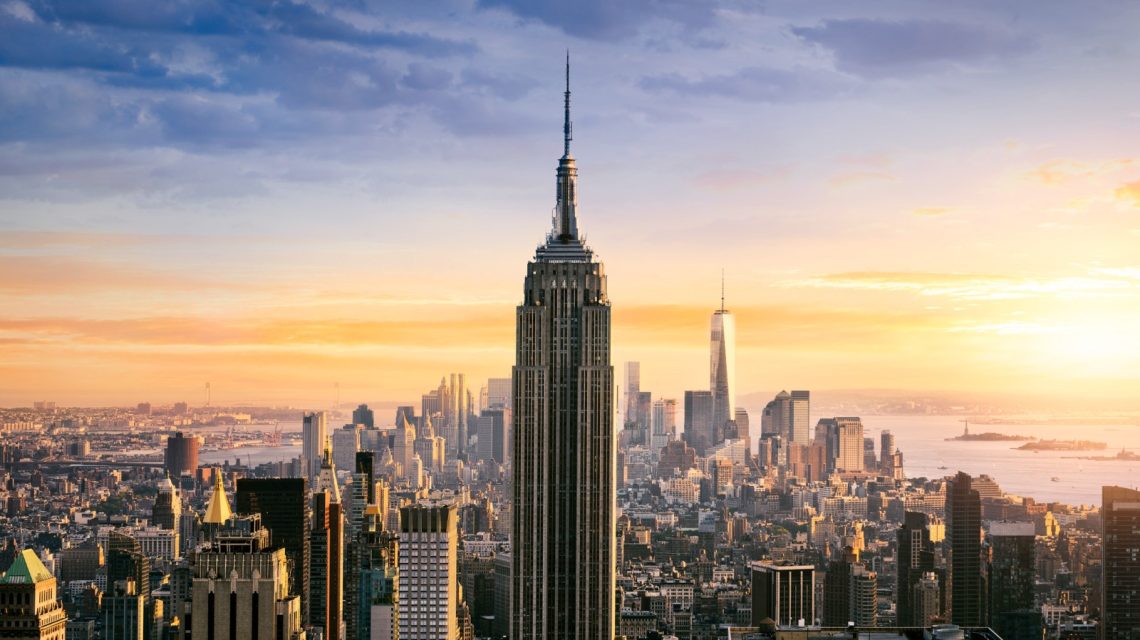
The Empire State Building, a prominent icon of New York City, originally had an unexpected purpose when designed nearly a century ago. Its most distinctive feature, the spire, was intended for docking airships. This innovative plan aimed to allow dirigibles to dock high above Manhattan, enabling passengers to step directly into the building.
During the late 1920s and early 1930s, many believed airships might lead the future of long-distance travel. The notion never became reality, but it remains a fascinating ‘what if’ in American architectural history. This ambitious design contrasts with today’s renewed interest in historic landmarks across New York City. The Flatiron Building is being converted into residences, and Penn Station is undergoing major renovation.
Why the Empire State Building Was Designed for Airships
The spire’s design was a bold concept. The architectural firm Shreve, Lamb and Harmon envisioned it as a sleek, modern structure, facilitating the direct transfer of passengers from airships into the building. The Skyscraper Museum describes the mooring mast as a ‘200-foot tall, modernistic metal tower, flanked by stylized wings and topped with an octagonal room meant as the embarkation point for trans-Atlantic airships.’ In theory, travelers would depart airships and enter the heart of Midtown Manhattan.
Why the Plan Failed
Practical challenges quickly arose. Engineers realized that strong winds around the skyscraper’s top made docking airships extremely difficult and hazardous. Reports from 1931 indicate a privately owned dirigible attached to the mast for only a few minutes while contending with 40 mph winds. Ultimately, no airships used the building as a passenger terminal, ending the experiment soon after it began.
The Spire Still Changed History
Though its intended use was abandoned, the spire helped secure the Empire State Building’s historical significance. By extending its height, the building surpassed the Chrysler Building by approximately 200 feet, making it the world’s tallest skyscraper in 1931. This title held for four decades until the World Trade Center emerged. The summit found a practical use as an observation area, offering remarkable views of New York City. As The Skyscraper Museum notes, ‘The views from the rooftop outdoor observation deck and from the 102nd floor room were unparalleled.’ The summit became both a vantage point and a defining symbol, high above yet central to the city.
For architecture or design-related stories, contact [email protected] to feature your story with Newsweek.
 Understanding Dog Behavior After Grooming
  Unusual Cold Snap Brings Frost and Snow to Western U.S.
  Quantum Physics Enhances Random Number Generation