NABATIYEH, Lebanon — In the early hours of Tuesday, Aida Jleilati and her daughter rummaged through the rubble of their destroyed home in Nabatiyeh, southern Lebanon. An airstrike in late May by Israel turned their residence into debris. They picked up belongings that survived. A small number of residents returned to check on their homes after the announcement of a U.S.-Iran deal aimed at ending their war, which also calls for an end to the Israel-Hezbollah conflict in Lebanon.
Limited Strikes Bring Hope
Though fighting in southern Lebanon hasn’t ceased, the strikes have become less frequent since the U.S.-Iran agreement. Many who had fled are now venturing back to check on their houses. Jleilati and her daughter, Sukaina al-Muhtadi, used to live on the first floor of a three-story building that collapsed due to the bombing.
Through the rubble, Jleilati salvaged her husband’s scuba equipment and some clothing. Meanwhile, her daughter sought a cherished photo album. “What can I say? All that we have gathered in our life has been wasted,” Jleilati expressed. She learned of their home’s destruction on May 26 when her daughter saw images on social media.
Relentless Strikes on Nabatiyeh
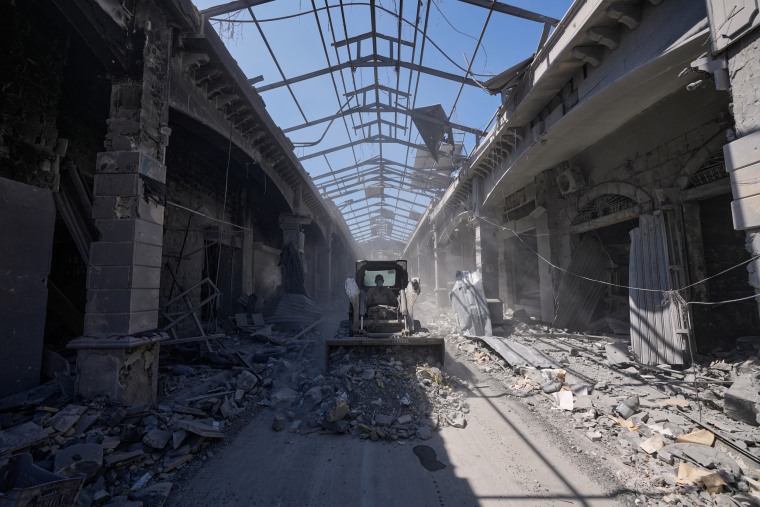
Since the conflict began, Nabatiyeh has faced intense strikes, resulting in numerous casualties. The city’s marketplace has been devastated. On Tuesday, bulldozers cleared debris as the U.S.-Iran deal restored some hope for residents.
Despite the preliminary truce established on April 17, skirmishes continue. Israeli forces have advanced approximately 4 kilometers from Nabatiyeh, historically a major trade hub known for its Monday market.
A municipal worker cleared debris as the city struggled to return to normalcy.
Nabatiyeh’s Historical Significance
Since Lebanon’s establishment in 1920 post-Ottoman era, Nabatiyeh has been a religious and cultural center. Shiite clerics here maintain strong ties with holy cities in Iraq. Historically, Nabatiyeh was central to the Shiite Jabal Amel region, with ties to Iran dating back to the 16th century.
Nabatiyeh is pivotal for Shiite Muslims marking Ashoura, a period of mourning for the Prophet Muhammad’s grandson. This ten-day mourning starts soon.
Destruction and Loss
At Nabatiyeh’s heart, 75-year-old Kamel al-Kamel surveyed the ruins of his supermarket and coffee roastery. Valuing his losses at $2.5 million, he lamented the devastation from this war compared to past conflicts. “Thank God we are still alive,” he shared, recalling his walk through Nabatiyeh.
Samar Zuraik was relieved her house stood albeit damaged, but the loss of her son Ali, killed in an airstrike, overshadowed this. In the war-torn city lacking basic services, Zuraik expressed profound grief: “I wish I lost my house and my son stayed alive.”
Impact on Health Services
Nabatiyeh hosts three main hospitals. The oldest, Najdeh El Chaabiyeh, treated many wounded in the conflict. Dr. Shafi Fouani noted the war’s harshness, paralleling a previous conflict in 2024. The hospital has managed about 500 deaths and treated 1,200 patients, sending critical cases to other cities.
Lebanese Health Ministry reports over 3,800 killed in the latest conflict. On the other side, Israeli casualties include 30 soldiers and a defense contractor, along with two civilian deaths.
On Tuesday, Israeli artillery targeted Nabatiyeh’s outskirts while Hezbollah launched rockets at Israeli positions. Blasts resonated as Israeli troops fought for strategic positions.
Uncertain Future
Jleilati and al-Muhtadi found a watch from the daughter’s childhood among the ruins. They plan to return to a Beirut suburb temporarily, hoping the truce holds to facilitate their return to Nabatiyeh. “We cannot live outside Nabatiyeh,” said al-Muhtadi, yearning for stability in their hometown.
 Lithuanian Leader Seeks U.S. Military Commitment Amid Rising Russian Threats
  Italian PM Giorgia Meloni Skips UN General Assembly Amid Growing Tensions
  Calls Grow for Ireland’s Soccer Team to Boycott Matches Against Israel
  New U.S. Military Bases Planned in Greenland Amid Strategic Security Deal
  Twitch Streamer Hasan Piker Discusses Controversial Commentary
  A Shifting Political Landscape: The Decline of Autocratic Power