Colombia’s Political Shift
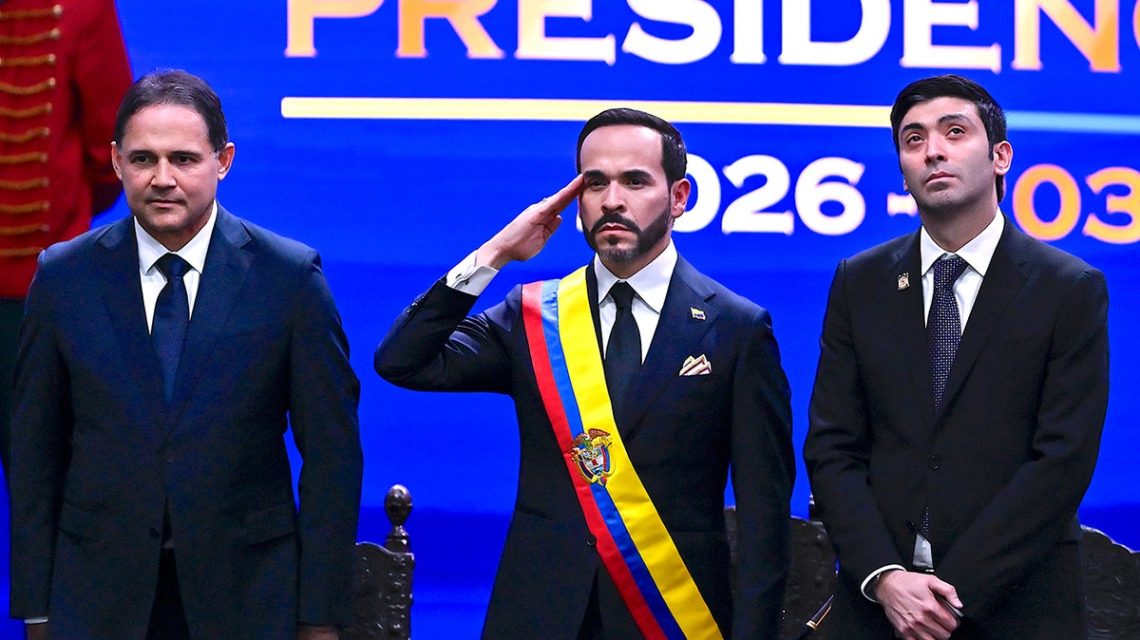
Colombia has entered a significant new phase in its political landscape as conservative President Abelardo de la Espriella took office recently. Renowned by his nickname ‘El Tigre’, his leadership promises a departure from the left-wing policies of former President Gustavo Petro. His agenda focuses on enhancing security, revising economic strategies, and fortifying relations with the United States.
Significant Political Event
The inauguration, held in Cali, Colombia, marked a profound political transformation in Latin America. This pivot comes after President Gustavo Petro’s socialist tenure, which included expansion of coca cultivation and tense relations with Washington. Now, De la Espriella faces the task of turning campaign ideals into actionable policy.
Several conservative heads of state from diverse nations like Argentina, Ecuador, and Chile attended his inauguration, showcasing regional solidarity. U.S. Attorney General Todd Blanche represented the United States, along with other dignitaries like Spain’s King Felipe VI and FIFA President Gianni Infantino.
Security Partnership and Foreign Relations
Colombia remains a vital security ally for the U.S., a significant trade partner, and a major recipient of American security aid. The country hosts numerous American companies, and its security status impacts regional migration, organized crime, and drug trafficking. De la Espriella’s foreign policy aims to rebuild strategic connections with the U.S., foster collaboration with Israel, and adopt a firm stance against authoritarian regimes in Venezuela, Cuba, and Nicaragua.
Managing these commitments depends heavily on financial resources, which are currently strained. Camilo Guzmán of Libertank highlighted fiscal constraints as a key obstacle, stating, “President de la Espriella inherits a house with the roof leaking and the safe empty.”
Challenges Ahead
The fiscal challenges include a deficit tracking around 6.5–6.7% of GDP, a financing gap near $34 billion, and a medium-term adjustment required of about five points of GDP. Economic growth predictions are modest, and inflation remains stubbornly high. These conditions limit the ability to finance new security initiatives or economic reforms without cutting spending or finding new revenue.
Beyond fiscal issues, security challenges are pressing. Violence from criminal organizations and guerrilla groups poses an ongoing threat. Guzmán noted a surge in homicides and extortion, stating, “Security is rebuilt in years, not in quarters.” Early measures might include operations and captures, but substantial reforms will take time.
Political and Legislative Landscape
The president’s legislative success relies on consensus-building in a divided Congress. Despite winning the presidency, his party holds just five Senate seats, while Petro’s bloc remains influential. Passing reforms will necessitate negotiation with various political groups.
Guzmán emphasized the reality, “He won the election; he did not win Congress.” The fragmented coalition will require careful management, while political realities may prove as significant as security challenges.
Expectations for the New Administration
Experts caution against judging by immediate results alone. The first 100 days should be assessed by how effectively the administration sets out a coherent governing strategy. Key will be forming a credible team, instituting decrees, spending cuts, and fiscal plans. Guzmán advises, “The realistic expectation is this: the first 100 days will produce signals, not results.”
Ultimately, investors and policymakers will scrutinize actions that signal a departure from Petro’s era. These include ending negotiations with groups like ELN, resuming aerial coca fumigation, expanding intelligence cooperation with the U.S., and restoring full diplomatic ties with Israel.
The early steps will gauge whether President de la Espriella can successfully implement one of the most ambitious conservative agendas in Colombia’s recent history or if fiscal, political, and security realities will necessitate a change in plans.
 Trump Administration’s Plan to Resettle Afrikaners as Refugees
  Trump’s Vision on Iran, AI, and Global Security at the UN
  Lithuanian Leader Seeks U.S. Military Commitment Amid Rising Russian Threats
  Italian PM Giorgia Meloni Skips UN General Assembly Amid Growing Tensions
  Calls Grow for Ireland’s Soccer Team to Boycott Matches Against Israel
  New U.S. Military Bases Planned in Greenland Amid Strategic Security Deal