
A couple decided to adopt a rescue puppy based on appearance, believing she resembled a Labrador. As their new pet grew, her looks changed, surprising them with a mix of unexpected traits. Originally documented in a June 5 Instagram post on the account @buffy.the.egg.slayer, the owners shared the animal shelter’s listing that first caught their attention.
They adopted the pup, named Buffy, captivated by her short, light brown coat, typical of a Labrador. However, Buffy’s appearance evolved over time. Her floppy ears transformed, with at least one ear standing upright—a trait not commonly associated with Labradors. Buffy’s pink nose also became apparent, contrasting with the typical black or brown noses described in the United Kennel Club’s breed standards for Labradors.
The owners captioned, “Safe to say she wasn’t a Lab…” Now fully grown, they realized Buffy is not the Labrador they expected. Reflecting on this experience, the shelter listing itself mentioned her breed as “mongrel,” indicating mixed or unknown ancestry. With limited information, the couple had initially relied on visual cues to determine her breed.
Despite the unexpected transformation, Buffy’s owners expressed no regrets about their choice. They captioned the video clip, “Wouldn’t change a thing.” Newsweek attempted to contact @buffy.the.egg.slayer for comments via Instagram.
Challenges in Identifying Shelter Puppies
Determining a puppy’s breed solely on appearance is challenging. According to the American Kennel Club, physical traits like coat texture, ear shape, and body structure can change significantly in a dog’s first year. Many breed-specific traits only develop fully during adolescence or adulthood. This makes breed identification difficult for shelter staff, veterinarians, and potential adopters.
Research shows that visual breed identification is often unreliable, especially in shelters where genetic backgrounds are unknown. A 2018 study in PLOS ONE analyzed over 900 shelter dogs in Arizona and California, revealing complex mixed ancestries that didn’t match a single breed. The study compared visual assessments by shelter staff with genetic testing results, finding many discrepancies. While some breed portions were correctly identified by staff, accuracy dropped when multiple breeds were present. Often, visual assessments did not fully align with genetic results.
The study concluded that shelter dogs frequently have diverse and overlapping breed heritages, making visual identification an imperfect method. Therefore, for mixed-breed dogs like Buffy, breed labeling should be considered an estimate rather than a definitive classification.
 Steve Lotysz: From Medinah’s Gates to Presidents Cup Artistry
  A Family’s Journey Through Cancer and Loss
  The Unlikely Intrigue of a 1990 NBA Trading Card
 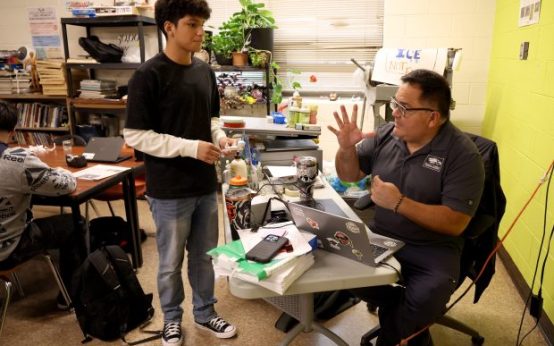 Celebrating Day of the Dead: Students Craft Calaveras in Pilsen
  Family Conflict over Sentimental Necklace
  Cindy Crawford’s Son Presley Gerber Dies at 27