Some of the world’s most renowned buildings often provoke strong reactions. While many label them as eyesores, architects view them as bold expressions of design thinking, engineering, and urban identity. From controversial museums to imposing civic structures, such projects highlight a divide between public perception and professional appreciation.
This debate is occurring alongside a broader shift in how the United States approaches architecture and building construction. The American Institute of Architects (AIA) reports that nearly half of the nation’s 125 million buildings are over 50 years old. Recent trends indicate a growing focus on retaining and repurposing existing structures. Adaptive reuse has surged. In 2024, approximately 25,000 apartments were created from converted buildings, marking a 50% increase from the previous year, according to RentCafe.
Reusing buildings can prevent 50% to 75% of carbon emissions associated with new constructions while avoiding the release of embodied carbon tied to materials and transport. Architects are increasingly prioritizing the refurbishment of older structures. Gordon Gill, the architect behind the world’s tallest building, stressed the importance of refreshing older buildings to maintain their longevity and relevance.
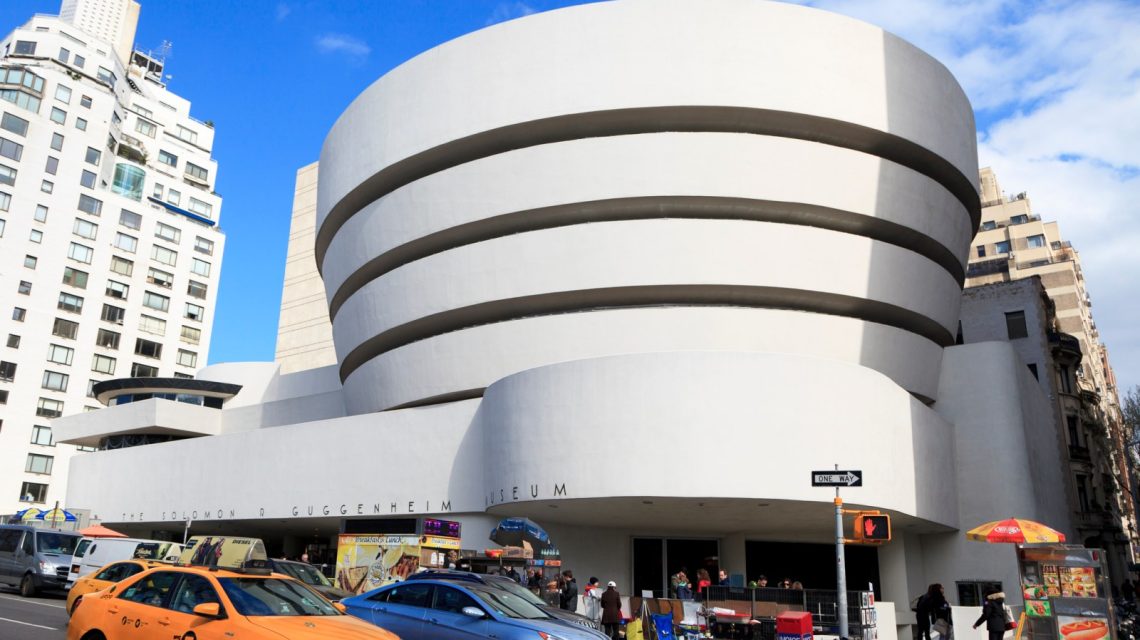
The Guggenheim Museum, New York City
Frank Lloyd Wright’s Guggenheim Museum is widely recognized yet not universally loved. Its stark contrast with Fifth Avenue buildings and its unconventional form can be divisive. Architect Monika Smith, principal and cultural+performing arts design leader at DLR Group, noted that the museum is controversial and sometimes unappreciated by the public due to its contrast with surrounding structures and challenging curved walls for curators and artists.
Despite this, Smith praised its radical rethinking of museum design. She explained that the Guggenheim reimagined the visitor experience by replacing traditional gallery layouts with a continuous journey shaped by circulation and natural light, making it a memorable experience and a sculptural object.
Marin County Civic Center, California
Another Frank Lloyd Wright design, the Marin County Civic Center in San Rafael, also divides opinion. Architect and engineer Charles Bloszies described it as a well-known and somewhat polarizing building. While he appreciates its distinctive design and public function, others see it differently, as illustrated by an acquaintance who dubbed it the “Martian Embassy.” Nonetheless, Bloszies emphasized its architectural significance, labeling it quintessential Frank Lloyd Wright Prairie School architecture transplanted to the rolling hills of northern California. He added that, like the Guggenheim, it fits its context surprisingly well.
Boston City Hall, Massachusetts
Miles Smith, architect and senior industry growth & strategy manager at Graphisoft, shared his admiration for Boston City Hall. Despite repeated attempts to demolish the building, the design community often opposes such actions. Smith considers it a fantastic brutalist structure with a rich backstory and even labeled it as his favorite building in the world.
Architect Marc Gordon, partner at Spacesmith in New York, explained the broader attitudes toward brutalism. The style is generally disliked by the public, as its exposed concrete and stark forms are perceived as anti-humanistic. However, architects value its honest expression of materiality and simplistic monumental geometric form.
Norfolk Scope Arena, Virginia
The Norfolk Scope Arena is another example of a building criticized by locals yet championed by architects. Mel Price, co-founder and CEO of Work Program Architects, noted that many in Norfolk dislike the concrete dome structure supported by 24 flying buttresses.
Despite this, Price considers it an iconic landmark that defines the city skyline, describing it as one of the most striking examples of late-modernist structural expressionism in the U.S. Thom White, also a co-founder of Work Program Architects, echoed this admiration, calling the building majestic and an icon. While acknowledging the ageing infrastructure lacks modern amenities, he argued that updates are possible. Demolishing it would mean losing a unique landmark and a prominent architectural gem that makes Norfolk’s skyline instantly recognizable.
Woodhull Hospital, New York City
In Brooklyn, Woodhull Hospital represents another example of contested architecture. Gordon described it as generally reviled by the public, often seen as a dystopian vision of future modernist architectural typology. Its Cor-Ten steel façade contributes to its foreboding appearance.
Yet, Gordon admires its sheer size and monumentality, highlighting its functional geometric forms, machine-like industrial aesthetic, and structural expressionism. He frames the building as a bold yet misunderstood design.
If you have an architecture or design-related story to share, let us know via [email protected], and your story could be featured by Newsweek.
 Amir Odom Discusses His Departure from the LGBTQ Movement
  Reviving the Spirit of Ken Kesey’s Iconic Bus ‘Furthur’
  Examining Complex Issues of Sex, Gender, and Consent
  Ancient Roman Artifacts Discovered Off Sardinia’s Coast
  Broadcaster Fired Over Teen Tweets: A Closer Look
  Elgin Lanes: A Bowling Alley Reborn