
U.S. crude prices dropped by 2.7% on Monday, reaching approximately $74 per barrel. This decline follows Treasury Secretary Scott Bessent’s announcement of a 60-day waiver on sanctions related to Iranian oil purchases. The drop marks the first time since early March that crude prices have fallen below $75 per barrel.
Meanwhile, international Brent crude prices experienced a more substantial decrease, falling by 4% to around $77 per barrel, the lowest level since the conflict with Iran commenced. Despite these declines, both U.S. and Brent crude prices remain above their immediate prewar levels of $62 and $68 per barrel, respectively.
According to Kpler data, traffic through the Strait of Hormuz reflects reduced activity. On Sunday, 17 crossings were recorded, a decrease from 35 on Saturday and 19 on Friday. Bessent’s statement on social media indicated that Iran committed to ensuring free and open transit within the Strait of Hormuz, which has sparked some market optimism. However, this optimism may be premature, as the situation regarding negotiations over the strait and regional military postures remains unstable.
Over the weekend, ship traffic showed some recovery, though volumes remain well below prewar levels. Kpler’s data, available on the MarineTraffic website, recorded a daily average of 23 transits from Friday through Sunday. Although this represents an increase from April’s single-digit transits, it is still far from the prewar average of 130 vessels per day.
Despite the decline in ship traffic, vessels continue to navigate routes designated by Iran or turn off their transponders during transit, indicating non-standard routing. Kpler emphasized that traffic did not cease entirely, but routes were less standard or transparent.
Additionally, the prices of other essential commodities are also nearing prewar conditions. The commodities group Argus reported a significant reduction in the price of urea, a vital component for fertilizer, noting a 50% decrease from the peak prices observed in April.
 Homer Glen Village Board Delays Decision on ComEd Substation Upgrade
  Nuclear Waste Concerns at San Onofre: Coastal Erosion and Long-term Solutions
 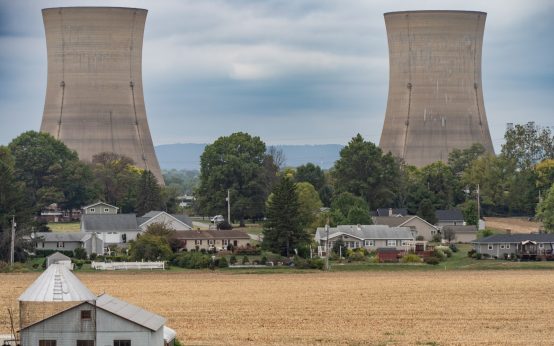 Nuclear Microreactor Project in Indiana Signals U.S. Nuclear Energy Revival
  Impact of Potential Canadian Electricity Cutoff on the U.S.
  Tariffs on Polysilicon Impact Green Energy Transition
  California Legislators Call for Action on Oil Companies’ Profits