
The Minnesota attorney general’s office has filed a lawsuit against a home seller accused of targeting the East African Muslim community with predatory and deceptive real estate deals. The lawsuit claims Chadwick Banken and six of his limited liability corporations violated state and federal laws, including Minnesota’s regulations against religious discrimination. Banken allegedly engaged in contracts-for-deed sales, offering homes at inflated prices on unfavorable terms to Muslim buyers.
Attorney General Keith Ellison stated that the case against Banken aims to send a message to others involved in similar practices. According to Ellison, such transactions lead to devastating financial consequences, leaving families homeless and penniless. Banken did not respond to requests for comment regarding the lawsuit.
“He’s not the only one, but he’s one of the worst that I’ve seen,” Ellison said. “When people can’t pay back, they’re out of their house, and they’re out of their money. I can’t think of anything more financially devastating to a family than that.”
The legal action in Hennepin County district court follows a 2022 investigation by ProPublica and Sahan Journal into the increasing use of contract-for-deed sales in Minnesota, particularly within the Somali community. Many Muslim buyers avoid transactions involving interest due to their religious beliefs, leading to offers framed as “interest free” home purchases. However, buyers reported signing contracts they didn’t understand and couldn’t afford.
The lawsuit alleges Banken imposed inflated home prices, high down payments, and substantial balloon payments to force buyers into default, ultimately retaining the property. Abdinoor Igal, featured in the ProPublica-Sahan Journal story, purchased a home from Banken in Lakeville and is identified as “purchaser 2” in the lawsuit. Igal has engaged with the attorney general’s office and recalls leaving his house after paying approximately $170,000. Following this, he lived in his truck while his family relocated to Kenya.
A legislative effort is underway in Minnesota to amend the contract-for-deed law. This initiative seeks to prohibit property “churning,” as alleged in the lawsuit against Banken, and aims to introduce new protections and methods for recovering losses from failed contract-for-deed transactions. The proposal is part of an omnibus bill awaiting legislative approval.
The lawsuit claims Banken sold hundreds of homes through contracts-for-deed over the past six years, detailing his business practices. One of Banken’s corporations, Slow Flip LLC, exemplifies predatory behavior, requiring buyers to make substantial down payments and large monthly installments, leading to eventual defaults. Subsequently, Banken reacquires the home and sells it to new buyers. Banken allegedly targeted buyers with low credit scores or recent bankruptcies and suggested they use business names for contracts, falsely indicating evictions of commercial tenants rather than families.
Banken’s contracts reportedly violated federal Truth In Lending Act requirements by concealing true home costs and balloon payments. Additionally, they included exorbitant monthly interest payments. The lawsuit notes that down payments, monthly installments, and total home prices increased for Muslim buyers. Ellison criticized Banken for his deceptive marketing, claiming to assist a community excluded from the traditional housing market.
“He’s not helping,” Ellison said. “What he’s really helping himself to is their money that they probably have mopped floors and pushed brooms for. … He’s setting people up to fail. His conduct is predatory, deceptive. And we hope to bring a stop to it.”
Ellison encouraged buyers involved in questionable contract-for-deed agreements to contact his office, suggesting potential avenues for restitution. Although Igal expressed relief over potential repercussions for Banken, he noted ongoing defaults and evictions among his former neighbors, and he continues to rebuild his family’s life.
“My kids, the smallest one, 4 years, she called me and asked me, ‘Daddy, when am I coming?’ And I told her I’m making some money, but I don’t know when,” he shared, describing his struggle and uncertainty.
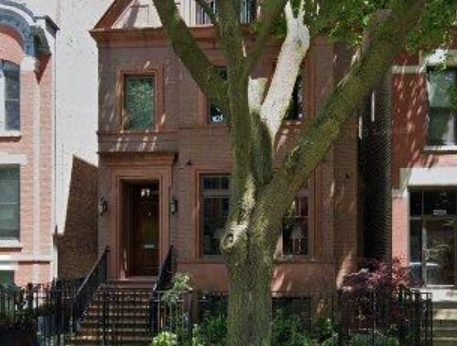 Former Federal Prosecutor Sells Lincoln Park Mansion
  Former Chicago Bulls Guard Jevon Carter Sells West Town Home
  Understanding Real Estate Fees
  Homeowners’ Guide to Home Equity Loans: Costs and Considerations
 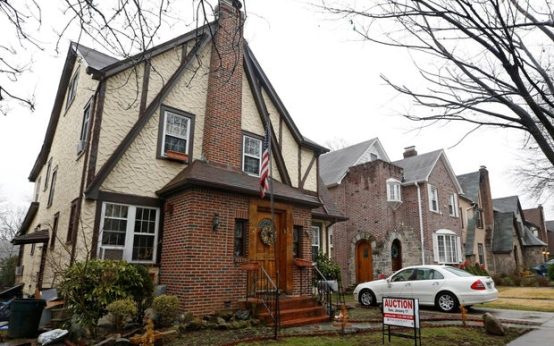 Trump’s Childhood Home Renovated and Sold for Nearly $2 Million
 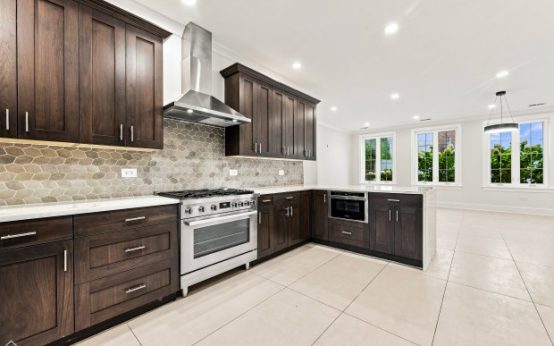 Luxury Five-Bedroom Home for Sale in Edgewater, Chicago