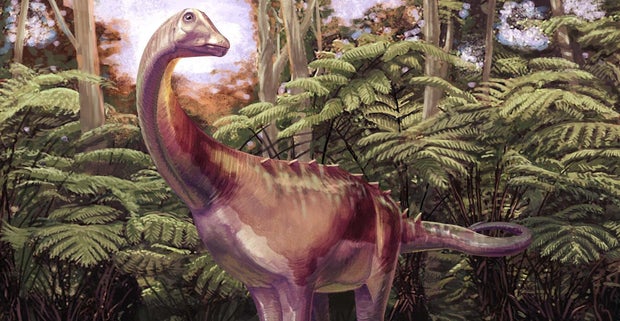
Scientists recently found a titanosaur fossil that had been stored in a drawer for many years. The fossil, a tail bone from a long-necked, plant-eating dinosaur, was discovered in Antarctica and had not been identified to species yet.
Originally unearthed in 1985 during an expedition to James Ross Island, Antarctica, geologist Mike Thomson had collected the bone while working with the British Antarctic Survey. He was mapping rock layers and gathering marine reptile fossils to assist with dating methods. At that time, Thomson recorded the find as a large reptile bone.
Decades later, paleontologist Mark Evans came across the bone in official collections. His curiosity led to further analysis, confirming it as a dinosaur fossil. Evans told BBC News, “It’s only when you start thinking ‘what’s in this drawer,’ that sometimes you come across something and you think, ‘Ah, this looks interesting.'” Researchers examined the bone’s shape and compared it to more complete dinosaur remains.
Published in the journal Acta Palaeontologica Polonica, the findings highlight how rare it is to find dinosaur fossils in Antarctica due to harsh ice-covered conditions. According to co-author Paul Barrett from the Natural History Museum in London, the region was vastly different millions of years ago, characterized by lush forests that were hospitable to life.
“This discovery represents only the second sauropod body fossil known from Antarctica, although it was the first dinosaur bone to be collected from the continent,” noted the study authors.
Titanosaurs lived in this forested Antarctica 80 million years ago. Measuring around 23 feet long, this dinosaur was small for its group, indicative of being a young specimen when it perished. Scientists theorize that the dinosaur’s body floated from the coast and eventually sank, preserving it in marine rock. Around 100 species of titanosaurs have been recognized globally. They all share features as four-legged, long-necked, tree-reaching plant eaters, with some reaching over 115 feet and weighing up to 60 tons.
Technological advancements now allow researchers to gain more detailed insights from fossils like the Antarctic titanosaur. Unfortunately, Thomson passed away in 2020, before the bone was confirmed as a dinosaur. According to Evans, Thomson “would be delighted to know what this was,” if he were still alive.
The provided image from the Natural History Museum shows this significant fossil find. The fossil belongs to a group of dinosaurs known as titanosaurs, providing valuable information about ancient Antarctic life.
 The Discovery of Incendiamoeba cascadensis: A Fire Amoeba
 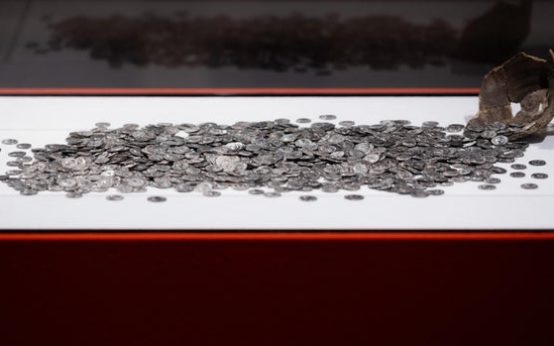 Archaeological Discovery in Germany: Largest Hoard of Roman Coins Found
  Cold Weather Alerts and El Niño Influence
  Turning Home Food Waste into Compost: A Guide
  Chicagohenge: When Sunlight Aligns with City Streets
 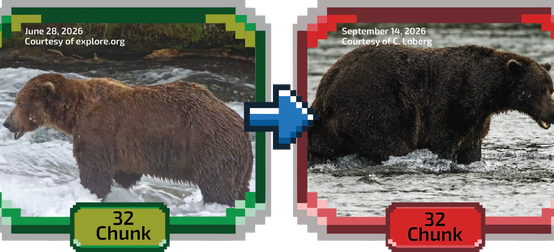 Fat Bear Week 2026: A Look at the Contest and Its Competitors