
At the “World of Tomorrow” summit in Edinburgh, notable industry leaders came together at a pivotal moment. Major companies like SpaceX, OpenAI, and Anthropic are all preparing to launch IPOs, each valued at trillion-dollar levels. This influx of IPO capital represents a crucial test for the evaluation of frontier technologies. The results will either define a successful AI era or reveal weaknesses in current excitement.
Industry Dynamics and Relationships
The current tech landscape shows a distinct interconnection among a few dominant players who supply computing resources, cloud services, and financial investment. These giants sometimes invest in firms reliant on their own infrastructure. For instance, OpenAI has partnered with Microsoft until 2032, and Anthropic plans to utilize Google Cloud for the next five years. Both entities depend on Nvidia’s hardware solutions.
Some critics view this network as a modern keiretsu—a tightly interlinked ecosystem where startups operate under the influence of a few dominant platforms. Yoav Zingher, founder and president of Launchpad Build AI, expressed concern about value concentrating in these platforms, seeing potential parallels with negative aspects of past technology eras. He noted that, if dominance consolidates, countries with centralized economies like China may have an upper hand.
On the other hand, some industry figures argue that these dynamics foster collaboration. Steve Smoot, co-founder at Lavrock Ventures, believes the real winners will be those who maximize the value of their data through AI by leveraging existing tools effectively.
Debate on Market Strategies
Strategic paths in the AI market vary. Some stakeholders advocate for immediately deployable automation, while others look toward future robotics potential. Jon Quick, CEO of Launchpad Build AI, promotes a focus on integrating specific, high-value automation into existing systems rather than chasing broader, uncertain innovations.
Conversely, investment continues in humanoid robotics. Ricky Horwitz of Exponential criticizes this trend, viewing humanoids as a way to replace human workers without modifying production lines. This approach is being tested through experimental data collection—such as using cameras on factory workers to train robotic systems.
Reshoring manufacturing presents another direction, where automation may reduce the labor required, allowing simpler production near markets. Stephen Bennington, CEO of Q5D, highlighted how localizing production can significantly speed up development cycles, enhancing supply chain efficiency and operational flexibility.
The Talent-Data Conundrum
Skills gaps in bridging engineering and AI-driven workflows have been identified as a major challenge. Timothy Le from Nebius discusses the shift toward “forward-deployed engineering,” integrating technical expertise directly into operations. Upskilling engineers to work with AI tools is a priority, yet challenges persist in finding talent that can effectively combine engineering and data science skills.
One major roadblock is inadequate data collection, an urgent priority according to many participants. Establishing structured, workflow-level data is critical for companies to capitalize on future AI opportunities. Roy Raanani, founder of Chorus.ai, stressed the importance of having data ready for upcoming technological advancements.
Yannis Georgas of Launchpad Build AI echoed this, pointing out that many sectors are still not optimizing their industrial data. Companies are digitized but not necessarily data-centric, posing challenges as they aim to adopt advanced AI technologies.
This context reveals the significant challenge: creating trusted data environments and acquiring the necessary skills to capture and structure this data. Firms lacking in these areas risk missing out on the benefits AI can provide.
 Beijing’s Tactical Undermining of U.S. Supremacy Through AI
 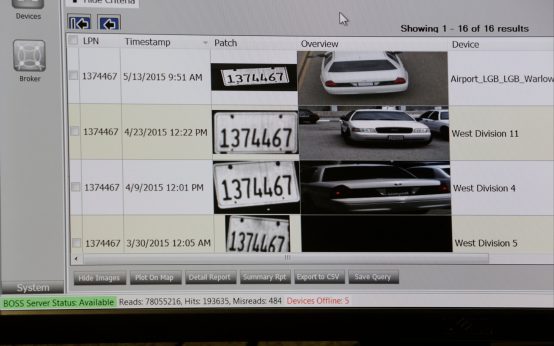 Controversy Surrounds Automated License Plate Readers Across the U.S.
  Trump and Harp Sued Over Truth Social Subscriber Program
  Implications of AI in College Admissions
  Congressional Inaction Amid AI Concerns
  Rising Demand for Data Centers Driven by AI Development