At Coherent’s Sherman, Texas facility, CEO Jim Anderson and NVIDIA CEO Jensen Huang highlight the use of light to transmit data efficiently in AI data centers. Their facility is a leader in AI innovation. They plan to increase output fourfold by next year.
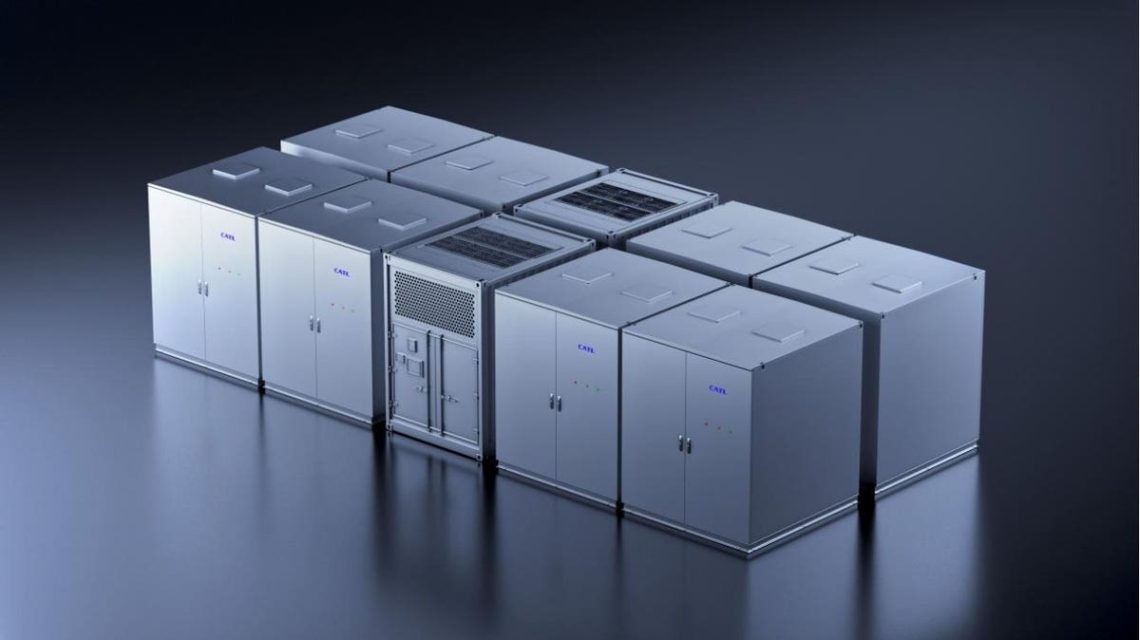
In related news, Chinese battery maker CATL has launched a sodium-ion battery named TENER Sodium Energy Storage System. This could impact power grids in the future. It’s the first sodium-ion system ready for commercial use.
Potential Impact on the Power Grid
CATL’s battery targets large-scale storage to support grids and manage rising electricity demand. AI data centers and extreme weather conditions increase grid strain. Renewable energy sources also need efficient storage solutions.
No specific U.S. launch has been announced. However, TENER Sodium represents a shift towards sodium-ion storage for major grid projects.
Sodium-Ion Battery Benefits
Sodium, unlike lithium, is more abundant and widely distributed. CATL aims to supplement, not replace, lithium-based systems with sodium-ion batteries. This diversification offers more choices to energy companies.
Integration with Existing Systems
The TENER Sodium system shares a physical footprint with existing lithium iron phosphate platforms. It offers rated capacity of over 30 megawatt-hours and is adaptable to various project needs. Its design enhances performance in extreme temperatures.
CATL claims reduced heat generation and auxiliary power consumption, benefiting large storage projects. Its silent operation could alleviate concerns when built near populated areas.
Commercial Readiness
CATL has invested substantially in sodium-ion research since 2016, resulting in significant production capacity. It secured a large commercial order with HyperStrong, illustrating confidence in sodium-ion technology.
U.S. adoption remains uncertain. Utilities must consider factors like cost and performance. Nevertheless, sodium-ion storage might play a role in future energy projects.
Conclusion
This new technology won’t solve all issues like old infrastructure or slow permitting. Still, sodium-ion batteries offer a promising addition to energy storage solutions, potentially bolstering grid reliability.
Kurt “CyberGuy” Knutsson offers further tech insights for viewers and readers at CyberGuy.com.
 Congressional Inaction Amid AI Concerns
  Rising Demand for Data Centers Driven by AI Development
  Understanding AI’s Impact Compared to Historical Threats
  Debate Over AI’s Governance Amidst Fearful Predictions
  Navigating AI Responses: A Personal Experience with Google’s New Approach
  Concerns About AI Responses in Health Information