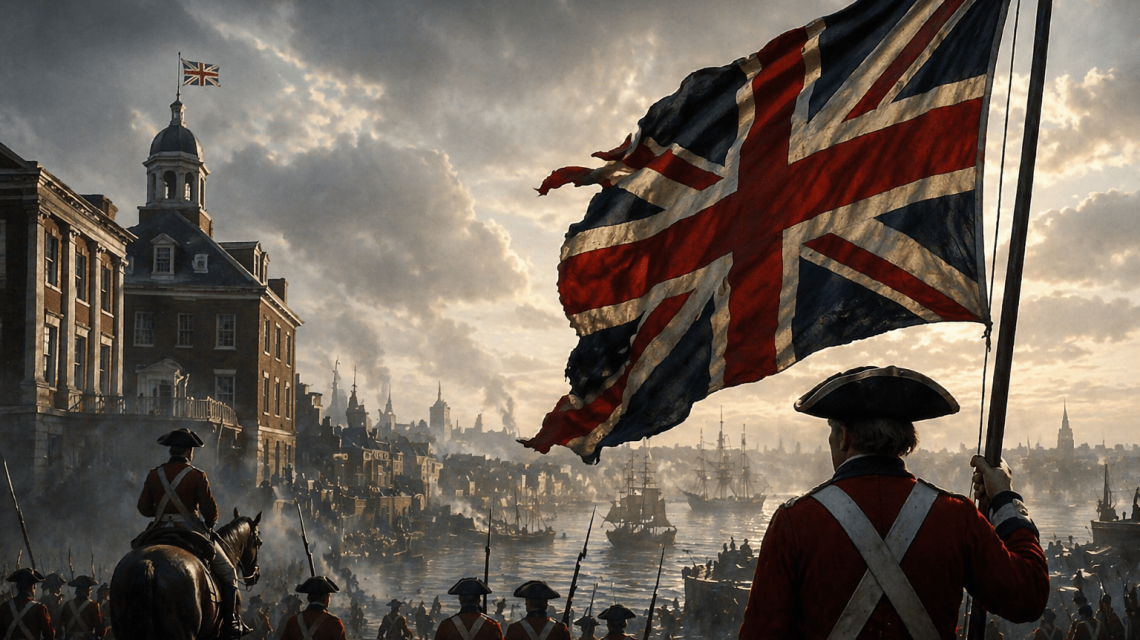
In December 1776, General George Washington surprised the Hessians at the Battle of Trenton, marking a pivotal moment in the American Revolutionary War. This victory set in motion events that eventually led to the United States celebrating its 250th anniversary of independence. But what if Washington had not succeeded? What if the Declaration of Independence remained nothing more than a dream of freedom?
Alternate History and Its Complexities
Imagining an alternate reality where America lost the Revolutionary War is challenging. Historians point out that even small changes could create a butterfly effect, altering countless historical outcomes. Despite this, some aspects of daily life might not look so different.
“You had guys like Benjamin Franklin, you know, the Poor Richard, ‘Time is money,’ coming from him early on. And that is distinctly American, I think, in many ways,”
Nathaniel Philbrick, a historian, explained to Newsweek. This American spirit of innovation and enterprise might have persisted irrespective of political outcomes.
Gaining Independence Eventually
Most historians agree that even if America had not gained independence in 1776, it would have happened by 2026. The British Empire changed significantly over time, with territories like Australia, Canada, and India eventually gaining independence. Joseph Ellis, a Pulitzer Prize-winning historian, notes that the United States’ vast and resource-rich land would inevitably have become difficult for Britain to control.
A Changed Map of America
The Revolutionary War victory set the stage for America’s territorial expansion. The Louisiana Purchase and acquisitions of Florida, Texas, and Oregon were part of this landscape change. If America had lost the war, the map might have depicted territories under French, Spanish, British, or Russian control. Russia, under Empress Catherine the Great, attempted to colonize Alaska in 1784, and historians suggest a different outcome in the war may have seen more Russian influence along the West Coast.
Impact on Native American Nations
Native tribes, like the Mohawk and Seneca, supported the British during the Revolutionary War, hoping that British rule would halt colonial expansion into their lands. Historian Kathleen Duval speculates that had the British won, some tribes might have maintained sovereignty longer, potentially creating a different power dynamic west of the Mississippi River.
Slavery’s Uncertain Future
Britain abolished the slave trade in 1807 and slavery itself in 1833. If Britain had won the Revolutionary War, it might have pushed for emancipation in the colonies sooner. Joseph Ellis believes this could have led to a civil conflict between Britain’s anti-slavery efforts and the southern colonies’ pro-slavery stance.
Sports and Social Integration
Sports integration could have occurred at a different pace. While America delayed integration, European nations had already seen Black athletes excel in sports like boxing and soccer. Historian Louis Moore proposes that losing the revolution might have created alternative pathways for athletes, where professional opportunities arose earlier.
Women’s Rights and Social Progress
The timeline for women’s rights may not have changed significantly. The 19th Amendment in 1920 granted women the right to vote in the U.S. Some historians argue that the women’s rights movement drew strength from the American language of freedom and independence. Without these ideas, progress might have occurred differently.
Convenience Culture and Industrialization
The American commitment to convenience, exemplified by innovations like the drive-through, highlights cultural distinctions. Nathaniel Philbrick observes that a British-controlled America might have seen less emphasis on such modern conveniences. Kathleen Duval notes that British law once restricted industrialization in the colonies, hinting at a different developmental trajectory without the Revolution.
Conclusion
While it’s impossible to know exactly how history would have unfolded if America had lost the Revolutionary War, the exercise reveals intriguing possibilities. From territorial changes and social progression to sports and cultural dynamics, the effects of a different outcome are complex and far-reaching.
 Venezuelan Leadership at the United Nations
  Ontario Synagogue Shooting During Yom Kippur Leaves One Officer and Shooter Injured
  Pope Leo XIV’s Upcoming Visit to Latin America: An Overview
  Ukraine Deploys Ground Robots in ‘Operation Vivaldi’
  Understanding AI’s Impact Compared to Historical Threats
  State Department Alerts on Middle East Travel Amid Rising Tensions