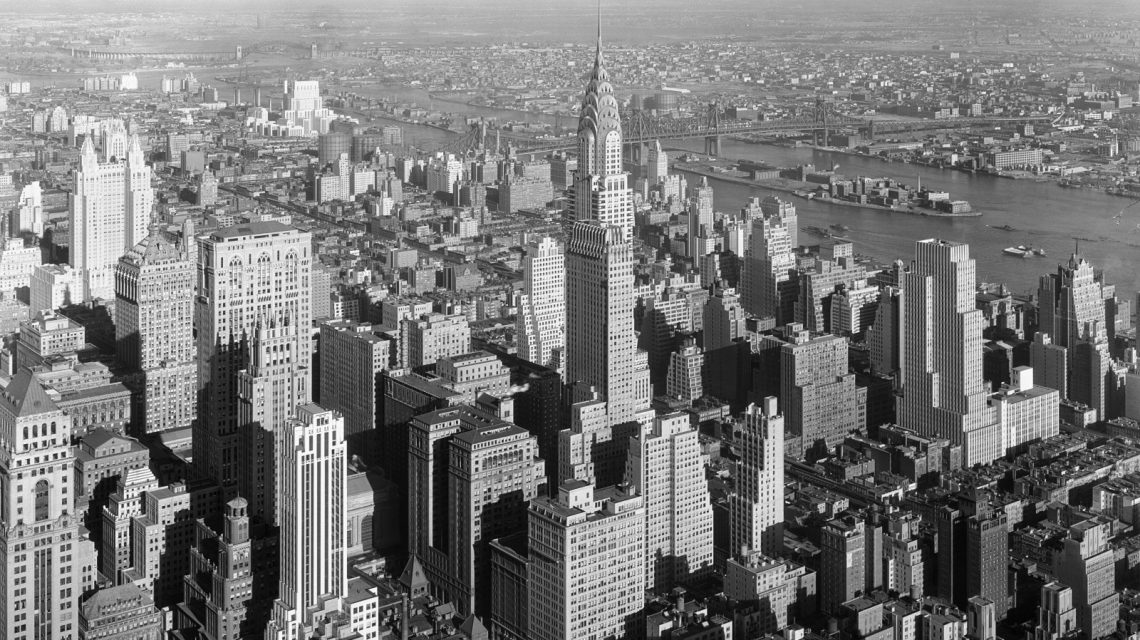
As the United States marks its 250th anniversary, architects express concerns about the potential loss of its historic character due to the emphasis on demolition over preservation. This tendency to replace older buildings with new developments threatens landmarks that reflect local identity and culture. Advocates propose a greater focus on adaptive reuse to secure the nation’s architectural heritage.
Prominent architect Gordon Gill, known for his work on Jeddah Tower, emphasizes the importance of existing buildings. He highlights the need to refresh and maintain these structures as part of the sustainability legacy.
A Debate Rooted in American History
The tension between preserving historic buildings and clearing them for development has been part of American history for centuries. Historian Whitney Martinko outlines debates from as early as the 1780s, where Americans argued about historic structures’ roles in the nation’s landscape versus private profit motives.
An example from the 19th century is the demolition of John Hancock’s house in Boston for new residences, while Mount Vernon was saved by preservationists. Recent efforts show growing interest in adaptive reuse, such as New York City’s Flatiron Building being converted into private residences.
Architect Leeswann Bolden highlights financial motives behind America’s demolition-first mentality. Since the Industrial Revolution, rapid population growth demanded fast and cheap construction, overshadowing longevity and preservation. Even today, financial ease drives many developers to favor rebuilding over retrofitting due to evolving standards in accessibility, utilities, and parking.
Roots of the Mentality
Miles Smith, another architect, points to America’s historical need for rapid growth as a driving factor. He notes that the rise of stick-frame construction contributed to a culture of disposable buildings. The construction economy remains centered on the demand for new development, where changing this mindset may disrupt existing industry stakeholders.
Losing the Nation’s Story
Bolden warns against the demolition-focused approach as it risks losing significant parts of America’s historic narrative, especially during its 250th anniversary. Many traditional landmarks are sacrificed for the sake of newer constructions.
Smith shares similar concerns, cautioning that bypassing preservation protections could lead to the replacement of cultural touchpoints with profit-driven architecture lacking historical and cultural significance.
Preserving Cultural Identity for the Future
Despite these concerns, Smith acknowledges progress in preserving historic structures over recent decades. He contrasts this with European practices, where buildings are often adapted for multiple generations.
Bolden points out how European cities utilize century-old stadiums, reflecting different value priorities compared to the U.S. According to Smith, preserving historic structures is crucial for maintaining cultural identity. America’s architectural styles reflect the diverse influences of immigrants and settlers, creating a complex mix representing the nation.
“There isn’t one distinct ‘America’ style of architecture because immigrants brought their native architectural styles here,” Smith says, describing it as a “patchwork quilt” that mirrors the country’s melting pot of customs and beliefs.
Smith advocates for embracing adaptive reuse to ensure that American architecture continues to evolve and tell its story over time, safeguarding its unique identity for another 250 years.
 Navy Veteran Generald Wilson Reflects on Emotional National Anthem Performance
  Lucas Museum of Narrative Art: A New Cultural Landmark
  Northlight Theatre’s ‘The Front Page’: A Satirical Nod to Chicago’s Journalistic Past
  The Value of Unsupervised Play in Child Development
  Why the Creative Class and Global City Concepts Lost Momentum
  Aurora’s Moon Festival Showcases Cultural Diversity and Community Engagement