
Last week’s Supreme Court decision bolstered President Donald Trump’s authority to dismiss nearly all executive branch officials. Though seen as a conservative ruling, this power echoes presidential authority from the past.
In the 1930s, President Franklin D. Roosevelt and the Democratic left would have welcomed such executive control. Roosevelt’s era was marked by a desire for enhanced presidential powers to implement the New Deal. He frequently used radio broadcasts, famously known as ‘fireside chats’, to communicate directly with Americans. These chats helped gather public support for his policies.
The recent court decision in Trump v. Slaughter aligns with this earlier presidential centralization. It shows how perceptions of executive power shift over time based on political context. The ruling might appear as a conservative win today, yet reflects a historical trend desired by a past Democratic administration.
This development demonstrates how the balance of power within the U.S. government evolves. It underscores the ongoing debate over executive authority’s scope in different political climates. The ruling could influence how future presidents from either party exercise their influence.
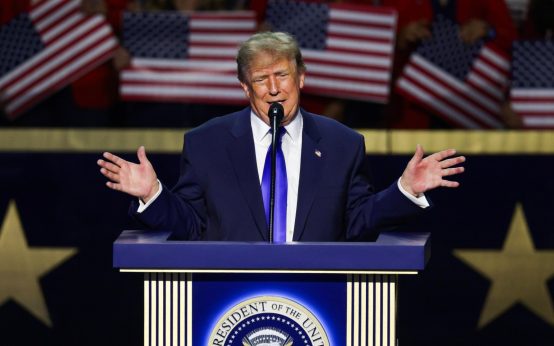 Republican Senator Criticizes Trump’s $5,000 Check Proposal
  Trump’s Approach to Iran at the United Nations
  Trump’s Triumphal Arch Controversy
  Concerns Over Abdul El-Sayed’s Potential Senate Role and National Security
  Kentucky Governor Andy Beshear Discusses Tariffs, Faith, and Political Ambitions
  Sunday Highlights: Lane Kiffin, Nancy Mace, and College Football Drama