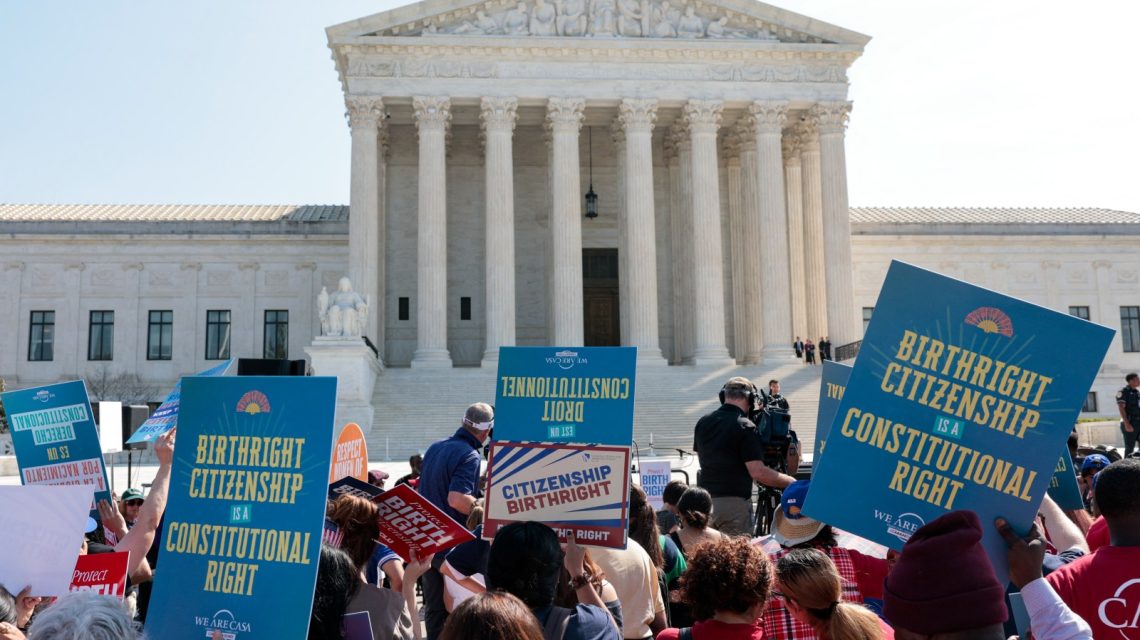
The recent U.S. Supreme Court decision, a 5-4 ruling, supports birthright citizenship, providing relief despite other reactionary judgments this year. This outcome demonstrates the court recognizing limits to reversing liberal legal precedents.
This year, the court’s rulings have been notably conservative, with significant implications for various rights. If the court had abolished the birthright citizenship guarantee, it would parallel the landmark Roe v. Wade reversal, not by introducing new rights but by withdrawing established ones.
Nonetheless, the court’s majority has a clear conservative agenda, favoring traditional rights while opposing progress for certain groups. The Trump administration’s policies gained favor, such as restricting asylum seekers and humanitarian protections.
The court has dismantled barriers to conversion therapy bans, allowed discrimination against the LGBTQ+ community, exempted healthcare refusals for transgender patients, and upheld restrictions on transgender athletes.
These decisions are part of a broader conservative shift impacting environmental regulations, abortion rights, and democratic safeguards, potentially facilitating oligarchy and tyranny. Recent rulings also ease big money’s political influence and expand the president’s power over federal employees.
Chief Justice John Roberts, writing for the majority, upheld birthright citizenship by a narrow margin. This restrained decision likely stemmed from the negative optics of the Trump administration’s attempt to reinterpret the Constitution’s citizenship clause.
The clause’s language, “subject to the jurisdiction thereof,” traditionally excludes diplomats, invaders, and certain Native tribes. Trump’s stance sought to exclude illegal immigrants, a contradiction given their subjection to U.S. laws, evident in ongoing arrests and deportations.
The court’s rejection of Trump’s legal reasoning suggests an unwillingness to appear wholly partisan, although the conservative shift continues. Upcoming midterm elections highlight the potential for further judicial scrutiny.
Donald Trump’s persistent election integrity challenges lack evidence despite extensive investigations. The Supreme Court should prepare to uphold electoral integrity, actively addressing fraud claims during the midterms.
To safeguard democratic processes, the court should ensure ample judicial resources during elections, resisting procedural dismissals and prioritizing substantive fraud evaluations.
Clarifying election integrity in prominent cases could prevent events like the January 6 Capitol attack. In the current political climate, the Supreme Court’s role may prove crucial in averting similar crises.
Thomas G. Moukawsher, a former Connecticut judge and American Bar Association leader, highlights these judicial dynamics in his book, “The Common Flaw: Needless Complexity in the Courts and 50 Ways to Reduce It.” His perspectives reflect personal opinions.
 Federal Appeals Court Decision Against Trump’s ‘Third-Country’ Deportation Policy
  President Trump’s Controversial Ban on Media Outlets Sparks Press Freedom Concerns
  U.S. Security Agreement in Greenland Sparks Optimism and Concerns
  Cook County’s Property Tax Bridge Loans
  A Controversial Stance on Immigration Policies Sparks Debate in South Carolina
  Trump Administration Challenges In-State Tuition for Undocumented Students