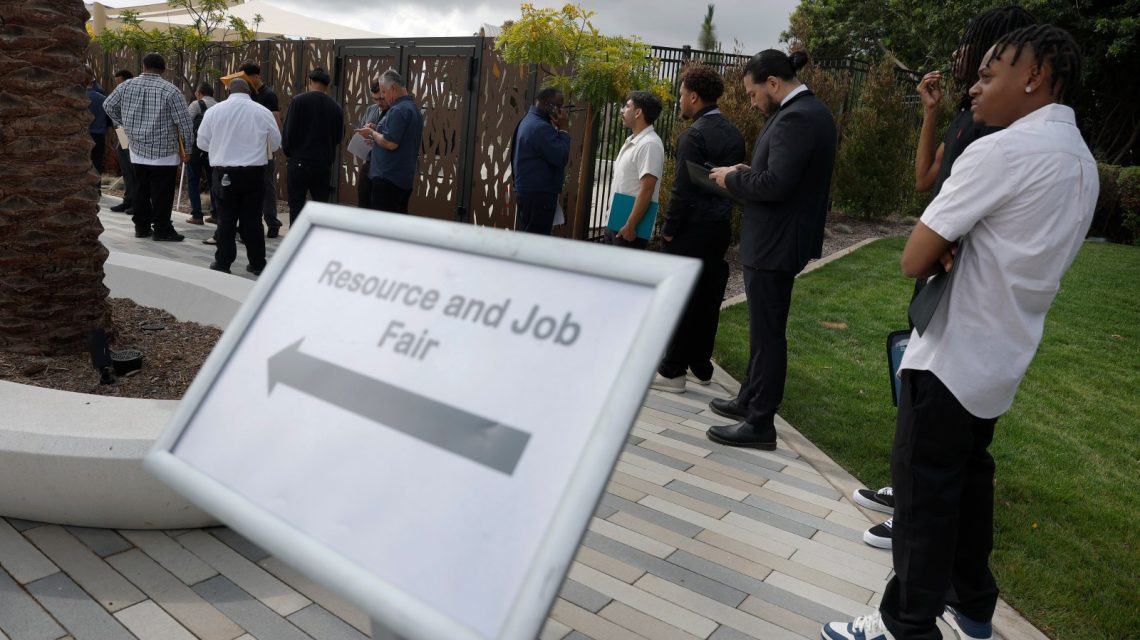
Enhanced Unemployment Benefits in Virginia
Virginia workers can now expect larger unemployment checks due to a new state law affecting unemployment benefits starting July 5. The law, approved by the Virginia General Assembly and endorsed by Governor Abigail Spanberger, raises the maximum weekly unemployment benefit for new claims from $430 to $478. Additionally, the minimum weekly benefit increases from $112 to $160.
These changes apply solely to new unemployment claims filed from July 5 onwards. The Virginia Employment Commission (VEC) states that the increase aims to provide more substantial financial support to workers as they seek new jobs and stabilize household finances during periods of unemployment.
Economic Context and Implications
This legislative move occurs amidst a stable U.S. labor market, though uncertainties prevail in sectors impacted by artificial intelligence, shifting consumer demands, and modifications in government spending. Virginia’s unemployment rate remains below the national average, prompting state lawmakers to advocate for stronger worker protections during transitional phases.
Current Labor Market Status
Virginia’s labor market shows relative health compared to other states. “Virginia Works” reports that the state’s seasonally adjusted unemployment rate in May stood at 3.8%, equating to 4,490,601 individuals, with the labor force participation rate slightly declining to 63.3%. This figure is below the national unemployment rate of 4.3% for May, as per the Bureau of Labor Statistics.
While Virginia’s rate has increased from the early 2023 and 2024 lows, reflecting nationwide labor market cooling, the state benefits from a diverse economy anchored in government employment, defense contracting, healthcare, education, and technology.
Economists consider unemployment rates between 3% and 4% indicative of a healthy labor market. Nonetheless, certain sectors display weaknesses, impacted by federal workforce reductions, technology restructuring, and slower hiring.
Financial Pressures in Metropolitan Areas
Despite low historical unemployment rates, job loss-induced financial pressures persist in high-cost metropolitan regions like Northern Virginia, Richmond, and Virginia Beach. Proponents of the new law argue that unemployment benefits failed to keep up with inflation and increasing living expenses.
To receive the new maximum weekly benefit of $478, workers must have earned at least $18,900.01 in wages over two quarters during the base period used for benefit calculations.
State Comparisons: Unemployment Benefits
Though Virginia’s benefit increase is significant, the state still lags behind those with the most generous programs nationwide. A Newsweek analysis shows varying maximum weekly benefit amounts across states, with some exceeding $1,000 while others offer less than $300.
Virginia’s previous benefits ranked in the lower half nationally, and while the new limit of $478 elevates its standing, it remains far from many northeastern and western states. Differences across states highlight the decentralized nature of America’s unemployment insurance system, as states largely determine formulas, levels, and eligibility, leading to uneven support based on residency.
National Unemployment Overview
The national unemployment rate, calculated monthly by the Bureau of Labor Statistics, measures the percentage of the labor force actively seeking work but not employed. It excludes individuals who have ceased job hunting, retirees, students, and those voluntarily leaving the workforce.
Economists view this measure as crucial for assessing labor market strength. Lower rates typically suggest robust worker demand and healthy economies, whereas rising rates may signal economic frailties.
In May, the national unemployment rate was 4.3%. This rate is higher than the post-pandemic recovery lows but below recessionary benchmarks. Comparatively, unemployment neared 15% during the 2020 COVID-19 shutdowns and hit 10% during the Great Recession.
Layoff Trends in 2026 Compared to 2025
Despite reports of substantial corporate layoffs, overall job-cut announcements saw considerable decline in 2026 compared to 2025. According to Challenger, Gray & Christmas, U.S. employers disclosed 443,604 layoffs in the first half of 2026, marking a 40% decrease from 744,308 during the same period in 2025.
June disclosed 45,849 job cuts, 53% lower than May and 4% below June 2025. Although layoffs remain prevalent in specific sectors, the broader labor market avoids the predicted downturns.
Technology comprises the largest share of layoff announcements, with 139,156 cuts reported through June, signifying an 83% rise from the first half of 2025. These reductions link to artificial intelligence adoption and restructuring around emerging technologies.
Despite technology-related layoffs, other industries are more stable with fewer job cuts than previous years, reducing 2025 total layoff numbers.
Virginia lawmakers identified these factors as justification for strengthening unemployment benefits. While employment stability persists, workers facing job loss may encounter prolonged transitions and heightened living expenses. The expanded benefits can serve as a supportive financial cushion for Virginia residents amidst such challenges.
 Bishop Blase Cupich Announced as New Archbishop Designate for Chicago
  Daring Rescue of American Fighter Pilots in Iran
  Giants Honor 9/11 Anniversary During Game Against Cowboys
  Tragic Incident at Shasta Lake: Man Dies Trying to Rescue Dog
  High-Speed Crash in Irvine Results in Two Fatalities
  Teen Charged with Murder After Man Pushed from Train in Chicago