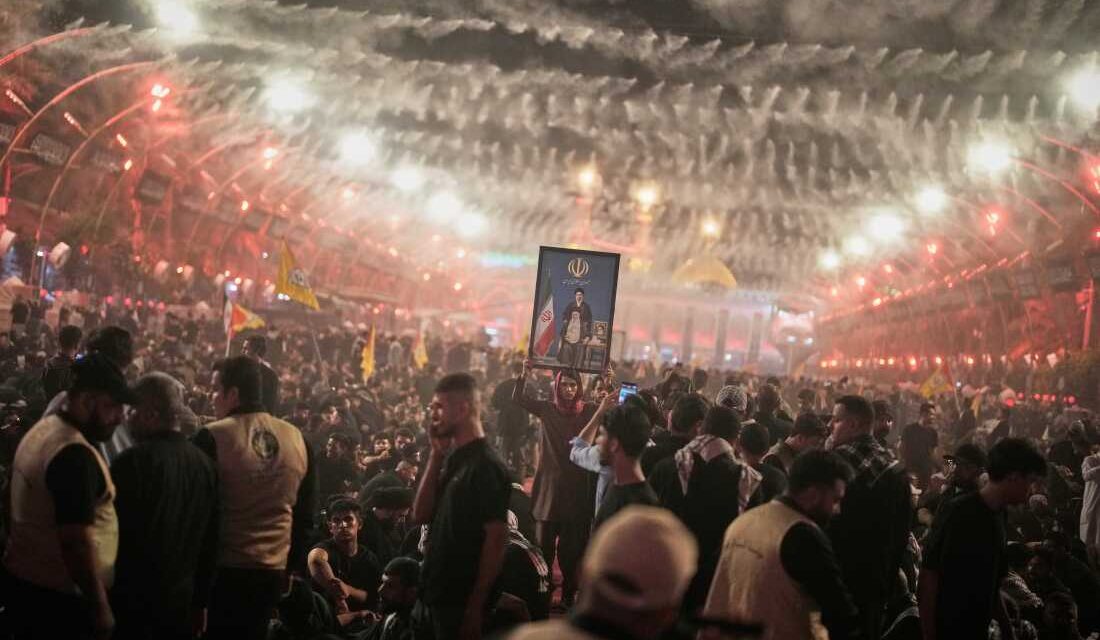
On Wednesday, July 8, 2026, mourners gathered outside the Imam Hussein Shrine in Karbala, Iraq, for the funeral procession of Ayatollah Ali Khamenei. A mourner held a portrait showing Iran’s Supreme Leader Ayatollah Mojtaba Khamenei with his late father. Meanwhile, tensions escalated as the United States launched new airstrikes against Iran early Thursday.
Iran’s response targeted Bahrain, Kuwait, and Qatar. This rekindled threats to an interim deal aimed at ending the ongoing conflict in the Persian Gulf. The strikes occurred after U.S. President Donald Trump announced that recent Iranian attacks on ships in the Strait of Hormuz marked the end of a fragile ceasefire.
U.S. Airstrikes and Iranian Retaliation
The U.S. military targeted military sites and port facilities following earlier Iranian actions. On Wednesday, Iran targeted merchant vessels near Oman, leading to U.S. strikes. Thursday’s attacks were more extensive, with warnings sounding in Bahrain, home to the U.S. Navy’s 5th Fleet.
Kuwait’s military actively intercepted drones and missiles. Iran’s Revolutionary Guard confirmed attacks on Bahrain and Kuwait. The U.S. Central Command reported hitting around 90 targets in Iran, including an airport runway and missile launchers. These actions aimed to weaken Iran’s capacity to disrupt passage in the Strait of Hormuz, a critical oil and gas conduit.
Repercussions in Iran
Iranian state media reported explosions in several regions, including Bushehr, the site of Iran’s nuclear power plant, and multiple southern ports. In Khuzestan province, three fatalities occurred. A firefighter died during a strike on an airport in Iranshahr. Previous strikes on Wednesday resulted in nine deaths in Iran.
The U.S. strikes also targeted infrastructure, a first since April. A railway bridge in Golestan province was hit, with the Revolutionary Guard reporting similar attacks. These locations are significant, especially near Mashhad, where ceremonies for Ali Khamenei took place.
Trump’s Warnings
After attending a NATO summit in Turkey, Trump shared videos on social media of explosions in Iran. He warned against future attacks, stating that further actions would have stronger repercussions. Despite indicating no long-term military action, Trump suggested decisive U.S. military responses.
Trump threatened to target Iran’s civilian infrastructure, including power and desalinization plants, and indicated potential U.S. control over Kharg Island, a crucial oil export site.
Impact on Ceasefire and Negotiations
Following the U.S. strikes, Iranian forces retaliated against American military bases in the Persian Gulf. Iran maintained that its interim ceasefire agreement allowed for control over the Strait of Hormuz. Parliament Speaker Mohammad Bagher Qalibaf expressed confrontation against the U.S. actions in a message on X.
The turmoil raised fears of resumed warfare, with Trump suggesting the ceasefire deal was “over.” This led to a spike in oil prices due to uncertainties around energy shipments through the strait.
Trump’s comments fueled speculation, questioning the viability of ongoing negotiations. Iranian Deputy Foreign Minister Kazem Gharibabadi criticized Trump’s policy approach as ineffective.
Continued attacks pose a dilemma for Iran’s leadership, balancing hard-line desires for control of critical waterways and the need for economic relief through international negotiations. Talks aimed at a lasting resolution and addressing nuclear program disputes are set to follow Khamenei’s funeral, which was meant to lower tensions.
 Trump Delivers Warning to Iran, Cuba at UN General Assembly
 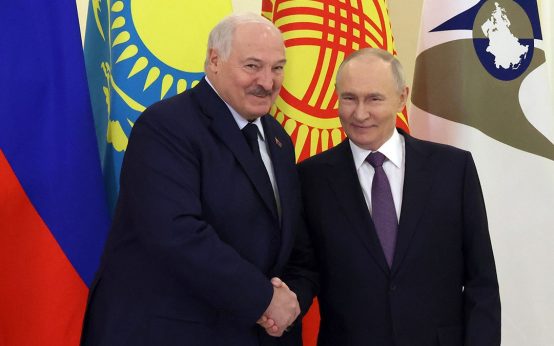 Lukashenko and Putin’s Unique Relationship and Belarus’ Strategic Role
  Alan Ritchson Faces Backlash Over Political Remarks
 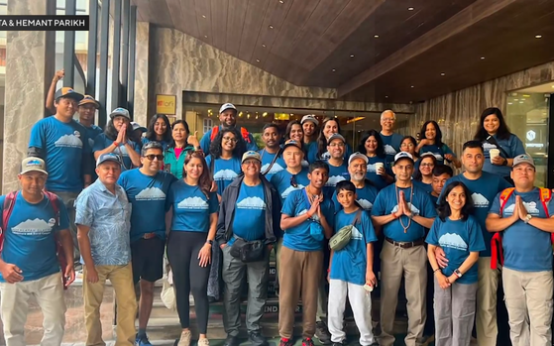 Himalayan Pilgrimage: A Couple’s Narrow Escape and Lingering Questions
  Former CEO Sentenced for Bank Fraud and Sanctions Evasion
  Russia’s Potential Incursion Into Estonia: NATO’s Resilience Under Scrutiny