
New York’s trading witnessed a downturn for computer chipmakers and other beneficiaries of the artificial intelligence wave this Thursday. This decline had a negative effect on global stock markets, overshadowing positive movements elsewhere on Wall Street. As a result, U.S. stock indices reflected mixed outcomes.
Market Index Movements
The S&P 500 slipped by 0.2% after nearing its all-time peak from the previous month. By mid-morning Eastern time, the Dow Jones Industrial Average showed a modest climb of 102 points, or 0.2%. In contrast, the Nasdaq composite decreased by 0.7%.
Most stocks on Wall Street gained ground due to major companies exceeding profit expectations for the last quarter. However, certain AI-focused enterprises experienced setbacks overshadowing these gains.
Individual Stock Performances
Abbott Laboratories’ shares surged 11.1% due to stronger-than-anticipated profits and an upbeat earnings forecast. UnitedHealth Group shares rose by 3.5%, driven by similar earnings success. Nonetheless, Nvidia’s stock fell 2.5%, posing a significant weight on the S&P 500 owing to its high market value. Other prominent AI firms also saw declines, giving back some gains made earlier in the year.
Micron Technology’s year-to-date performance fell below 200% as its shares declined 5.7%. Sandisk experienced a 10.6% drop, yet remains up 500% for the year. Additionally, Western Digital fell 9%, maintaining an overall yearly gain of 170%.
Global Chipmaker Insights
Concerns linger over AI stocks facing pressure due to potentially inflated prices and uncertain profitability. Meanwhile, Taiwan Semiconductor Manufacturing Co. reported robust quarterly profits, yet its U.S.-trading shares fell 2.2% despite a 1.2% rise in Taiwan.
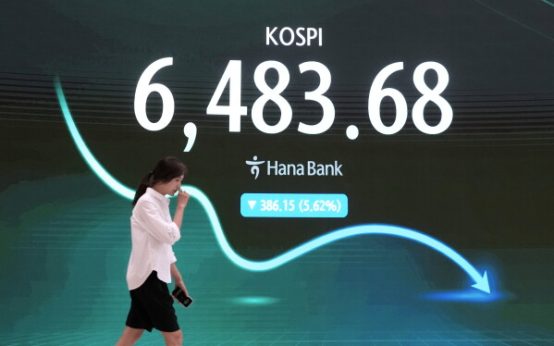
In South Korea, AI leaders Samsung Electronics and SK Hynix’s losses dragged the Kospi index down 6.4%. The market has been volatile in recent weeks, reflecting drastic fluctuations influenced by these stocks. Additionally, the Bank of Korea’s interest rate hike negatively impacted Seoul’s stocks, marking its first hike since 2023.
Oil Prices and Economic Factors
Globally, apprehensions about the Federal Reserve and major central banks increasing interest rates to manage the effects of expensive oil persist. Oil reached near-monthly highs amid concerns surrounding conflict with Iran and the stability of the Strait of Hormuz, with Brett crude prices fluctuating around $84.75 per barrel.
Amidst these factors, the bond market saw the 10-year Treasury yield increase to 4.57%, contrasting with the previous day’s 4.55% and 3.97% before tensions with Iran.
Economic Data
Recent U.S. economic reports painted a mixed picture. Retail spending was weaker than anticipated; however, excluding gasoline station sales, consumer spending displayed strength. Additionally, fewer unemployment benefit claims signaled a robust job market, and manufacturing in the mid-Atlantic region surpassed expectations.
International Market Performance
Globally, indexes in Europe and Asia experienced declines, with Shanghai dropping 1.8% and Tokyo 2.8%. Hong Kong’s Hang Seng was an exception, gaining 1.3% following Alibaba’s cybersecurity approval for AI usage in China.
 Maximize Savings with New Interest Rate Hikes
  Maximizing Returns with Short-Term CDs
  Debate Over Mortgage Accessibility Continues Amid Lender Standards
  Maximize Savings with the Right Interest-Bearing Account
  Wall Street Dips as AI Stocks Decline
  Wall Street Awaits Key Financial Updates from Major Retailers and Fed Meeting Insights