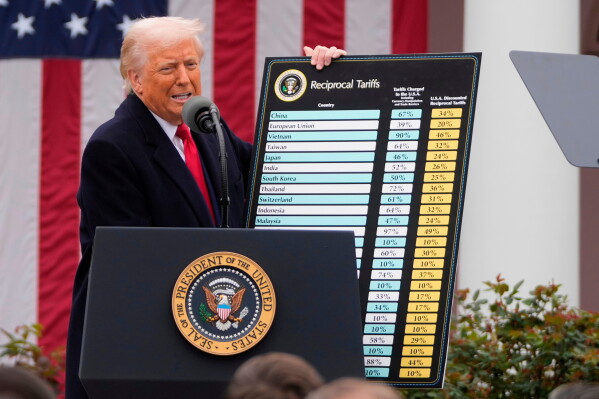
The U.S. Treasury experienced a surge in revenue from President Donald Trump’s extensive tariffs on imports. These revenues, however, diminished after the Supreme Court invalidated a significant portion of Trump’s tariffs in February. This leaves the current administration with the challenge of replacing the lost revenue.
After the Supreme Court ruling, the president attempted to leverage Section 122 of the Trade Act of 1974, which allows for the imposition of 10% tariffs globally. However, such tariffs are only valid for 150 days, expiring on July 24. Extending these tariffs would require congressional approval, which seems improbable given the upcoming midterm elections and voter dissatisfaction with rising living costs.
The administration, however, considers more robust options. Section 301 of the same trade law permits tariffs and sanctions against nations with unfair trade practices. Trump previously imposed significant tariffs on China under Section 301, and similar actions were recently taken against Brazil. Trade experts believe the administration will transition to Section 301 tariffs before the deadline, ensuring no interruption in tariff collections.
Despite Trump exceeding his mandate to levy import taxes, the U.S. Constitution reserves this power for Congress. His use of the 1977 International Emergency Economic Powers Act (IEEPA) for imposing worldwide tariffs was struck down. The Supreme Court ruled in February that emergency powers could not justify tariff imposition, necessitating refunds to importers. Consequently, tariff revenues turned from a significant influx to a financial drain.
Import tax revenues peaked at over $31.4 billion last October but dwindled significantly, dropping to $22 billion by March and April. Refunds outpaced tariff collections, resulting in a $42 million shortfall in May and a $25.6 billion deficit in June. President Trump and Treasury Secretary Scott Bessent aim to utilize other legal means to recover the lost income.
Section 301 offers the president the ability to impose or modify tariffs based on foreign trade practices but requires following procedural steps like collecting public comments and conducting hearings. Unlike other tariffs, Section 301 tariffs do not have a limit and can be renewed after four years, providing the administration with agility. Although businesses face uncertainty regarding Trump’s tariff policies, a switch to Section 301 tariffs could offer more predictability.
The administration initiated substantial Section 301 investigations to counter the revenue loss. One investigation targets 60 countries failing to address imports produced by forced labor. Another examines whether certain trading partners, including China, the EU, and Japan, are overproducing goods and harming U.S. manufacturers.
In response to forced labor issues, U.S. Trade Representative Jamieson Greer proposed tariffs last month on numerous countries. Public comments are still under review, but implementations are imminent. Trade expert Nathaniel Halvorson predicts smooth implementation of the forced-labor tariffs before the expiration of the existing ones.
The other Section 301 investigation into alleged overproduction remains incomplete. However, additional tariffs are expected soon, possibly after the midterm elections, to avoid political repercussions. Trump, self-proclaimed “Tariff Man,” aims to revive the large worldwide import taxes initiated in 2025, though these new investigations may face legal scrutiny.
 Flight 93 Hero’s Father Criticizes Ties Between Hasan Piker and Abdul El-Sayed
  House Races Shift Amid Democratic Momentum
 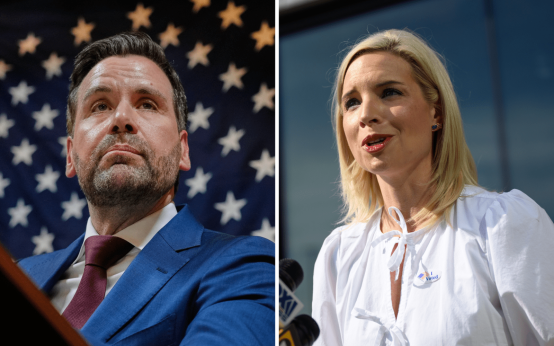 Iowa Senate Race: Marist Poll Shows Democrat Josh Turek Leading Republican Ashley Hinson
  Kamala Harris and Abdul El-Sayed Campaign Together in Detroit
  New U.S. Military Bases Planned in Greenland Amid Strategic Security Deal
  Challenges Facing the Supreme Court’s Public Perception