
The United States intensified its airstrike campaign against Iran, targeting bridges and collapsing a tower at an important Iranian port. These actions are part of U.S. President Donald Trump’s attempts to pressure Tehran to ease its control over the Strait of Hormuz.
In response, Iran launched missile attacks against U.S.-allied countries in the Middle East, including Qatar, which plays a significant role in mediation efforts.
Ceasefire Collapse and Regional Tension
The temporary ceasefire, agreed upon the previous month, has fallen apart. The region has seen continuous exchanges of fire between the U.S. and Iran, as both seek to control the vital strait. Iranian officials report that U.S. strikes have resulted in dozens of deaths and numerous injuries, with more casualties expected from the latest attacks.
The conflict began with the U.S. and Israel declaring war on Iran on February 28, leading to Tehran’s decision to close the strait to shipping. This action caused oil prices to rise sharply, granting Iran significant leverage in negotiations.
Trump’s Address and U.S. Airstrikes
In a primetime speech, President Trump claimed the war effort was progressing successfully. He promised that the positive outcomes of this effort would soon become evident.
The recent U.S. airstrikes targeted bridges in Iran’s Hormozgan province, resulting in seven fatalities as reported by Iranian state television. These strikes aimed to isolate Bandar Abbas, Iran’s primary port, from central regions of the country.
Despite some remaining open routes, the U.S. strategizes to further expand strikes to disrupt military and essential supplies to Iran’s population. The U.S. Central Command confirmed striking multiple targets, including a tower at Iran’s Chabahar port, a crucial trade hub for Afghanistan.
The collapse of the port tower has been highlighted by U.S. Defense Secretary Pete Hegseth. The tower oversaw commercial activities, but Iran’s Revolutionary Guard was also present at various ports.
Iran Retaliates Against Qatar
Iran launched missile attacks on Qatar, which urged its citizens to find shelter. Explosions echoed as defenses intercepted the missiles, and a child was reported injured by debris.
Iran targeted other U.S.-aligned nations like Bahrain and Kuwait. Jordan also intercepted incoming Iranian missiles. Reported explosions were heard in the Kurdish region of northern Iraq.
Struggle for Control Over the Strait
President Trump reiterated threats to attack Iranian power infrastructure to force their withdrawal from the strait, previously a major route for global oil and natural gas commerce.
Further complicating trade, the U.S. reestablished a naval blockade on Iranian ports. The blockade aims to curb crude oil shipments.
Data from Lloyd’s List Intelligence showed a significant decline in strait cargo shipments, raising concerns among shippers. In response, some have resorted to switching off location devices or halting operations.
The U.S. military reported encountering commercial vessels violating the blockade rules. They have taken direct action to ensure adherence, including redirecting, disabling, or boarding non-compliant ships.
Contributions to this report were made by Associated Press writers Amir Vahdat in Tehran, Annika Wolters in Rayong, and Stella Martany in Irbil.
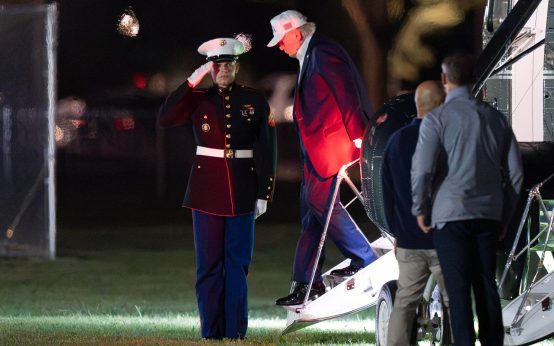 Trump Shortens Camp David Trip Amid Middle East Tensions
  Addressing Artificial Intelligence Concerns Beyond Political Lines
  U.S. Strategic Goals in Question Amid Ongoing Conflict
 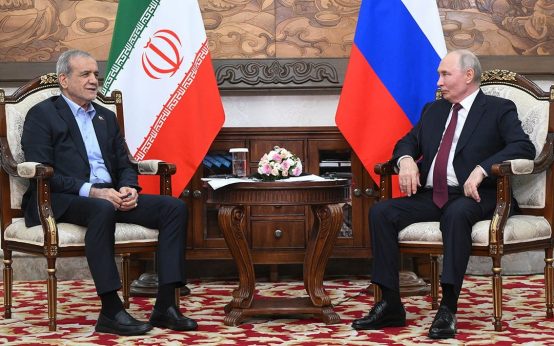 Russia’s Expanding Relationship with Iran: Strategic Plans for 2024-2026
 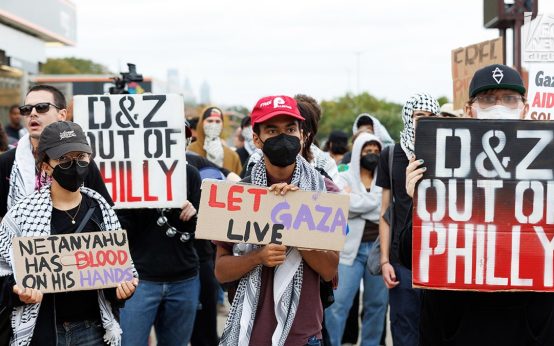 Ed Sheeran Expresses Regret Amid Controversy Over Macklemore’s Tour Exit
  Confronting China’s Religious Oppression: A Call to Action